
Most honey glazed parsnips go wrong in the same way: the honey goes on at the start, turns black in the pan, and the parsnips underneath are still firm. This honey glazed parsnips oven recipe fixes that with one change in timing. The parsnips roast plain with oil, garlic and thyme until they are tender and browned, and only then get a honey butter glaze for the last 10 minutes. The result is sticky, deep golden edges, soft and sweet centers, and a pan you can actually clean.
It takes about 50 minutes from start to finish, almost all of it hands-off, and it works just as well for a Sunday roast as it does for Thanksgiving or Christmas dinner.
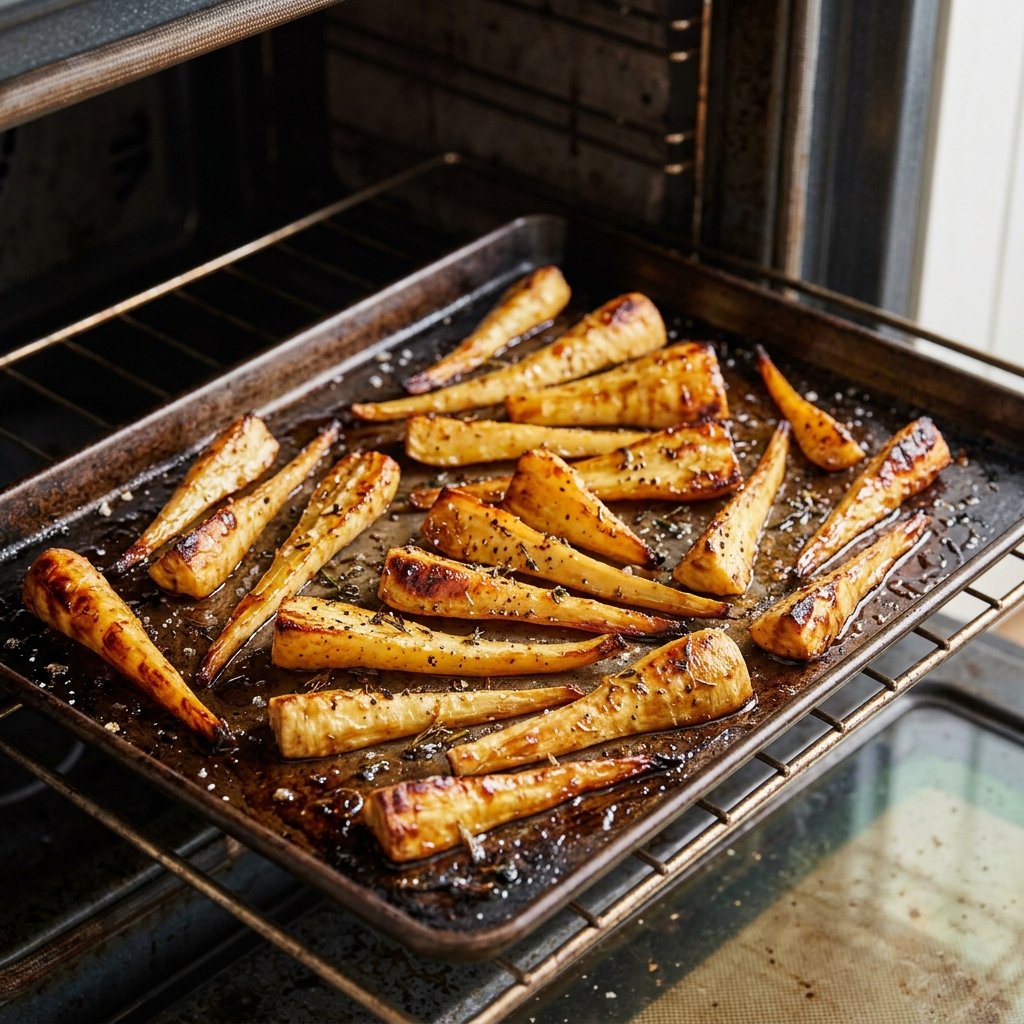
The One Rule: Honey Goes On Late
Honey is mostly sugar, and sugar starts to scorch well before a parsnip turns tender at roasting temperature. If you toss raw parsnips in honey and put them in a 425°F oven for 35 minutes, the coating darkens, turns bitter and welds itself to the pan. Recipe writers who have tested both ways say the same thing: add the honey near the end, once the parsnips have already browned.
Roasting first does a second useful job. The dry heat drives off surface moisture and lets the parsnips caramelize on their own, so the glaze clings to a browned surface instead of sliding off a wet one. That is the difference between parsnips that are glazed and parsnips that are just sweet and soft.
Honey Glazed Parsnips Oven Timeline at a Glance
| Time | What happens | Oven |
|---|---|---|
| 0 min | Pan goes into the oven to preheat | 425°F / 220°C |
| 0 to 15 min | Peel, cut and season the parsnips | Heating |
| 15 min | Parsnips go onto the hot pan | 425°F / 220°C |
| 30 min | Flip every piece | 425°F / 220°C |
| 40 min | Add the honey glaze and toss | 425°F / 220°C |
| 48 to 52 min | Sticky and deep golden: rest 2 minutes, then serve | Off |
For a convection or fan oven, use 400°F (200°C) and start checking a few minutes early at each stage.
What You Need for Honey Glazed Parsnips
- Parsnips: 2 pounds, about 6 medium. Look for firm, smooth roots of similar thickness, without soft spots or shriveled tips.
- Olive oil: for roasting. Any neutral oil works too; avoid butter at this stage, since its milk solids burn at 425°F.
- Garlic: whole cloves, unpeeled and lightly smashed. The skins protect them so they turn soft and sweet instead of bitter.
- Fresh thyme: a few sprigs in the pan and a pinch of leaves to finish. Rosemary is a good swap.
- Honey: runny honey spreads evenly. If yours has crystallized, warm the jar in hot water first.
- Butter: melted into the honey, it makes the glaze glossy and slightly richer.
- Lemon juice (optional): a teaspoon keeps the sweetness in check.
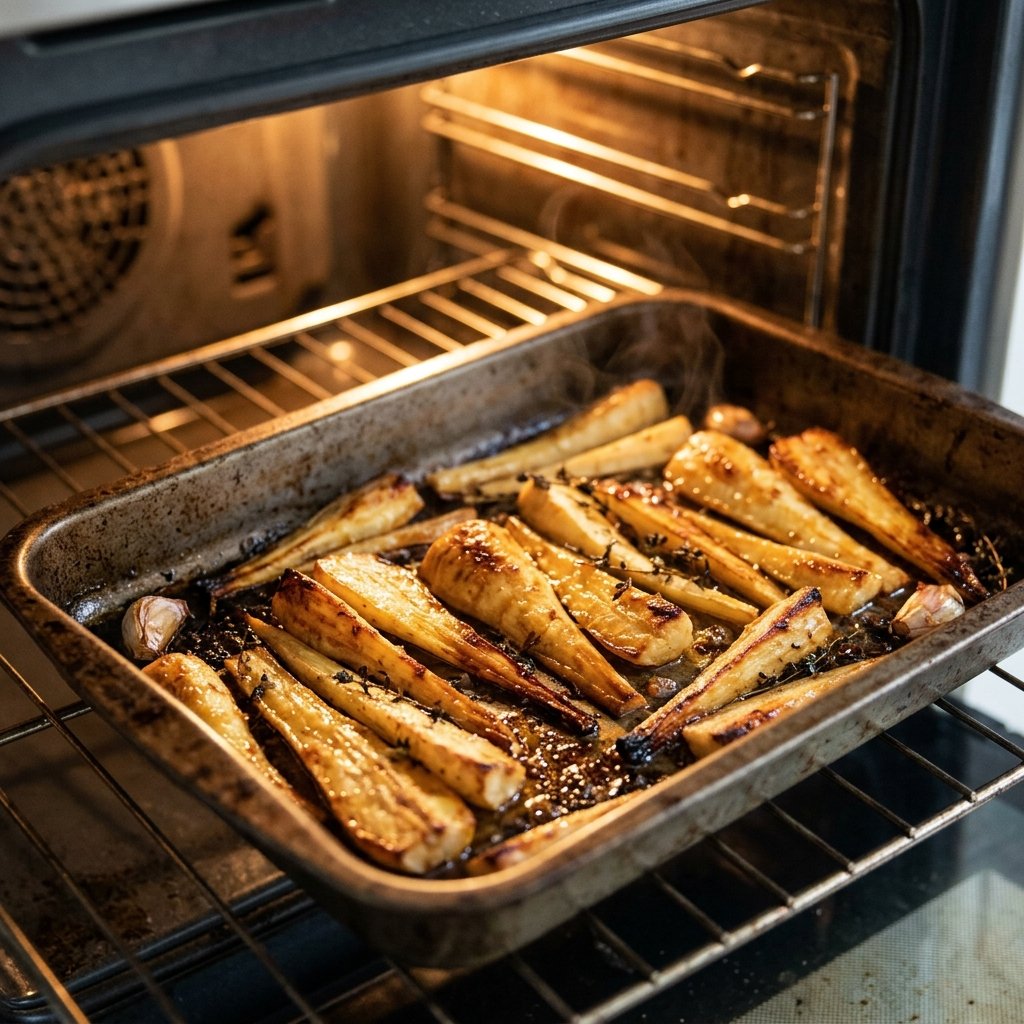
For the best honey glazed parsnips oven results, buy parsnips in late fall and winter, when they tend to be the sweetest. Cool temperatures turn some of the starch in the root into sugar, which is why parsnips have their sweet, nutty flavor, according to UMass Extension. That natural sugar is also why parsnips brown so well in a hot oven.
How to Cut Parsnips So They Cook Evenly
Parsnips are wide at the top and skinny at the tip, so cutting them all the same way gives you burnt tips and raw tops. The goal is pieces of similar thickness, not similar shape.
| Part of the parsnip | How to cut it |
|---|---|
| Thin tip (under 1/2 inch) | Leave whole, about 3 inches long |
| Middle section | Halve lengthwise |
| Thick top (over 1 inch) | Quarter lengthwise into long wedges |
| Very large, old parsnips | Quarter, then slice out the pale, fibrous core |
To check the core, look at the cut end of a thick piece. If the center is a darker ring that feels hard and stringy, trim it out with a paring knife. Smaller and medium parsnips usually do not need this.
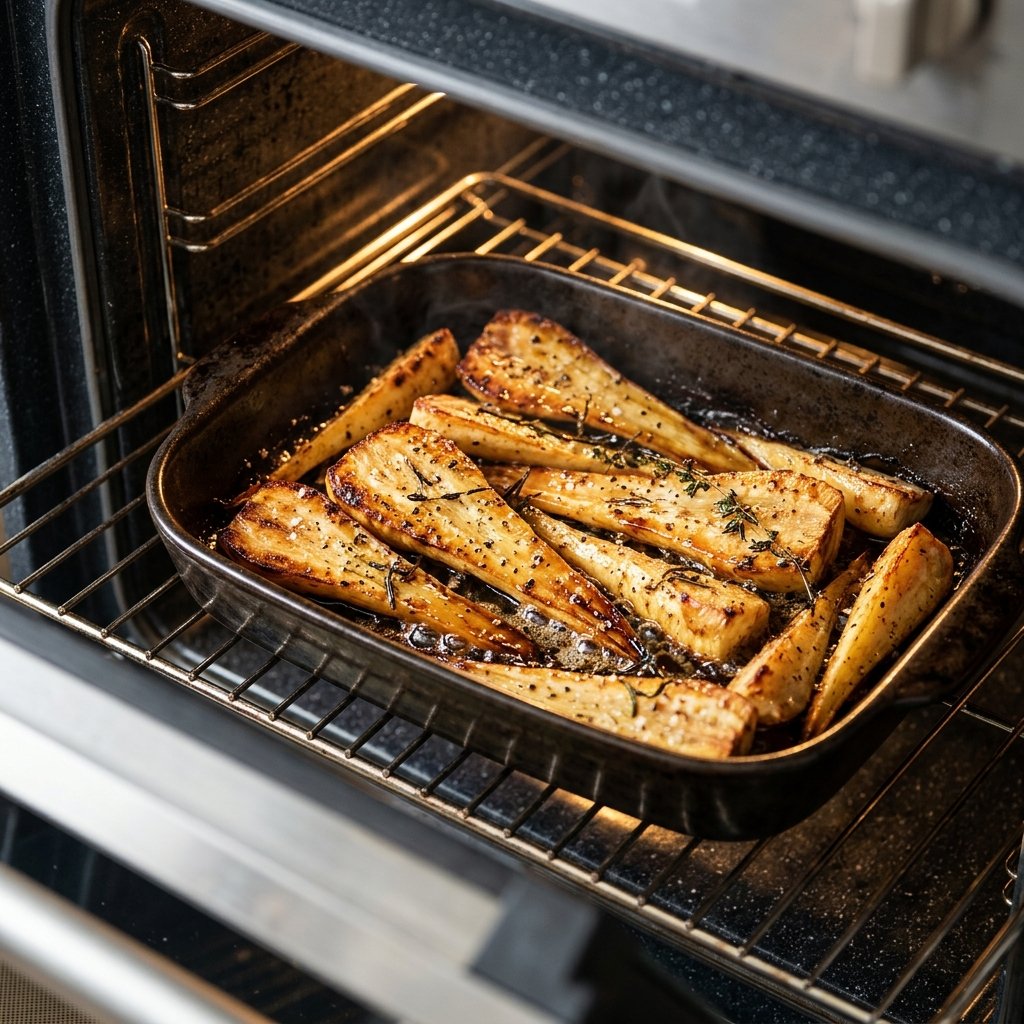
How to Make Honey Glazed Parsnips in the Oven
1. Preheat the pan, not just the oven
Put a rimmed baking sheet or a metal roasting pan in the oven as it heats to 425°F (220°C). When the parsnips hit hot metal, they start browning right away instead of steaming. Metal pans also brown better than glass or ceramic dishes.
2. Season and spread them out
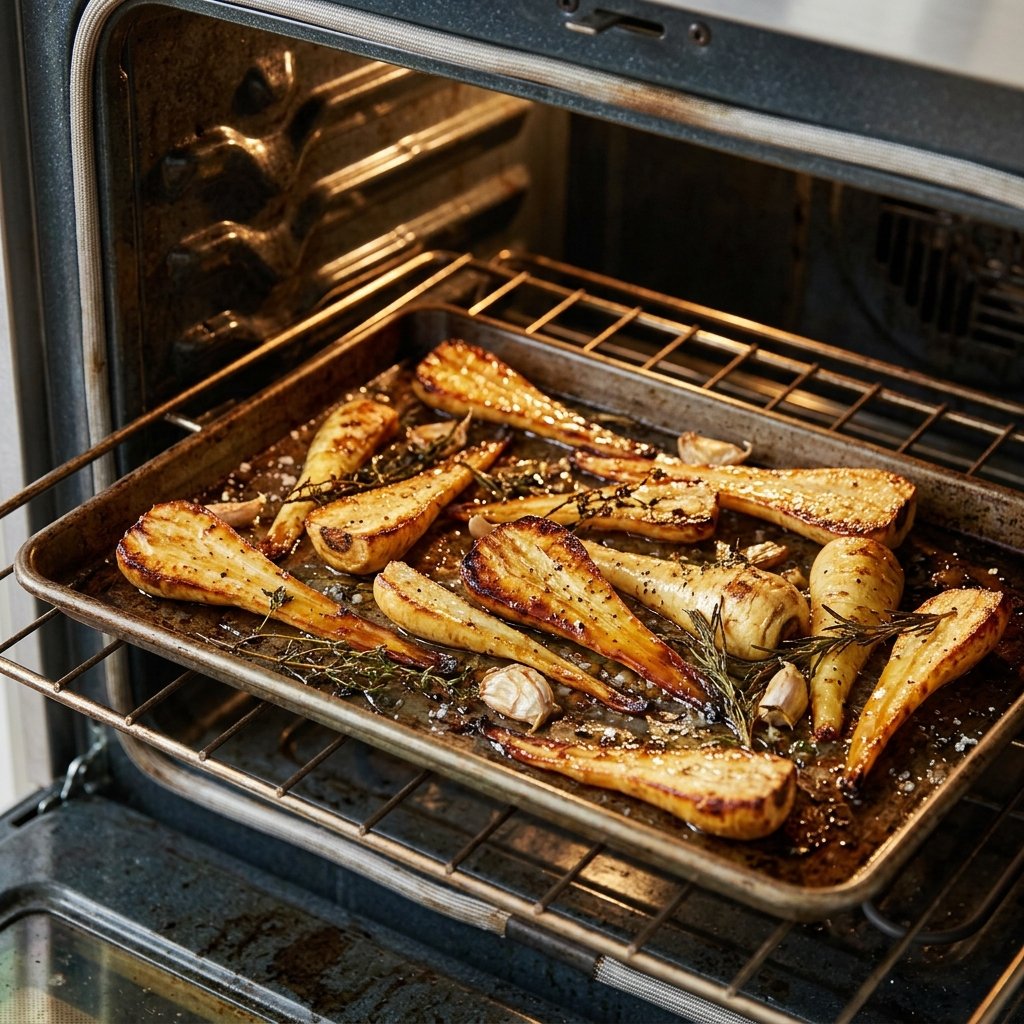
Toss the cut parsnips in a bowl with the olive oil, 1/2 teaspoon salt and the pepper. Carefully pull out the hot pan, tip the parsnips onto it and spread them into a single layer with a little space around each piece. Tuck the garlic cloves and thyme sprigs between them. If they are piled on top of each other, use two pans.
3. Flip halfway through
Give them 15 minutes in the oven, then turn each piece with a thin metal spatula or tongs so the pale side gets a turn against the pan. After another 10 minutes, check the thickest piece: they are ready for the glaze when a knife slides in easily and the edges are golden.
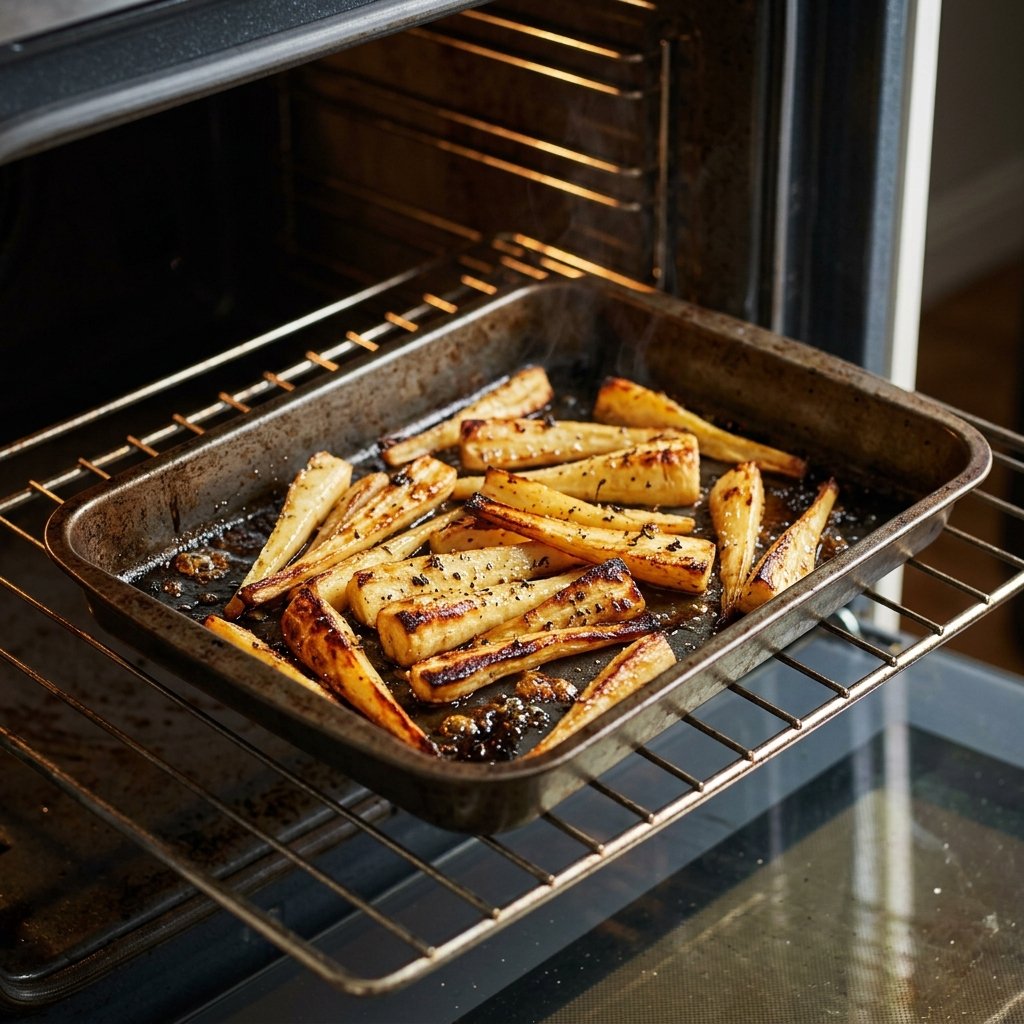
4. Glaze and finish
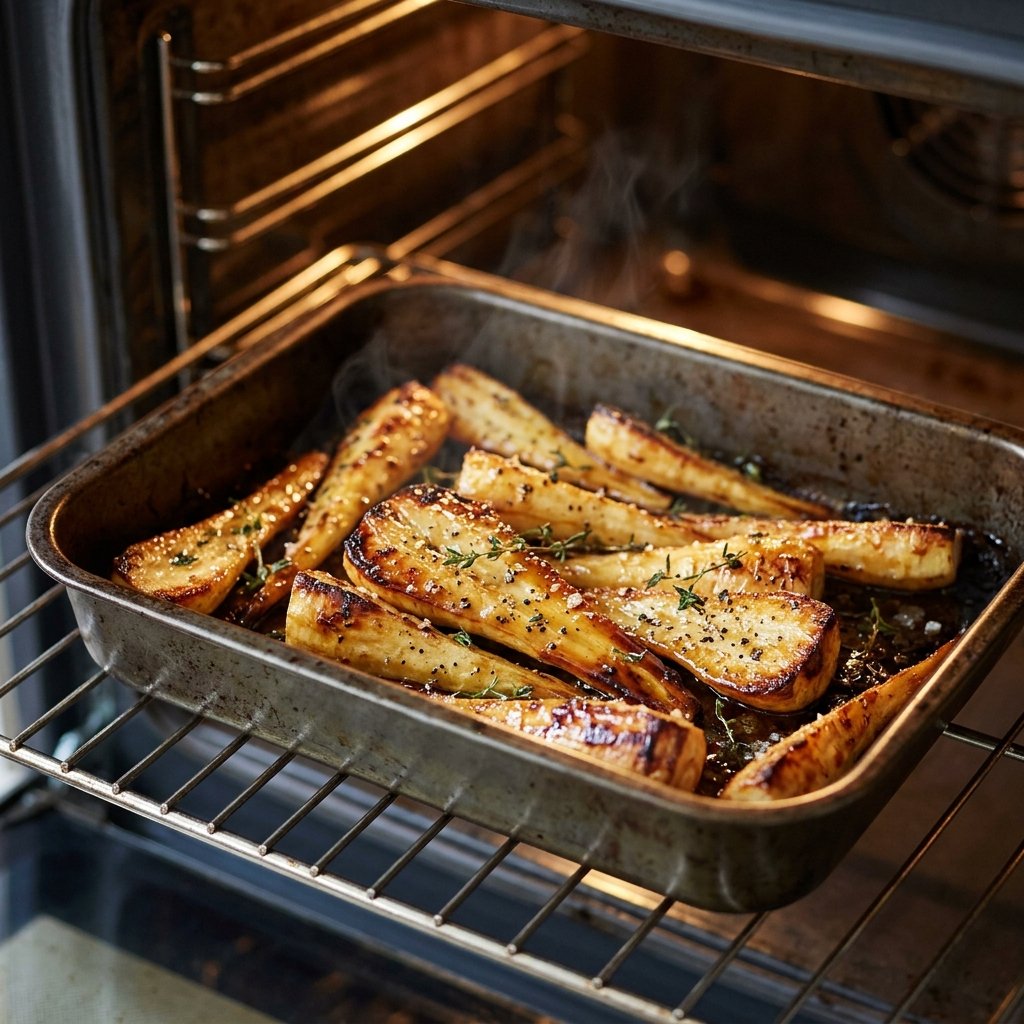
While they roast, stir the honey, melted butter, lemon juice and remaining 1/4 teaspoon salt in a small bowl. Drizzle it over the parsnips and toss right on the pan so every piece is coated. Return the pan to the oven for 8 to 12 minutes, until the glaze bubbles and the tips turn deep amber. Stay close for the last few minutes; honey goes from golden to burnt quickly.
5. Let the glaze set
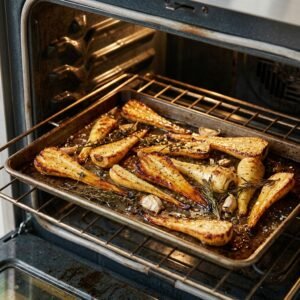
Leave the parsnips on the hot pan for 2 minutes. The glaze thickens as it cools slightly and clings better. Squeeze the soft garlic out of its skins over the top if you like, scatter with thyme leaves and serve.
Troubleshooting Honey Glazed Parsnips
| Problem | Likely cause | Fix next time |
|---|---|---|
| Glaze is burnt or bitter | Honey added too early or oven runs hot | Glaze only in the last 10 minutes; check at 8 |
| Parsnips are soft but pale | Pan was crowded or not preheated | Use a hot pan and a single layer, or two pans |
| Some pieces burnt, others hard | Pieces were different thicknesses | Cut tops into quarters and leave tips whole |
| Chewy, stringy centers | Woody core on large parsnips | Cut out the core before roasting |
| Glaze slid off into the pan | Parsnips were wet or glazed too soon | Pat dry after peeling; brown them first |
Make Ahead Honey Glazed Parsnips for the Holidays
When oven space is tight, this honey glazed parsnips oven recipe is easy to split into two stages. Roast the parsnips through step 3, let them cool, and refrigerate them on a plate or in a container for up to 2 days. Before dinner, spread them on a pan and reheat at 425°F for about 8 minutes, then add the glaze and finish as usual. Since the glaze goes on fresh, they taste just made.
If your oven is busy with a roast at a lower temperature, you can also cook them alongside it at 375°F to 400°F. Give them more time before glazing, and use the visual cues rather than the clock: tender all the way through and browned on the edges.
Easy Variations
- Honey mustard: stir 1 tablespoon whole-grain or Dijon mustard into the glaze. It is one of the most popular versions for a reason.
- Hot honey: add a pinch of red pepper flakes to the glaze, or use hot honey in place of regular.
- Carrots and parsnips: swap half the parsnips for carrots cut the same size. The timing stays the same.
- Maple glazed: use maple syrup instead of honey and olive oil instead of butter for a vegan side.
- Nutty finish: scatter toasted chopped pecans or hazelnuts over the top just before serving.
- Balsamic: add 1 teaspoon balsamic vinegar to the glaze for a tangy, darker finish.
What to Serve With Honey Glazed Parsnips
Honey glazed parsnips belong next to anything roasted. Try them with a Pikes Peak roast, pork chop supreme or lamb souvla. On a holiday table, they sit well beside rosemary potatoes, crispy Brussels sprouts and a bowl of cranberry sauce with honey, which repeats the honey note without making the plate too sweet.
Storing and Reheating Leftovers
Cool leftovers and refrigerate them in an airtight container for 3 to 4 days. Reheat on a pan at 400°F for 6 to 8 minutes, or in the air fryer at the same temperature for about 5 minutes, until hot and the glaze bubbles again. The microwave works in a pinch but leaves them soft. Leftover parsnips are also good blended into a soup or chopped into a grain salad.
Raw parsnips keep for about 3 to 4 weeks in a loose bag in the vegetable drawer, so it is easy to buy them ahead of a holiday.
Honey Glazed Parsnips Oven Recipe Card
Honey Glazed Parsnips (Oven Roasted)
Equipment
- Large rimmed baking sheet or metal roasting pan
- Vegetable peeler
- Small bowl
- Thin metal spatula or tongs
Ingredients
- 2 lb parsnips about 6 medium (900 g)
- 2 tbsp olive oil
- 3/4 tsp kosher salt divided
- 1/2 tsp black pepper freshly ground
- 4 garlic cloves unpeeled, lightly smashed
- 4 fresh thyme sprigs plus 1 tsp leaves to finish
Honey glaze
- 3 tbsp honey runny
- 1 tbsp butter melted
- 1 tsp lemon juice optional, to balance the sweetness
Instructions
- Heat the oven to 425°F (220°C) with a rack in the middle. Put a large rimmed baking sheet or metal roasting pan in the oven while it heats.
- Peel the parsnips and trim the ends. Cut into batons about 3 inches long and 1/2 inch thick. Quarter the thick tops lengthwise; if the center looks fibrous and darker, slice it out.
- Toss the parsnips with the olive oil, 1/2 teaspoon salt and the pepper.
- Carefully spread the parsnips on the hot pan in a single layer with a little space between them. Tuck in the garlic and thyme sprigs.
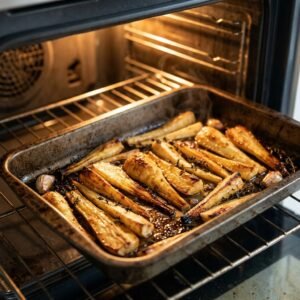
- Roast for 15 minutes, flip the pieces, and roast 10 minutes more, until tender when pierced and golden on the edges.
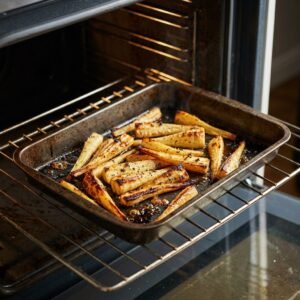
- Meanwhile, stir together the honey, melted butter, lemon juice (if using) and the remaining 1/4 teaspoon salt.
- Drizzle the glaze over the parsnips and toss right on the pan. Roast 8 to 12 minutes more, until sticky and deep golden at the tips. Watch the last few minutes, since honey browns fast.
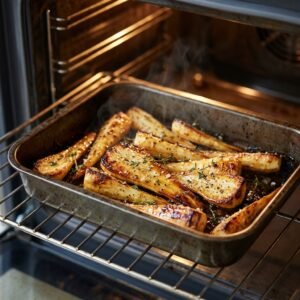
- Let them sit on the pan for 2 minutes so the glaze sets, then scatter with thyme leaves and serve.
Notes
FAQ
What temperature should I roast honey glazed parsnips at?
425°F (220°C) in a regular oven, or 400°F (200°C) with convection. A hot oven browns the outside before the inside turns mushy.
How long do parsnips take in the oven?
About 25 minutes before glazing and 8 to 12 minutes after, so roughly 35 minutes total for 1/2-inch batons. Thicker wedges need 5 to 10 minutes longer.
Do I need to peel parsnips?
Peeling is recommended. The skin is thin but often a little bitter and tough, especially on larger roots. Young, small parsnips can be scrubbed well and roasted unpeeled.
Should I parboil parsnips before roasting?
It is not necessary with this method. Parboiling gives a fluffier inside, but cutting even batons and roasting on a preheated pan gets them tender without the extra pot.
Can I use maple syrup instead of honey?
Yes, in the same amount. Maple syrup is a little thinner and browns slightly faster, so start checking at 6 minutes after glazing.
Why are my parsnips bitter?
Usually from a burnt glaze or from the woody core of very large parsnips. Glaze late and trim thick cores.
Once you have tried this honey glazed parsnips oven method, the timing becomes second nature: roast plain, glaze late, rest briefly. It is a small change that turns a humble winter root into the side dish people go back for.