
This whipped honey recipe takes one ingredient, a mixer and about 20 minutes. As the whisk beats air into plain honey, the color fades from amber to pale ivory and the texture turns thick, soft and spreadable, closer to frosting than syrup. It sits on toast instead of dripping through the holes, and it melts slowly into warm biscuits, oatmeal and tea.
The short version: pour 1 cup (340 g) of room-temperature honey into a stand mixer fitted with the whisk. Whip on medium-high for 15 to 20 minutes, until pale and thick enough to fall in soft ribbons. Spoon it into a clean, dry jar and keep it at cool room temperature.
What Is Whipped Honey?
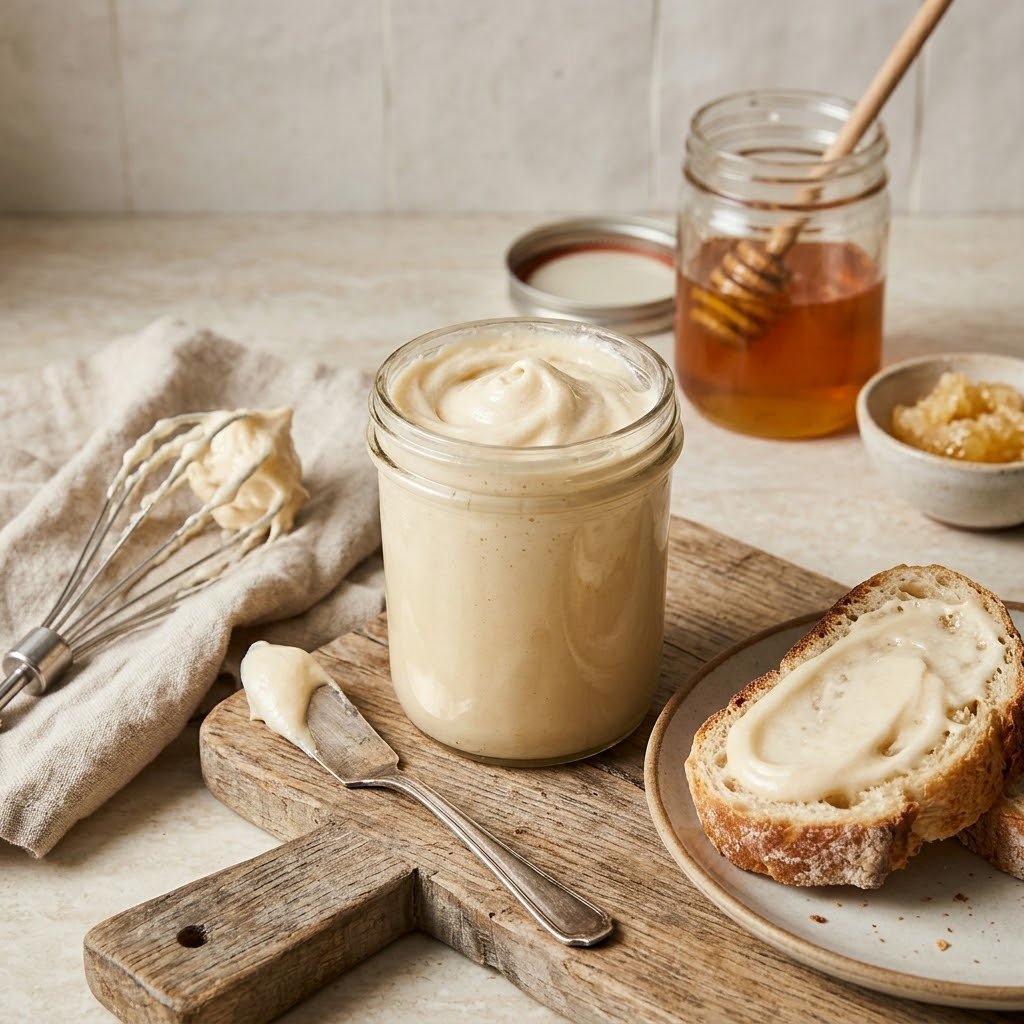
Whipped honey is honey with air beaten into it. Nothing else goes in the bowl. Those tiny bubbles scatter light, which is why the honey looks so much paler, and they give it a fluffy body that spreads easily with a butter knife.
The flavor stays true to the jar you started with, though it tastes a little softer and rounder on the tongue. Because a spoonful holds air, it also weighs less than a spoonful of liquid honey. The sugar in the honey itself has not changed at all, so think of this as a texture upgrade rather than a lighter food.
Whipped Honey vs. Creamed Honey
The two names get used interchangeably, and plenty of store-bought jars labeled “whipped” are really creamed honey. They are made in different ways, and knowing the difference will save you from wondering why your homemade batch does not match the firm, opaque honey from the farmers market.
| Whipped honey | Creamed honey | |
|---|---|---|
| What changes the texture | Air beaten in with a mixer | Very fine, controlled sugar crystals |
| Ingredients | Liquid honey only | Liquid honey plus a finely crystallized “seed” honey |
| Time | About 20 minutes | One to two weeks of cool resting |
| Texture | Light, fluffy, soft | Dense, smooth, butter-like |
| Best for | Same-day spreading and gifting | A firm spread that holds its shape for months |
Want to try the slow version? Stir about 2 tablespoons of smooth creamed honey into 1 cup of liquid honey without beating in air, pour it into jars, and hold them somewhere cool, ideally 50 to 57°F (10 to 14°C), until set. Carolina Honey Bees has a detailed guide to the seed ratio and setting conditions if you want to go deeper.
Choosing Honey for This Whipped Honey Recipe
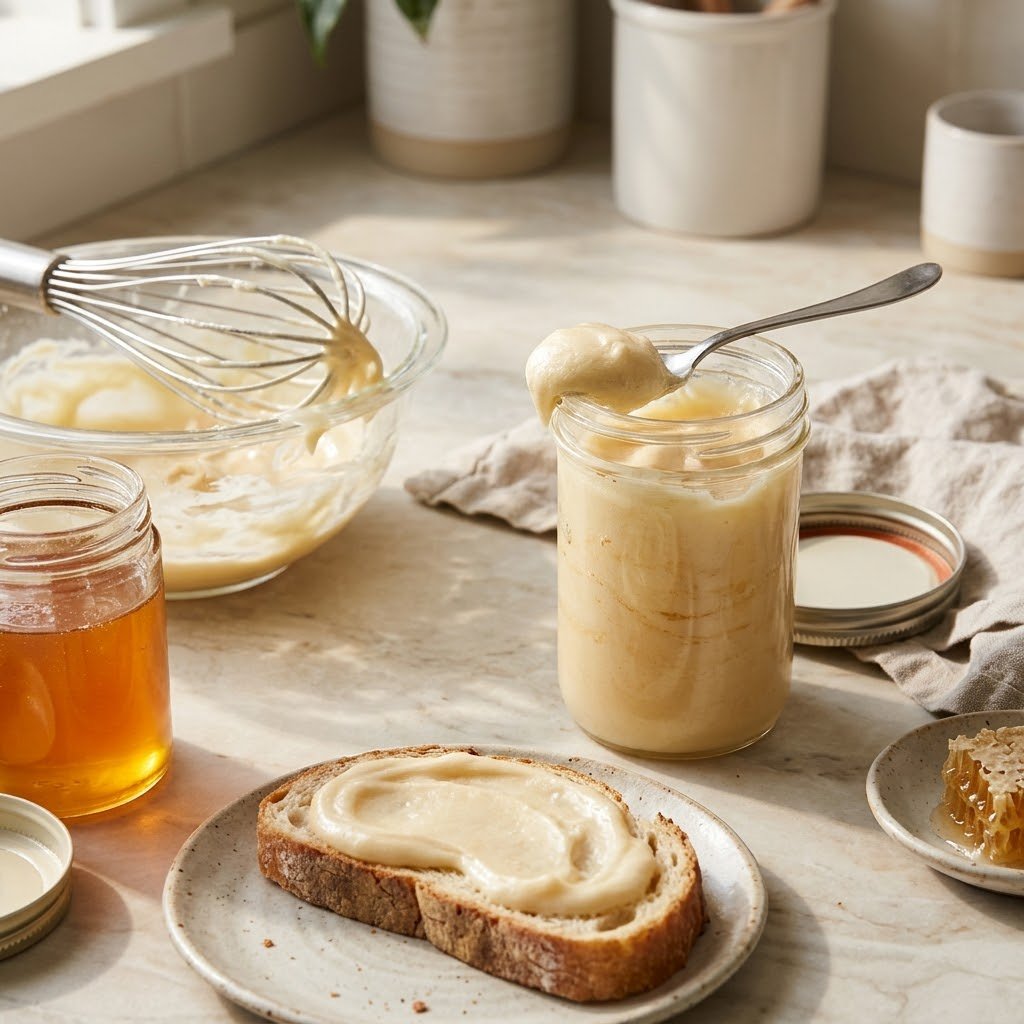
With only one ingredient, the honey decides everything. Pick one you already enjoy straight from the spoon, because whipping will not hide a harsh or bland flavor.
- Raw or lightly filtered honey is the best choice. It usually whips up with more body than heavily processed honey, though regular grocery-store honey still works.
- Clover and wildflower are easy, mild, widely available options that suit toast and baking.
- Darker honeys such as buckwheat stay bold after whipping, so use them when you want a strong, malty spread.
- Slightly crystallized honey is welcome here. Those small crystals help the honey thicken, often faster than a perfectly clear jar. If it has set rock hard, warm the jar gently in a bowl of warm water until it can be poured.
- Tupelo and sourwood resist crystallizing, so they may stay looser and are poor candidates for true creamed honey.
What You Need for a Whipped Honey Recipe
A stand mixer with a whisk attachment is the easiest tool, since the job runs hands-free for a long stretch. An electric hand mixer works too, but plan on at least 50% more time. Whipping by hand is not realistic. You will also want a rubber spatula and a clean glass jar with a tight lid.
Use at least 1 cup of honey in a stand mixer so the whisk can actually reach it. Very small batches tend to spin around the bottom of the bowl without taking in much air. Everything that touches the honey should be completely dry, because extra water can encourage fermentation during storage.
How to Make Whipped Honey Step by Step
1. Bring the honey to room temperature
Cold honey is stiff and strains the mixer. Leave the jar on the counter until it pours freely, then add it to the dry bowl.
2. Start low, then increase the speed
Run the mixer on low for about a minute so the honey does not climb the whisk, then move up to medium-high. Let it go, stopping once or twice to scrape the sides and bottom of the bowl.
3. Whip until pale and thick
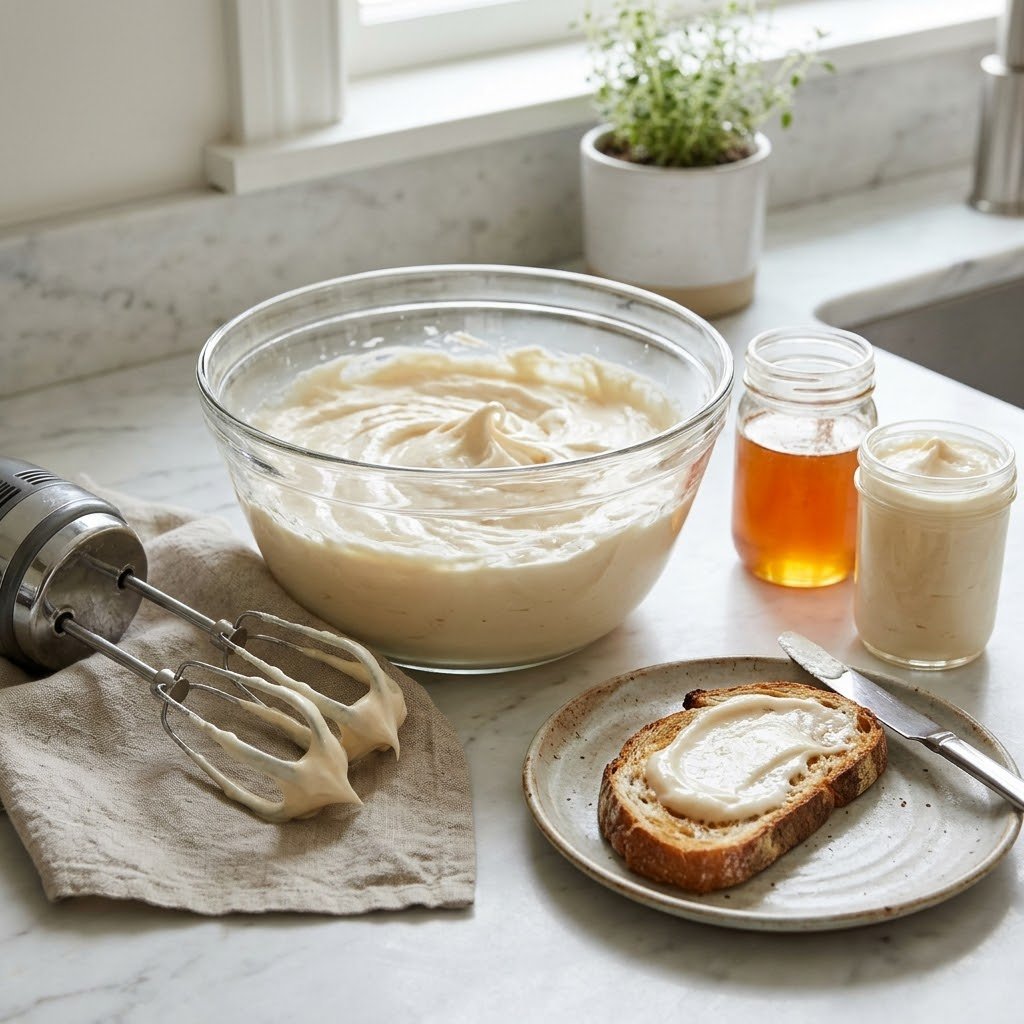
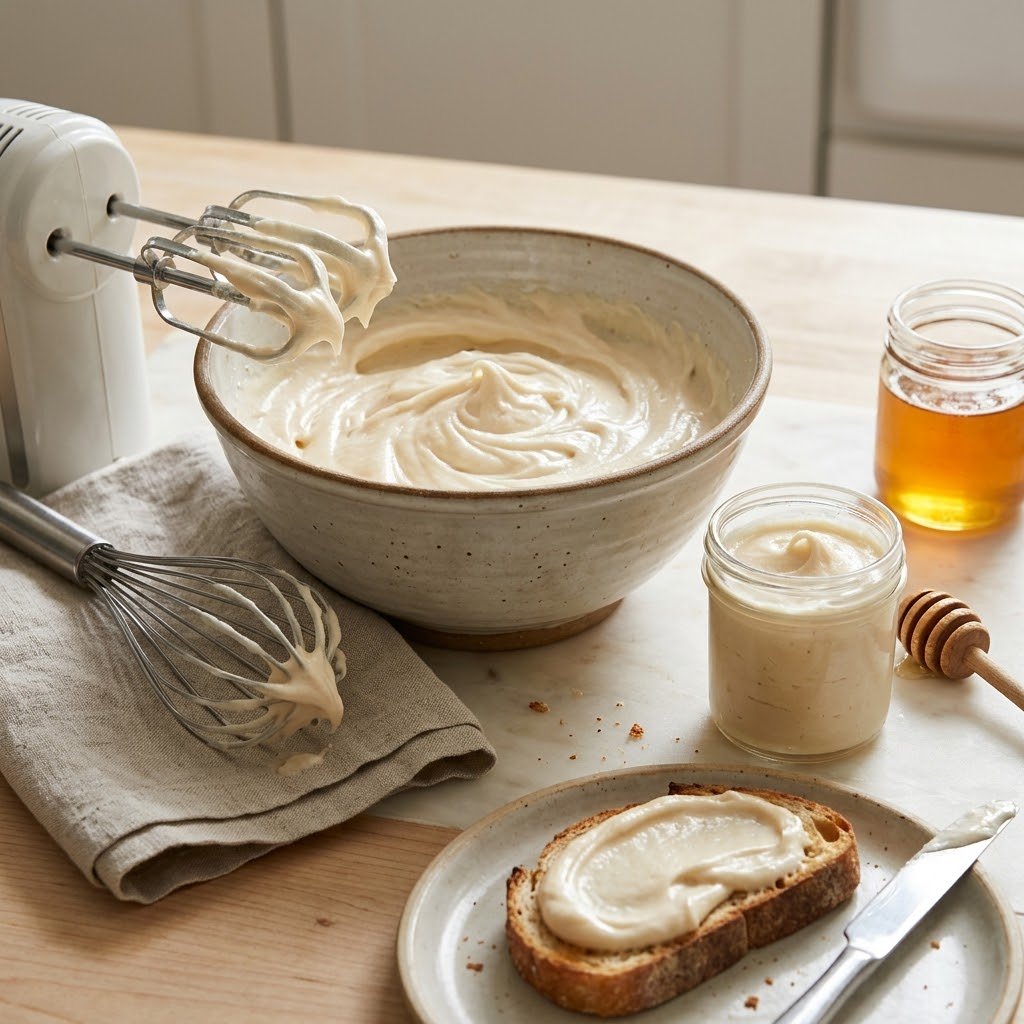
Most batches need 15 to 20 minutes. Ignore the clock at the end and watch the honey instead: it should look ivory or pale gold, feel fluffy, and fall from the whisk in thick ribbons that sit on the surface for a moment before sinking.
4. Jar it
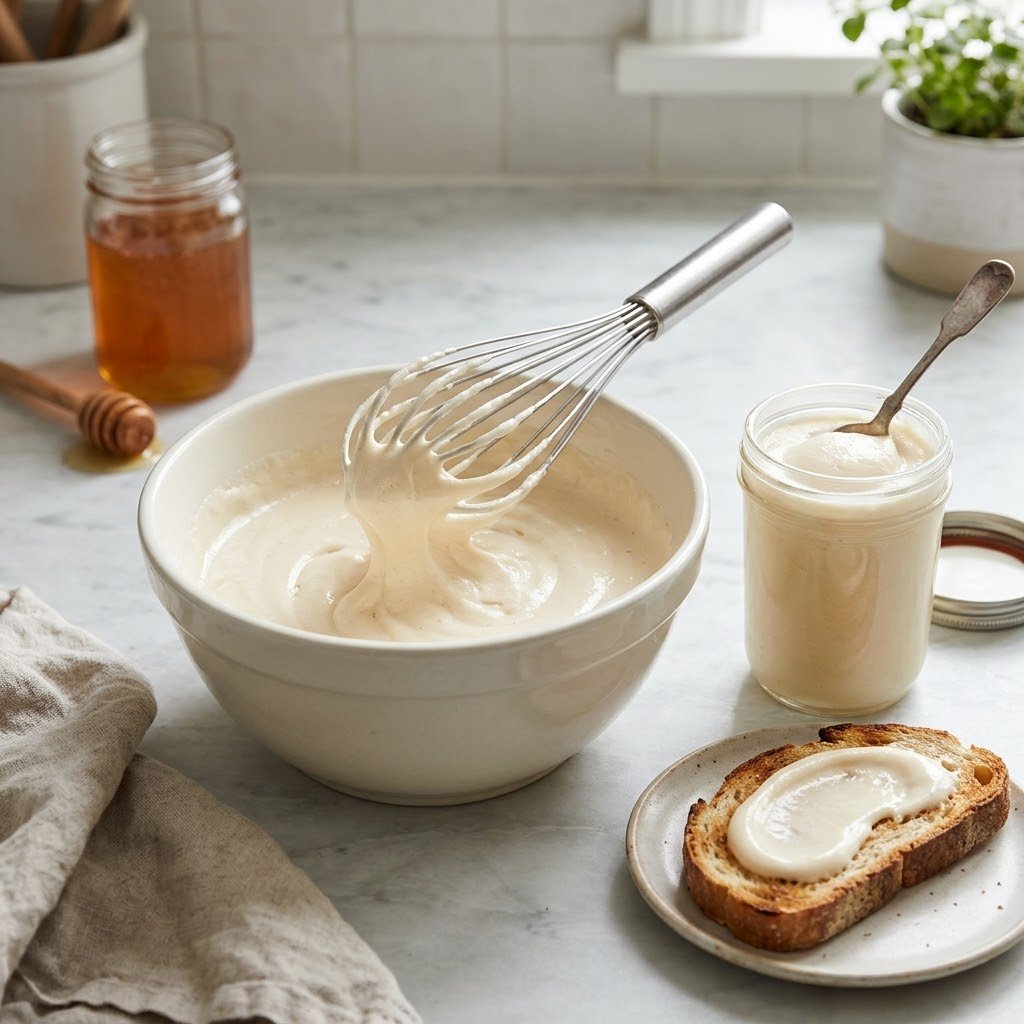
Scrape the whipped honey into a clean, dry jar and seal it. You can eat it right away. A short rest also lets any large bubbles rise and settle.
How Long Does It Take to Whip Honey?
Every whipped honey recipe seems to give a different time, with published versions ranging from about 5 minutes to 25 minutes, and that spread is real. Honey varies in moisture and crystal content, mixers vary in power, and bigger batches take longer. For 1 cup in a stand mixer on medium-high, this is a useful rough guide:
| Time | What you should see |
|---|---|
| 0 to 5 minutes | Glossy and foamy, slightly lighter in color |
| 5 to 10 minutes | Noticeably paler, with more volume in the bowl |
| 10 to 15 minutes | Creamy gold, thicker, whisk leaves visible trails |
| 15 to 20 minutes | Pale ivory and fluffy, ribbons hold their shape |
Long mixing can warm the motor. If the top of the mixer feels hot, switch it off and give it a 10-minute break. The honey will not mind, and you can pick up right where you left off.
Tips for the Best Whipped Honey Recipe Results
Small details make a real difference when a recipe has only one ingredient. Keep these in mind before you switch on the mixer:
- Measure with a lightly warmed cup. Honey slides out more easily, and you will not leave a tablespoon behind. Dry the cup well first.
- Choose the whisk, not the paddle. The thin wires are what pull air into the honey. A paddle mostly stirs it.
- Cover the bowl loosely on humid days. Honey readily absorbs moisture from the air, so a clean towel draped over the mixer helps during a long whip.
- Keep the kitchen comfortable. Very warm honey stays loose and takes longer to thicken, so avoid whipping next to a hot oven.
- Taste before jarring. This is the moment to add a pinch of flaky salt, which sharpens the flavor without making the honey taste salty.
Whipped Honey Troubleshooting
It is still runny after 20 minutes
Keep going for another 5 to 10 minutes. If nothing changes, check that the whisk is reaching the honey, since a shallow batch in a large bowl will not take in air. Honey that naturally resists crystallizing may also stay softer, which is fine for drizzling.
It feels grainy
Large crystals in the original honey will not vanish with whipping. Warm the honey gently in a jar set in warm water until the crystals melt, let it cool to room temperature, then whip it again.
A liquid layer formed in the jar
Some settling is normal, particularly in a warm kitchen. Stir it back together, or give it a few more minutes in the mixer if you want the fluffy texture back.
It smells sour or looks fizzy
That points to fermentation, usually from added moisture or a wet jar. Throw the batch away and start again with fully dry equipment.
Whipped Honey Flavor Variations
Stick to dry add-ins. Juice, extracts in large amounts and fresh zest add water, which can shorten shelf life. Stir these in during the last 2 minutes of whipping, using the amounts below for 1 cup of honey as a starting point.
| Flavor | Add to 1 cup honey | Try it on |
|---|---|---|
| Cinnamon whipped honey | 1 teaspoon ground cinnamon | Toast, oatmeal, apple slices |
| Vanilla bean | Seeds from 1/2 vanilla bean | Scones, yogurt, fruit |
| Chocolate | 1 tablespoon cocoa powder | Banana bread, pancakes |
| Spicy | 1/4 teaspoon crushed red pepper | Cornbread, fried chicken, cheese |
| Berry | 1 tablespoon freeze-dried berry powder | Waffles, biscuits, yogurt |
| Warm spice | 1/2 teaspoon ground cardamom or ginger | Tea, sweet rolls, pears |
For quick whipped honey butter, beat 1/2 cup of softened butter with 1/4 cup of whipped honey and a pinch of salt. Because it contains butter, keep this version in the refrigerator and use it within about 2 weeks.
What to Do With Whipped Honey
Anywhere you would use butter, jam or a drizzle of honey, this spread will fit right in:
- Spread it over warm buttermilk biscuits or fresh scones.
- Add a spoonful to a stack of fluffy pancakes, crisp waffles or classic French toast.
- Swirl it through homemade yogurt with nuts and fruit.
- Spread it on a thick slice of banana bread.
- Stir it into hot drinks, or use it to make this whipped honey coffee.
- Serve it on a cheese board with sharp cheddar, blue cheese, crackers and sliced pears.
How to Store Whipped Honey
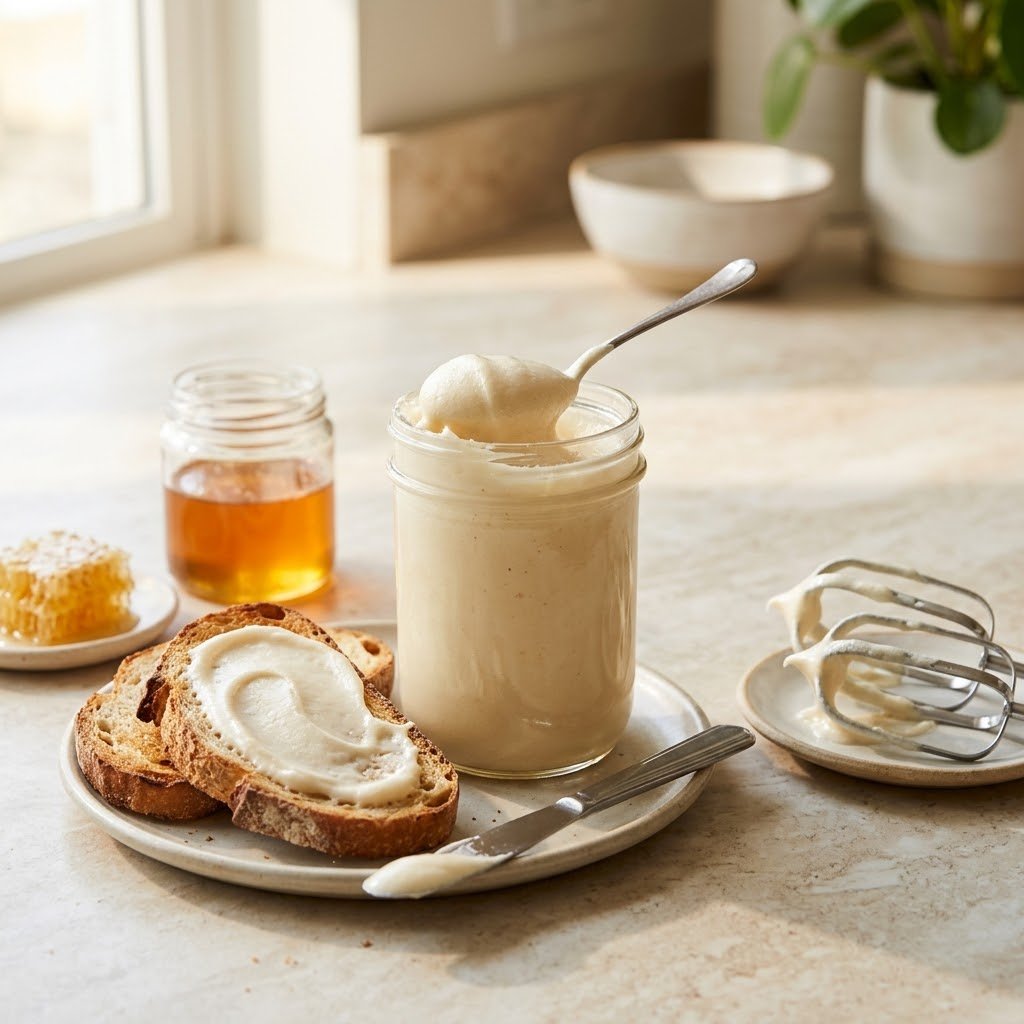
Keep whipped honey in an airtight jar in a cool, dry cupboard, away from the stove and direct sun. Temperatures below about 75°F (24°C) help it hold its texture. Always use a clean, dry spoon so no crumbs or water get into the jar.
Stored this way, plain whipped honey keeps about as long as regular honey, though the fluffy texture is at its best in the first few months. The refrigerator is not necessary and makes it hard to spread. Freezing is not recommended. If a batch loosens over time, it is still fine to eat as long as it smells and tastes normal; stir it or whip it again.
Packing Whipped Honey as a Gift
Small jars of whipped honey make a thoughtful homemade gift for teachers, hosts and neighbors. Fill 4-ounce jars, wipe the rims, and add a tag with the honey variety and the date it was made. Include a note that the honey is not suitable for babies under 12 months old. If you are making several flavors, whip the plain batch first and work from mildest to strongest so you only need to wash the bowl at the end.
Whipped Honey Recipe FAQ
Is whipped honey still real honey?
Yes. Plain whipped honey contains nothing but honey and air.
Do you need raw honey to make whipped honey?
No. Raw honey tends to give the best body, but any pure honey can be whipped. Times and final thickness will vary from one jar to the next.
Can you whip honey without a stand mixer?
Yes, with an electric hand mixer. Expect the job to take at least 50% longer. A blender is a poor substitute because it adds little air.
Why did my whipped honey not turn white?
The final color depends on the starting honey. Light honey can turn almost white, while dark honey will stay tan or caramel-colored even when fully whipped. Go by the thick, fluffy texture.
Is whipped honey healthier than regular honey?
No. It is the same honey with a different texture. A spoonful may contain slightly less honey because of the air, but it should still be enjoyed as a sweetener.
Can babies eat whipped honey?
No. Honey in any form should not be given to children under 12 months old because it can contain spores that cause infant botulism. The University of Florida explains the risk, and Michigan State University Extension offers further guidance for families.
Make a Jar This Week
Good honey, a dry bowl and a little patience are all this whipped honey recipe asks for. Start with one cup, watch for the pale, ribbony stage, and keep a jar by the toaster. Once you have the plain version down, the cinnamon variation is an easy next step.
Whipped Honey
Equipment
- Stand mixer with whisk attachment (or electric hand mixer)
- Rubber spatula
- Clean, dry glass jar with lid
Ingredients
- 1 cup honey 340 g; raw or lightly filtered, at room temperature
Instructions
- Make sure the mixer bowl, whisk and spatula are completely dry. Pour the room-temperature honey into the bowl.
- Start the mixer on low for about 1 minute, then raise the speed to medium-high. Whip for 15 to 20 minutes, stopping once or twice to scrape down the bowl. With a hand mixer, allow at least 50% more time.
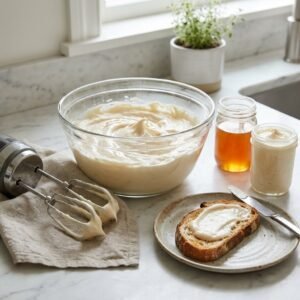
- Stop when the honey has turned pale ivory and falls from the whisk in thick ribbons that hold their shape for a moment. If the mixer motor feels hot, rest it for 10 minutes before continuing.
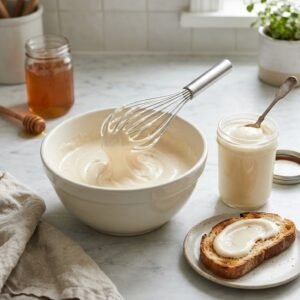
- Spoon the whipped honey into a clean, dry jar and seal it. Store at cool room temperature, and stir before serving if it settles.