
When the farmers market tables fill up with blood oranges, Cara Caras, Meyer lemons and bags of little tangerines, that is the moment to make this winter citrus syrup recipe. It takes a handful of the season’s best fruit, a cup of sugar and a few warm spices, and turns them into a ruby-orange syrup that tastes bright and cozy at the same time. One small jar in the fridge can sweeten your morning tea, finish a sparkling water, build a holiday cocktail or soak into a stack of pancakes.
The method is simple, but a few details make the difference between a syrup that tastes like fresh fruit and one that tastes flat or bitter: where the flavor comes from (hint: mostly the peel), when to add the juice, and how long to let the spices steep. All of that is covered below, along with a citrus guide, ratios for thin or thick syrup, storage advice and plenty of ways to use it. The printable recipe card is at the bottom of the page.
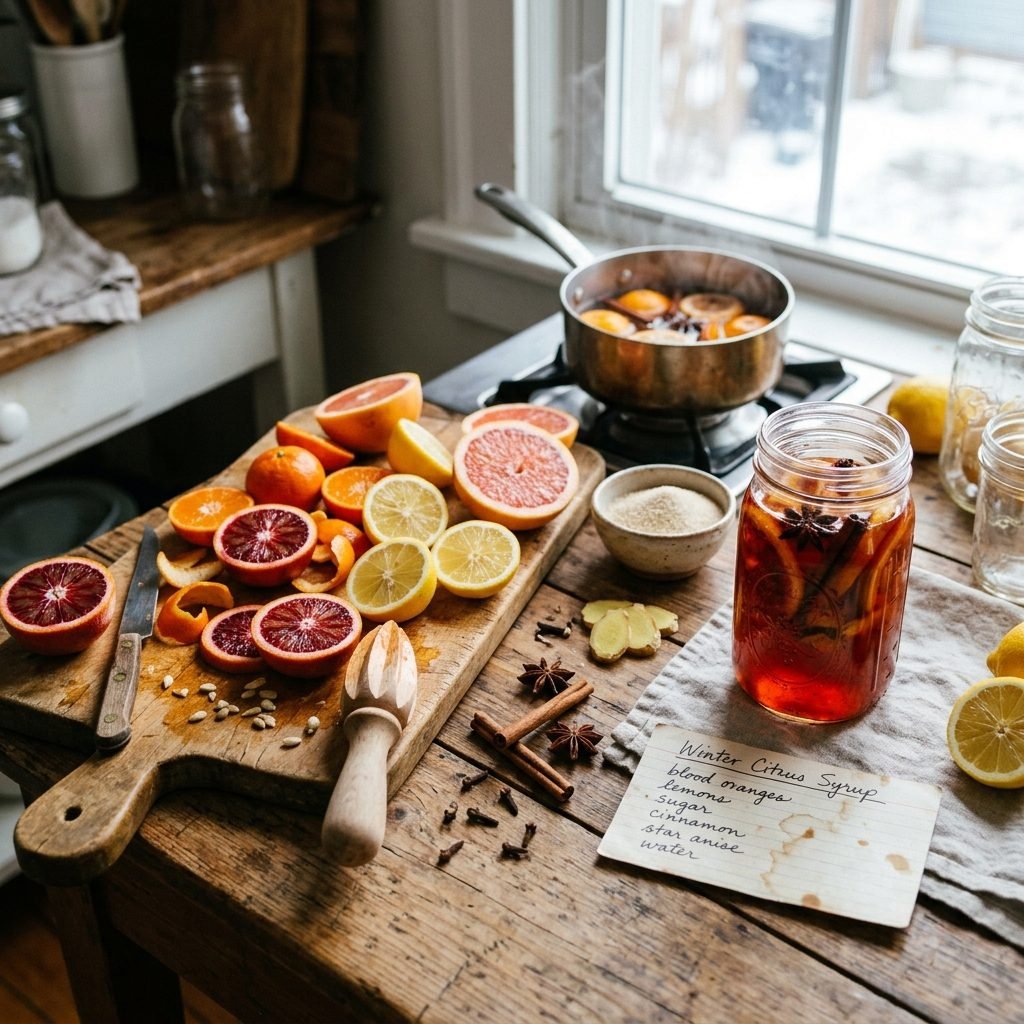
What Is Winter Citrus Syrup?
Winter citrus syrup is a flavored simple syrup made with the citrus fruits that peak between December and March: blood oranges, navel and Cara Cara oranges, mandarins and tangerines, Meyer lemons, grapefruit and kumquats. The fruit’s zest and juice are cooked with sugar and water, usually alongside warming spices such as cinnamon, star anise and cloves, then strained into a clean bottle.
You may also know the name from coffee shops and bar supply stores. Syrup brands sell seasonal “winter citrus” flavors for lattes, lemonades and cocktails; Monin’s Winter Citrus syrup, for example, describes a blend of clementine, blood orange and kumquat with hints of honey and herbs. A homemade version is different in a good way. It is made with real juice and peel, there are no flavorings or preservatives, and you control the sweetness and the spice level. The trade-off is a shorter shelf life, which we will get to in the storage section.
Think of this syrup as a more interesting cousin of plain citrus simple syrup. The base is still sugar and water, but the fruit gives it body, color and acidity, and the spices push it firmly into cold-weather territory.
Picking the Citrus: A Quick Guide
There is no single “correct” fruit mix for a winter citrus syrup recipe. The best results come from combining one sweet, aromatic orange with something tart, and adding a blood orange or two if you want that deep red color. Here is how the most common winter fruits behave in a syrup.
| Citrus | Flavor in the syrup | Best use in the mix |
|---|---|---|
| Blood orange | Berry-like, slightly tart, deep red color | Color and a raspberry note; use 2 to 3 |
| Navel or Cara Cara orange | Sweet, round, classic orange | The main juice base |
| Tangerine or mandarin | Floral, honeyed, very aromatic peel | Fragrance; great zest |
| Meyer lemon | Gentle tartness with a floral, almost herbal edge | Brightness without harsh sourness |
| Regular lemon | Sharp and clean | Balancing sweetness; a little goes a long way |
| Grapefruit | Bitter-sweet, sharp | Small amounts for an adult, bar-style syrup |
| Kumquat | Sweet peel, very sour flesh | Slice whole and simmer for a marmalade-like note |
If you can only find regular navel oranges and lemons, the syrup will still be very good. Blood oranges mainly add color and a subtle berry flavor; the spices and the peel do most of the “winter” work.
A note on choosing fruit: pick citrus that feels heavy for its size, with taut, glossy skin. Heavy fruit has more juice. Since you will be using the peel, scrub the fruit well under warm water, and if possible buy unwaxed or organic citrus.
Ingredients for This Winter Citrus Syrup Recipe
The ingredient list is short. Here is what you need for about 2 1/4 cups of syrup, with notes on each item.
- Granulated sugar (1 cup / 200 g): plain white sugar gives the cleanest citrus flavor and the brightest color. Light brown sugar or turbinado works too and adds a caramel note, but the syrup will be darker.
- Water (1 cup / 240 ml): filtered water is best if your tap water has a strong taste.
- Orange juice (1/2 cup): freshly squeezed from about 2 navel or Cara Cara oranges.
- Blood orange juice (1/2 cup): from about 2 to 3 blood oranges. Swap in more regular orange or tangerine juice if you can’t find them.
- Lemon juice (1/4 cup): from about 2 lemons, or Meyer lemons for a softer flavor.
- Wide strips of zest: from 1 orange and 1 lemon, removed with a vegetable peeler. This is where most of the aroma lives.
- 1 cinnamon stick: Ceylon cinnamon is softer and sweeter; cassia is bolder and spicier.
- 2 whole star anise: for a gentle licorice warmth that pairs beautifully with orange.
- 4 whole cloves: optional, but they make the syrup taste unmistakably wintry.
- 3 thin slices of fresh ginger: optional, for a little heat.
- A small pinch of fine salt: it doesn’t make the syrup salty; it simply makes the fruit taste brighter.
Always use whole spices rather than ground. Ground cinnamon and cloves turn the syrup muddy and gritty, and they are almost impossible to strain out completely.
How the Spices Shape the Flavor
The spice mix is what separates this winter citrus syrup from a basic orange syrup, so it helps to know what each one brings and how far you can push it.
Cinnamon adds sweetness and warmth and works with every citrus on the list. One stick is enough for a mild, rounded flavor; two sticks make it taste like mulled cider.
Star anise is powerful. Two pods give a soft, background anise note that most people won’t be able to name. Four or more and the syrup starts to taste like licorice, which is lovely in a whiskey cocktail but less so in a cup of green tea.
Cloves are the strongest of the group. Four whole cloves is the upper limit for this batch. If you’re making the syrup for kids’ drinks or delicate teas, use two or leave them out.
Fresh ginger gives a gentle, peppery bite that cuts through the sweetness. It’s especially good if you plan to mix the syrup with hot water and honey on cold evenings.
Other options that fit the season: a few green cardamom pods (lightly cracked), a split vanilla bean, a couple of allspice berries, or a sprig of rosemary added in the last few minutes of steeping.
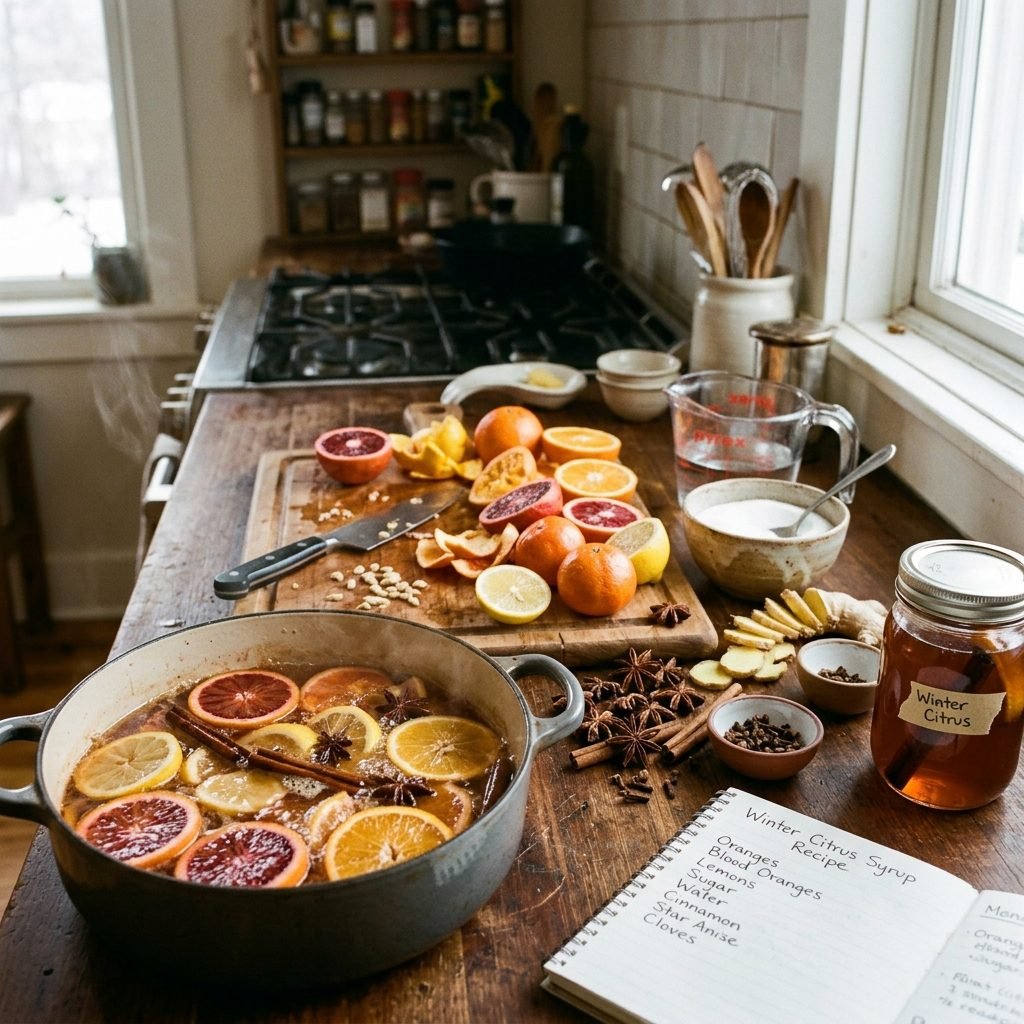
How to Make Winter Citrus Syrup, Step by Step
This winter citrus syrup recipe follows an order that keeps the flavor fresh: the peel and spices simmer first to release their oils, and the juice goes in later so it only cooks briefly.
Prep the Citrus and Cook the Syrup
- Prep the fruit. Scrub the citrus. Use a vegetable peeler to remove 4 to 5 wide strips of zest from one orange and 3 strips from one lemon, pressing lightly so you take only the colored skin and very little white pith. Then juice the oranges, blood oranges and lemons separately and strain out the seeds. You want 1/2 cup orange juice, 1/2 cup blood orange juice and 1/4 cup lemon juice.
- Dissolve the sugar. In a small saucepan, combine the sugar, water and pinch of salt. Set over medium heat and stir until the sugar has completely dissolved and the liquid looks clear, about 3 minutes.
- Simmer the zest and spices. Add the zest strips, cinnamon stick, star anise, cloves and ginger. Bring to a gentle simmer, then lower the heat and let it bubble softly for 5 minutes. The kitchen will start to smell like an orange pomander.
- Add the orange juices. Pour in the orange and blood orange juice. Return to a bare simmer (small bubbles at the edge only) and cook for 5 to 7 minutes, until the syrup reduces slightly and coats the back of a spoon in a thin layer. Avoid a hard boil, which dulls the fresh fruit flavor and can make the syrup taste like cooked marmalade.
Steep, Strain and Bottle
- Steep off the heat. Take the pan off the heat, stir in the lemon juice and cover. Let the syrup steep for 20 minutes. Taste it at this point: for a stronger spice flavor, steep up to 45 minutes; for a lighter one, strain right away.
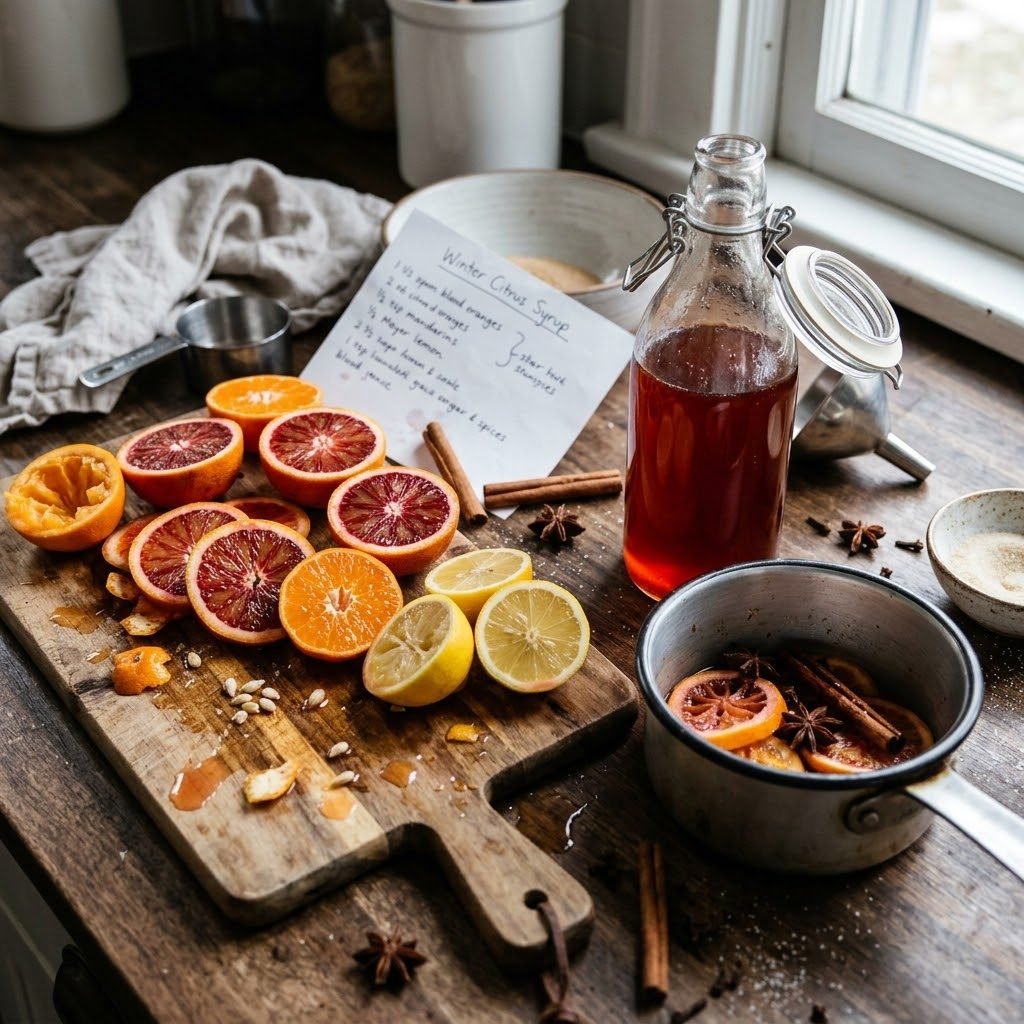
- Strain. Pour the syrup through a fine-mesh sieve into a heatproof jug. For an especially clear syrup, line the sieve with a coffee filter or a double layer of cheesecloth. You can keep the cinnamon stick and star anise to add to the bottle for looks.
- Cool and bottle. Let the syrup cool to room temperature, then pour it into a clean glass jar or swing-top bottle. Seal and refrigerate. It will thicken a little as it chills.
That’s it: about 2 1/4 cups of homemade winter citrus syrup, ready in under an hour, most of which is hands-off steeping time.
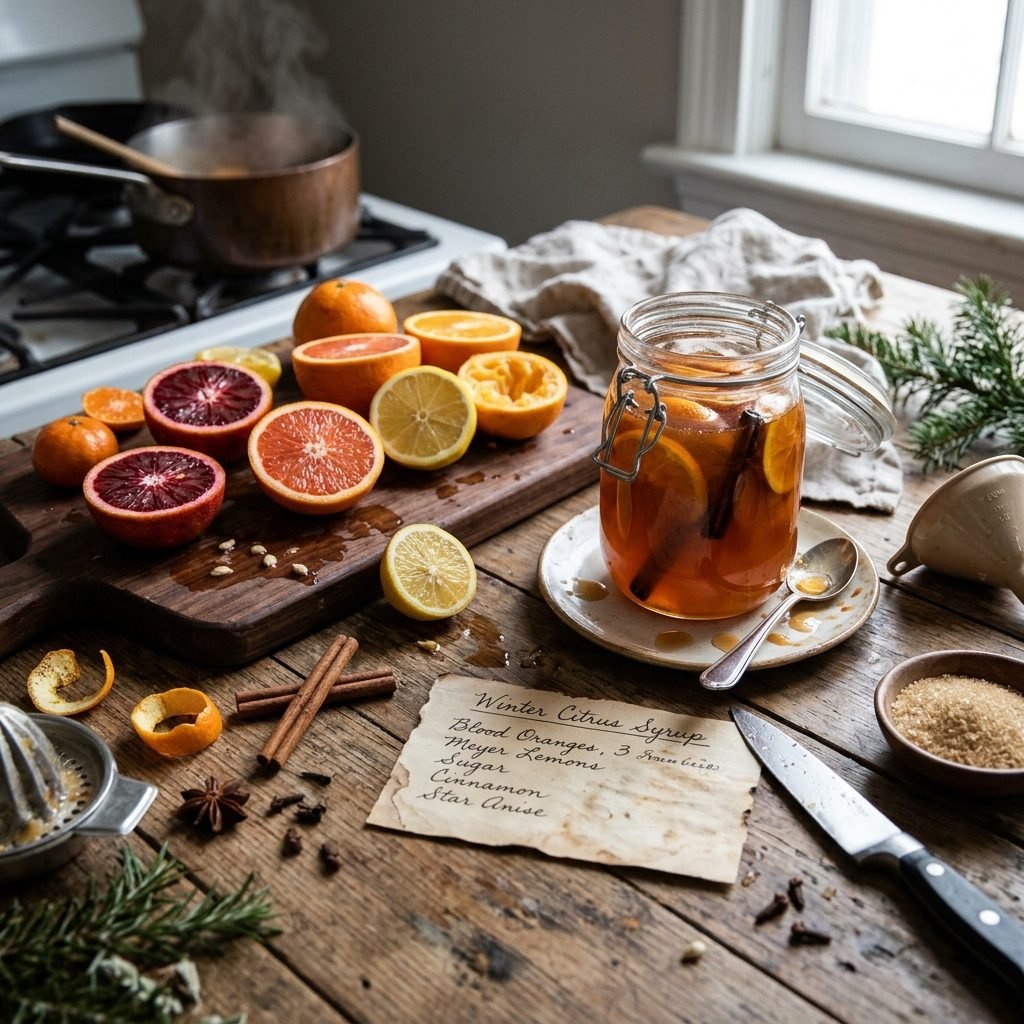
Peel vs. Pith: How to Avoid a Bitter Syrup
If a homemade citrus syrup tastes harsh or medicinal, the white pith is usually to blame. The colored outer layer of the peel (the zest) is full of fragrant oils. The spongy white layer underneath is bitter, and simmering draws that bitterness into the syrup.
A few ways to stay on the right side of that line:
- Use a sharp Y-shaped vegetable peeler and light pressure. If you can see a lot of white on the back of a strip, scrape it off with a paring knife.
- Don’t simmer whole citrus slices for long. Sliced oranges look beautiful in the pot, but the pith in every slice adds bitterness. If you love the look, add a few thin slices only for the final steep, or put fresh slices in the bottle once the syrup has cooled.
- Go easy on grapefruit peel. Its pith is more bitter than orange pith, so use the juice and skip the zest unless you want a bar-style bitter edge.
- Don’t squeeze the zest or spices when straining. Let the syrup drain on its own.
Thin, Medium or Thick: Adjusting the Ratio
This winter citrus syrup recipe sits in the middle: thin enough to stir into cold drinks, thick enough to drizzle. Depending on how you plan to use it, you can shift the ratio.
| Style | Sugar to liquid | Texture | Best for |
|---|---|---|---|
| Light | 3/4 cup sugar to 2 1/4 cups liquid | Thin, pourable | Iced tea, lemonade, sparkling water |
| Classic (this recipe) | 1 cup sugar to 2 1/4 cups liquid | Like a simple syrup with body | Cocktails, mocktails, hot tea, coffee |
| Rich | 1 1/2 cups sugar to 2 1/4 cups liquid, reduced 5 extra minutes | Thick, glossy | Pancakes, waffles, yogurt, cake soaking |
Keep in mind that sugar does more than sweeten. A higher sugar concentration also helps the syrup keep a little longer in the fridge, so the rich version lasts a bit better than the light one.
Ways to Use Citrus Simple Syrup All Winter
Once you have a jar of citrus simple syrup in the fridge, you’ll find yourself reaching for it almost daily. Here are some starting points.
Drinks without alcohol
- Citrus spritz: 1 ounce (2 tablespoons) syrup over ice, topped with 5 ounces sparkling water and a squeeze of lime.
- Winter citrus lemonade: mix equal parts syrup and fresh lemon juice, then add 3 to 4 parts cold water. If you like herbal lemonades, try it next to this blackberry sage lemonade refresher.
- Hot citrus tea: stir 1 to 2 tablespoons into a mug of black, green or rooibos tea. It’s also good in plain hot water with a slice of ginger.
- Iced tea: sweeten a pitcher of cold-brewed black tea with 1/3 cup syrup.
- Orange latte or mocha: add 1 tablespoon to a latte or hot chocolate for an orange-chocolate flavor.
Cocktails
- Winter citrus old fashioned: 2 ounces bourbon, 1/4 to 1/2 ounce syrup and 2 dashes of bitters, stirred over ice with an orange peel.
- Hot toddy: 1 1/2 ounces whiskey or dark rum, 1/2 ounce syrup, 1/2 ounce lemon juice, topped with 4 ounces hot water.
- Sparkling citrus cocktail: 1/2 ounce syrup in a flute, topped with chilled prosecco or champagne.
- Citrus margarita: use the syrup in place of agave in your usual margarita for a blood orange twist.
- Swap it into mojitos as well; it works surprisingly well in place of plain syrup in this lavender mojito.
Breakfast and desserts
- Drizzle the rich version over pancakes, waffles or Bisquick crepes.
- Spoon it over French toast with a little whipped cream and orange zest.
- Brush it over a warm pound cake, olive oil cake or citrus loaf right out of the oven; the cake absorbs it and stays moist for days.
- Toss segmented oranges and grapefruit with a few spoonfuls for a quick winter fruit salad.
- Stir it into plain Greek yogurt, oatmeal or a bowl of ricotta.
- Use a splash in a cranberry sauce; it pairs well with this cranberry sauce with honey.
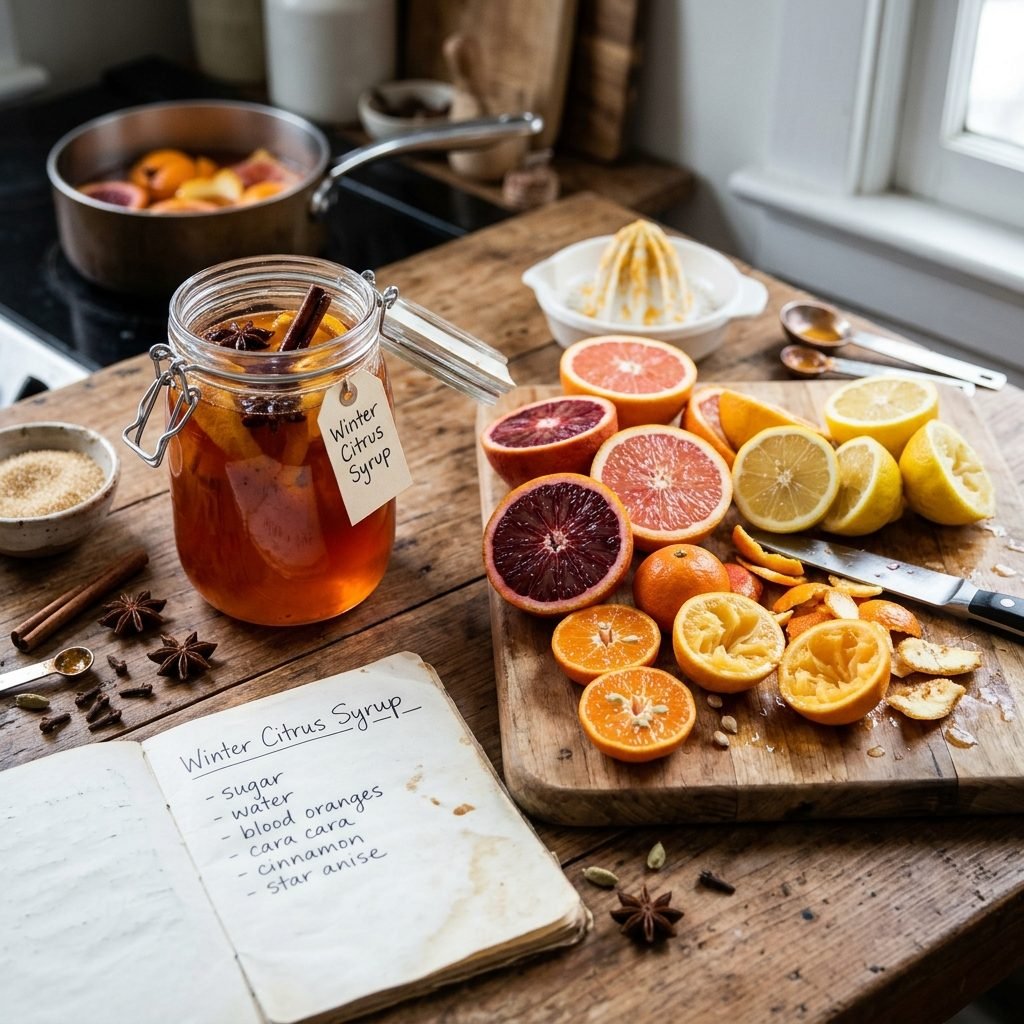
Storing and Freezing Homemade Citrus Syrup
Because this winter citrus syrup recipe uses real fruit juice, the syrup doesn’t keep as long as a plain sugar-and-water simple syrup or a shelf-stable store-bought syrup. Treat it like fresh juice that has been given a longer life by sugar.
- Refrigerator: stored in a clean, tightly sealed glass jar, the syrup keeps well for about 2 weeks. Use a clean spoon or pour from the bottle rather than dipping in with used utensils.
- Freezer: pour the cooled syrup into an ice cube tray, freeze until solid, then move the cubes to a freezer bag. They keep for about 3 months, and one cube is roughly 2 tablespoons, perfect for a single drink. Drop a cube straight into hot tea or thaw it in the fridge.
- Signs it’s past its best: cloudiness that wasn’t there before, fizzing or bubbles, a fermented or sour smell, or any mold on the surface. If you notice any of these, throw it out.
- Canning: this recipe is meant for the fridge. If you want shelf-stable syrup, follow a tested fruit syrup recipe and water bath method from a trusted source such as Penn State Extension, rather than improvising processing times.
Adding a tablespoon of vodka to the cooled syrup is a common bartender trick to extend its fridge life slightly, but it is optional and obviously not suitable if you’re making drinks for kids.
Troubleshooting Your Winter Citrus Syrup
The syrup is bitter. Too much pith went in, or citrus slices simmered too long. Next time, peel more carefully and keep slices out of the long simmer. To rescue a slightly bitter batch, add a tablespoon or two of honey and a squeeze of fresh orange juice.
It’s too thin. Return it to the pan and simmer gently for 3 to 5 more minutes. Remember that it thickens as it cools, so test a few drops on a cold plate before deciding.
It’s too thick or turned sticky. It was reduced too far. Stir in hot water a tablespoon at a time until it loosens.
The syrup is cloudy. Juice pulp and spice particles cause this. It doesn’t affect flavor, but straining through a coffee filter gives a clearer, jewel-like syrup.
Sugar crystals formed in the fridge. Some sugar didn’t dissolve completely, or crystals clung to the side of the pan. Warm the syrup gently until clear. Next time, make sure the sugar is fully dissolved before the mixture simmers.
The spice flavor is too strong. Dilute it with a little fresh orange juice and plain simple syrup, or use it in smaller amounts in bolder drinks like an old fashioned.
Variations to Try
Once you have made the basic winter citrus syrup recipe a couple of times, it is easy to play with the fruit, the sweetener and the spices. These are a few combinations that work especially well.
Honey citrus syrup: replace half of the sugar with mild honey, such as clover or orange blossom. Add the honey off the heat with the lemon juice so its flavor stays fresh. The syrup will be softer and slightly floral.
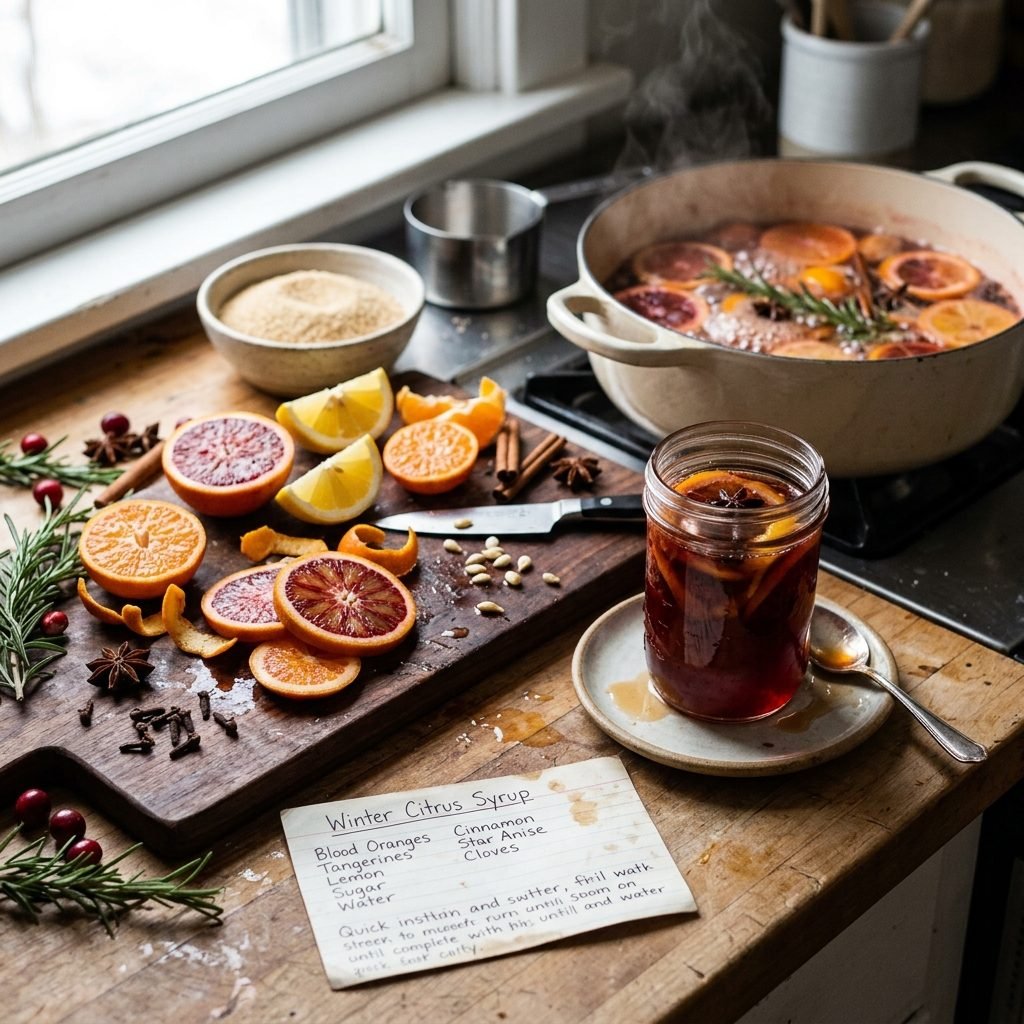
Rosemary and cranberry: add 1/2 cup fresh or frozen cranberries with the orange juice and a sprig of rosemary for the last 10 minutes of steeping. The cranberries deepen the color to garnet and add tartness, which makes this a natural for holiday parties.
Spiced blood orange syrup: use only blood oranges for the juice (about 1 cup) and add 2 cardamom pods. It’s especially striking in sparkling drinks.
Grapefruit and ginger: replace the orange juice with pink grapefruit juice, double the ginger and skip the cloves. This one is sharp and refreshing, great with gin or tonic water.
Kumquat syrup: thinly slice 1 cup of kumquats, remove the seeds, and simmer them with the sugar and water for 10 minutes before adding the other juices. The candied slices can be spooned over yogurt or used as a cocktail garnish.
Lower-sugar version: reduce the sugar to 1/2 cup. The syrup will be thinner and more like a spiced juice concentrate, and it should be used within a week.
Tips for Getting This Winter Citrus Syrup Recipe Right
- Zest before you juice. Once the fruit is cut, peeling neat strips is almost impossible.
- Bring the fruit to room temperature, or roll it firmly on the counter before cutting, to get more juice out of every orange.
- Keep the heat moderate. A gentle simmer protects the fresh, sweet citrus flavor; a hard boil cooks it.
- Add the lemon juice last. Its sharpness fades when cooked, so stirring it in off the heat keeps the syrup lively.
- Taste and adjust after steeping, not before. Spices keep releasing flavor as the syrup sits.
- Make a double batch and freeze half as cubes. It’s the easiest way to have winter citrus flavor well into spring.
- Bottle it for gifts. A small swing-top bottle with a cinnamon stick inside and a handwritten label makes a lovely homemade gift; just tell the recipient to keep it refrigerated.
More Homemade Syrups to Try
If you enjoy having a homemade syrup on hand, there are a few more on Dish Bloom that are worth a spot in the fridge door. This blueberry syrup is made for pancakes and waffles, while the apple crisp syrup brings cinnamon-apple flavor to coffee drinks. For cocktails, the nutty orgeat syrup is a classic, and the tangy strawberry basil shrub is a great way to make fruit drinks with a vinegar kick.
Winter Citrus Syrup FAQ
How long does homemade winter citrus syrup last?
About 2 weeks in the refrigerator in a clean, sealed glass jar, and about 3 months frozen as cubes. Because it contains fresh juice, it doesn’t last as long as plain simple syrup.
Can I use bottled orange juice?
You can, but fresh juice makes a big difference here. Bottled juice tastes more cooked and less aromatic, and it can’t give you the zest, which is the main source of flavor. If you must use bottled juice, still add fresh zest from at least one orange and one lemon.
Do I have to use blood oranges?
No. Blood oranges add a deep red color and a berry-like note, but navel oranges, Cara Caras, tangerines or mandarins all make a delicious syrup. Your syrup will simply be golden-orange instead of ruby.
Can I make this syrup sugar-free?
Granulated allulose or a monk fruit blend designed to replace sugar 1:1 can be used, but the texture will be thinner and the shelf life shorter, about one week in the fridge. Sugar plays a role in both thickness and keeping quality.
What is the difference between citrus syrup and marmalade?
Marmalade is cooked much longer, with the peel included, until it sets thanks to the fruit’s natural pectin. Citrus syrup is cooked briefly and strained, so it stays pourable and has a fresher, juicier flavor.
Can I leave the spices out?
Yes. Without the cinnamon, star anise and cloves, you’ll have a bright, everyday citrus simple syrup that works in summer drinks too. The spices are what make it taste like winter.
What can I do with the leftover peels and spices?
The strained zest strips are soft and sweet, so you can chop them and stir them into muffin or scone batter. The cinnamon stick and star anise can go into the bottle as decoration or into a pot of mulled cider.
Winter Citrus Syrup Recipe Card
Below is the full printable winter citrus syrup recipe with exact amounts, timings and notes. Make a batch on a quiet weekend afternoon, and you’ll have a jar of bright, spiced citrus flavor ready for every drink and breakfast for the next couple of weeks.

Winter Citrus Syrup
Equipment
- Small saucepan
- Vegetable peeler
- Citrus juicer
- Fine-mesh sieve
- Glass jar or swing-top bottle 16 to 20 oz
Ingredients
Syrup base
- 1 cup granulated sugar 200 g
- 1 cup water 240 ml, filtered if possible
- 1 pinch fine salt
Citrus
- 1/2 cup fresh orange juice from about 2 navel or Cara Cara oranges
- 1/2 cup fresh blood orange juice from 2 to 3 blood oranges, or more orange or tangerine juice
- 1/4 cup fresh lemon juice from about 2 lemons or Meyer lemons
- 5 strips orange zest wide strips, removed with a vegetable peeler, little white pith
- 3 strips lemon zest wide strips
Whole spices
- 1 cinnamon stick
- 2 star anise pods
- 4 whole cloves optional; use 2 for a milder syrup
- 3 thin slices fresh ginger optional
Instructions
Prep the citrus
- Scrub the fruit. Use a vegetable peeler to remove wide strips of zest from 1 orange and 1 lemon, pressing lightly to avoid the bitter white pith.
- Juice the oranges, blood oranges and lemons separately and strain out the seeds. Measure 1/2 cup orange juice, 1/2 cup blood orange juice and 1/4 cup lemon juice.
Cook the syrup
- In a small saucepan over medium heat, stir the sugar, water and salt until the sugar fully dissolves and the liquid is clear, about 3 minutes.
- Add the zest strips, cinnamon stick, star anise, cloves and ginger. Bring to a gentle simmer and cook for 5 minutes.
- Pour in the orange and blood orange juice. Keep at a bare simmer for 5 to 7 minutes, until the syrup lightly coats the back of a spoon. Do not boil hard.
Steep, strain and store
- Remove from the heat, stir in the lemon juice, cover and steep for 20 minutes (up to 45 minutes for a stronger spice flavor).
- Strain through a fine-mesh sieve (line it with a coffee filter for a clearer syrup) into a heatproof jug. Do not press on the solids.
- Cool to room temperature, pour into a clean glass jar or bottle, seal and refrigerate. The syrup thickens slightly as it chills.