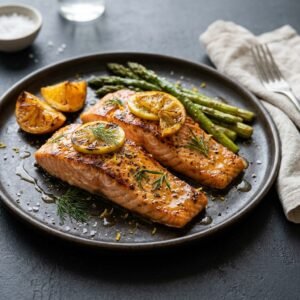
Three kinds of citrus, a spoonful of honey and one hot oven are all it takes to make this citrus salmon recipe taste like far more work than it is. Orange, lemon and lime juice simmer down into a sticky glaze, the fillets roast until just tender, and a quick turn under the broiler gives the citrus slices on top their browned, jammy edges. Dinner is ready in about 30 minutes.
Here is the plan: reduce the juices with honey, Dijon and garlic for 5 to 7 minutes, brush the glaze over seasoned salmon, roast at 400°F for 11 to 13 minutes, then broil for a minute or two until the thickest part reaches 145°F.
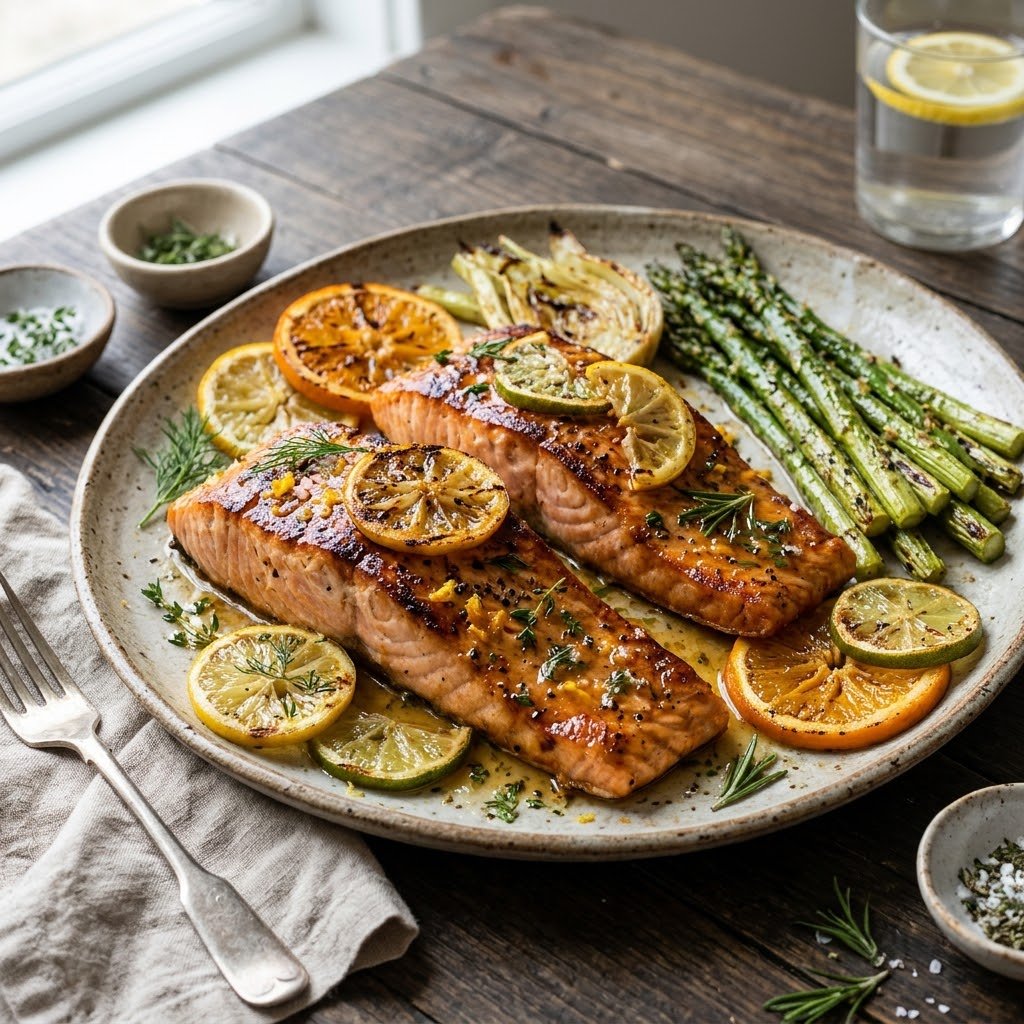
Why This Citrus Salmon Recipe Uses a Glaze, Not a Marinade
Plenty of recipes soak salmon in citrus juice before cooking, but acid and delicate fish are a risky pairing. Acid changes the structure of the proteins, which is how ceviche firms up without heat, and a long soak can leave the surface mushy. Chowhound advises keeping acidic salmon marinades to 20 or 30 minutes at most.
A reduced glaze avoids that problem altogether and brings a few other advantages:
- More flavor from the same juice. Simmering drives off water, so the citrus tastes bolder and sweeter.
- It clings. Thin juice runs off the fish and onto the pan. A syrupy glaze stays where you brush it.
- Better browning. The honey caramelizes in the oven and gives the salmon a glossy, amber top.
- No waiting. The glaze is ready in the time it takes the oven to heat.
Citrus Salmon Ingredients and What Each One Does
The full measurements for this citrus salmon recipe are in the recipe card below. This is what each ingredient adds, along with the simplest swap if you are missing one.
| Ingredient | Why it is there | Easy swap |
|---|---|---|
| Salmon fillets | Rich fish that stands up to bright citrus | Steelhead trout or arctic char |
| Orange juice and zest | Sweet base of the glaze | Tangerine or clementine |
| Lemon juice | Clean, sharp acidity | Meyer lemon, for a softer flavor |
| Lime juice | A floral top note | More lemon |
| Honey | Balances the acid and helps browning | Maple syrup |
| Dijon mustard | Savory depth; helps the glaze hold together | Whole-grain mustard |
| Garlic | Keeps the glaze from tasting like dessert | 1/2 teaspoon garlic powder |
| Butter | Rounds the sauce and adds shine | Extra-virgin olive oil |
Buying the salmon: ask for center-cut fillets of similar size, about 1 inch thick, so they finish at the same time. Skin-on fillets are a little more forgiving because the skin protects the bottom from direct heat, but skinless fillets work well too. Frozen salmon is fine; thaw it overnight in the refrigerator and pat it very dry before seasoning.
How to Make Citrus Salmon Step by Step
1. Prep the pan and the fish
Heat the oven to 400°F (200°C). Line a rimmed baking sheet with lightly oiled foil rather than parchment, since the pan goes under the broiler at the end. Pat the salmon dry with paper towels, rub it with olive oil, and season both sides with salt and pepper.
2. Simmer the citrus glaze
Zest the orange before you juice it. Combine the juices, zest, honey, Dijon and garlic in a small skillet and simmer over medium heat for 5 to 7 minutes, stirring often. You want about 1/4 cup of glaze that coats the back of a spoon. Take it off the heat and whisk in the butter. It thickens a little more as it cools.
Pour half into a small bowl and set it aside for serving. That portion never touches the brush used on raw fish.
3. Glaze and top the salmon
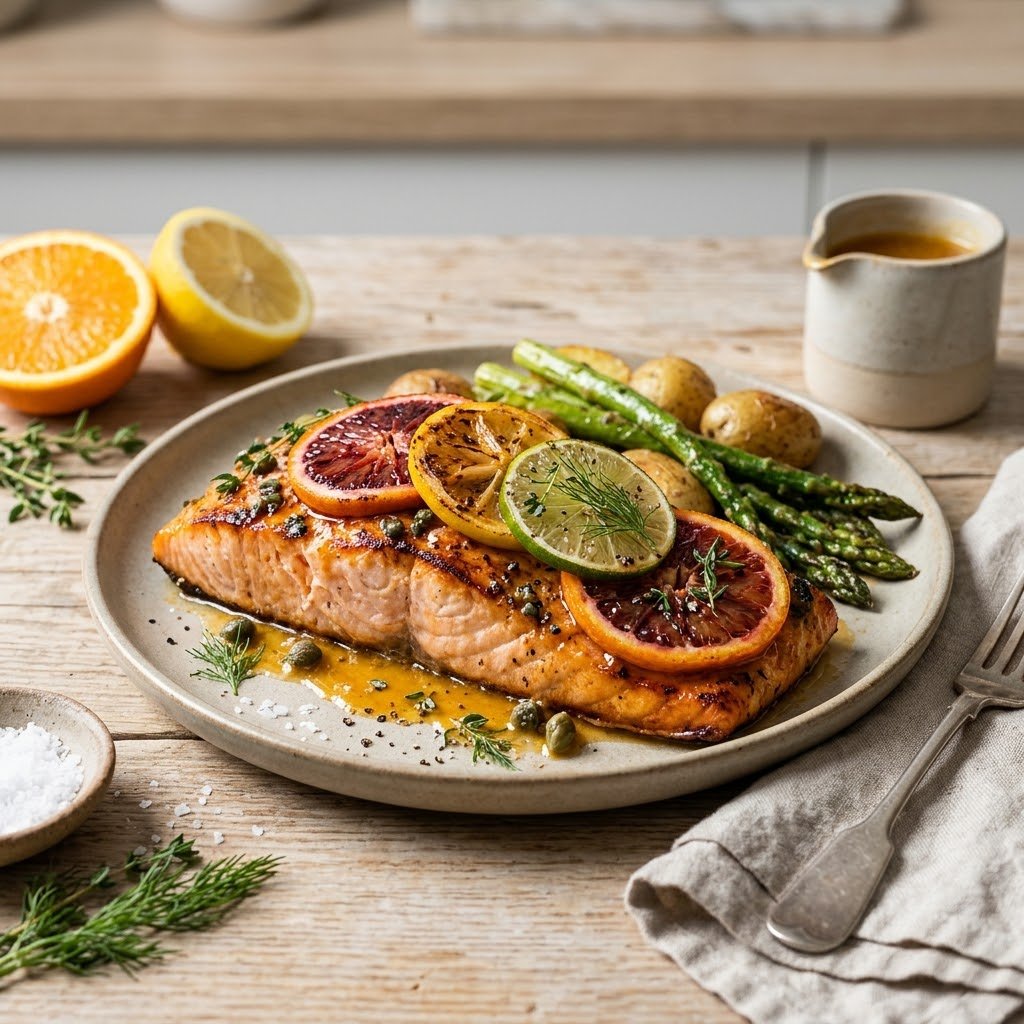
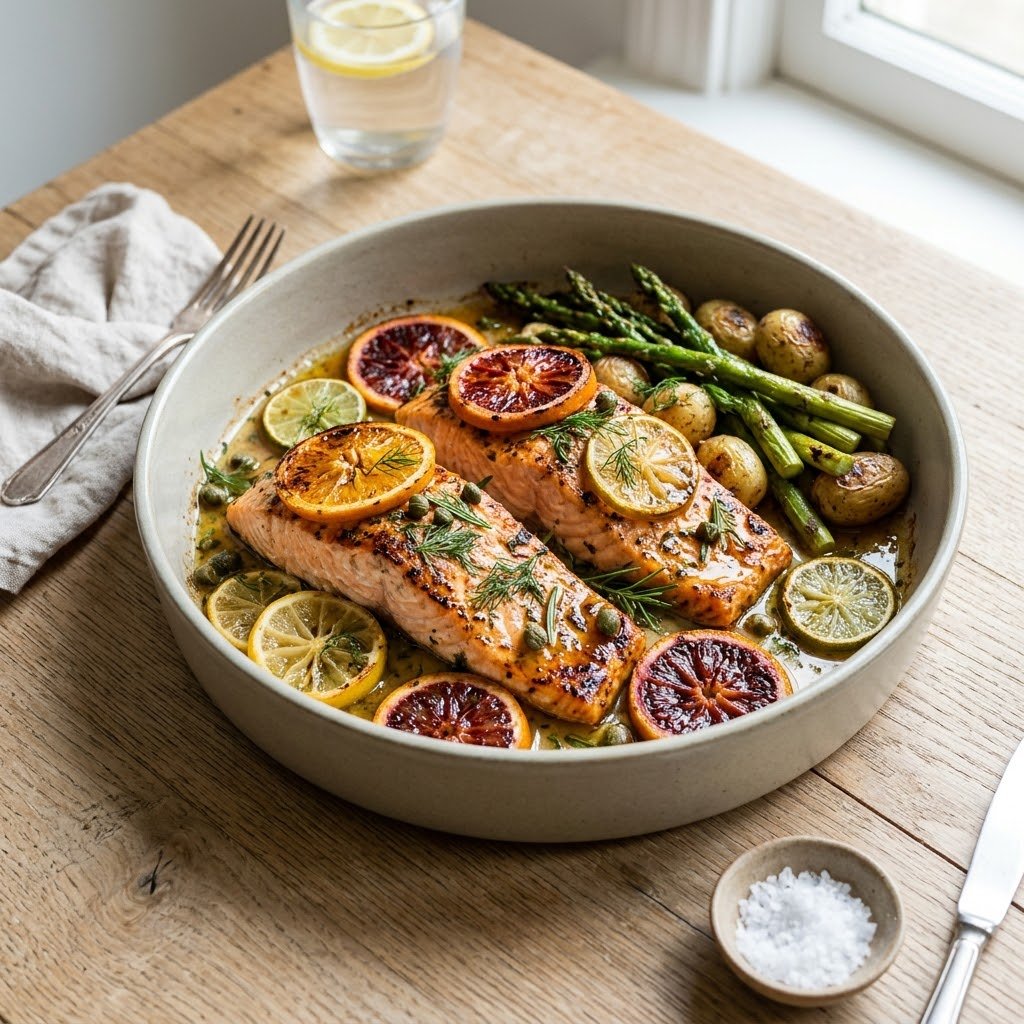
Set the fillets on the pan with space between them. Brush on the remaining glaze, then layer very thin slices of orange and lemon over the top. Thin slices soften and brown in the short cooking time, while thick ones stay chewy and can taste bitter.
4. Roast, then broil
Roast for 11 to 13 minutes. Switch the oven to broil and cook for 1 to 2 minutes more, staying close by, because honey can go from golden to burnt very quickly.
5. Rest and finish
Give the fish 3 minutes on the pan. Spoon over the reserved glaze, scatter with chopped dill, and serve while the citrus is still warm.
How to Tell When Salmon Is Done
Fillet thickness matters more than the clock, so an instant-read thermometer is the most reliable tool here. Slide it into the side of the thickest part of the fillet. FoodSafety.gov lists 145°F (63°C) as the safe minimum for fish, or cooking until the flesh is no longer see-through and pulls apart easily with a fork.
| Internal temperature | What it looks like | Good to know |
|---|---|---|
| 125 to 135°F | Silky, slightly translucent center | Below the federal safe minimum |
| 140°F | Mostly opaque and moist | Almost there; a little more time is needed |
| 145°F | Opaque and flakes easily | Recommended target for this recipe |
| Above 150°F | Firm, with white albumin on the surface | Starting to dry out |
Some cooks prefer to stop short of 145°F for a softer center. If you are cooking for anyone who is pregnant, very young, older or has a weakened immune system, stay with the full 145°F.
Other Ways to Cook This Citrus Salmon
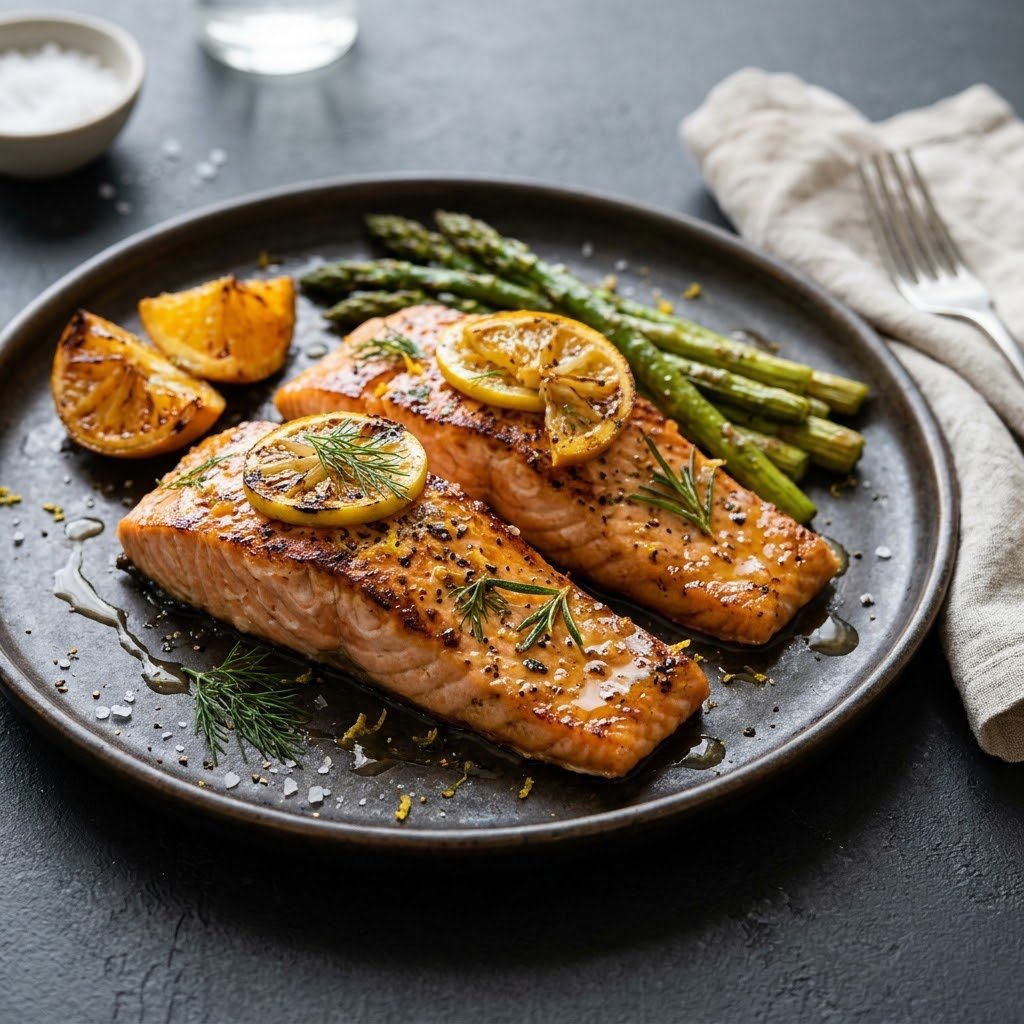
The glaze works with almost any method. Because it contains honey, add it near the end whenever the fish is close to direct, high heat.
| Method | Temperature | Approximate time | Tip |
|---|---|---|---|
| Oven (this recipe) | 400°F | 12 to 15 minutes | Broil briefly for color |
| Slow roasted | 300°F | 25 to 30 minutes | Very gentle and forgiving; skip the broiler if you like |
| Air fryer | 390°F | 7 to 10 minutes | Brush with glaze during the final 2 minutes |
| Skillet | Medium-high | 6 to 8 minutes | Sear first, then spoon glaze over at the end |
| Grill | Medium-high | 6 to 8 minutes | Oil the grates and glaze in the last 2 minutes |
Times assume fillets about 1 inch thick. Whatever the method, check the temperature before serving. If you enjoy the air fryer route, this hot honey air fryer salmon is another fast option.
Best Citrus Swaps for Salmon
Any mix of citrus can work as long as you keep the total juice close to 1/2 cup and taste the glaze before brushing it on.
- Blood orange: deep red slices and a berry-like sweetness, at their best in winter.
- Cara Cara orange: low acidity and a gentle, sweet flavor.
- Meyer lemon: softer and more floral than a regular lemon, so you can use a little less honey.
- Grapefruit: pleasantly bitter. Use it for part of the orange juice and add an extra teaspoon of honey.
- Tangerine or clementine: very sweet, so keep the lemon and lime for balance.
Have extra fruit left over? A batch of winter citrus syrup is a good way to use it.
Citrus Salmon Recipe Variations
The basic glaze is easy to adapt once you know how it should taste. Add any of these to the skillet along with the juices unless noted:
- Spicy: stir in 1/4 teaspoon crushed red pepper, or swap the honey for hot honey.
- Soy and ginger: add 1 tablespoon low-sodium soy sauce and 1 teaspoon grated fresh ginger, then reduce the salt on the fish to 1/2 teaspoon.
- Herby: replace the dill with parsley, thyme or chives. Cilantro is especially good if you increase the lime.
- Briny: scatter 1 tablespoon of drained capers over the fish just before serving.
- Dairy-free: finish the glaze with olive oil instead of butter.
Common Citrus Salmon Mistakes to Avoid
- Skipping the reduction. Raw juice slides off and steams the fish instead of glazing it.
- Using bottled juice alone. Fresh juice and zest supply most of the flavor in this dish.
- Leaving the salmon wet. Surface moisture keeps the glaze from sticking and slows browning.
- Slicing the citrus too thick. Aim for slices you can almost see through, and remove the seeds.
- Walking away from the broiler. Sugar burns fast, and one or two minutes is plenty.
- Crowding the pan. Leave room around each fillet so hot air can circulate.
What to Serve With Citrus Salmon
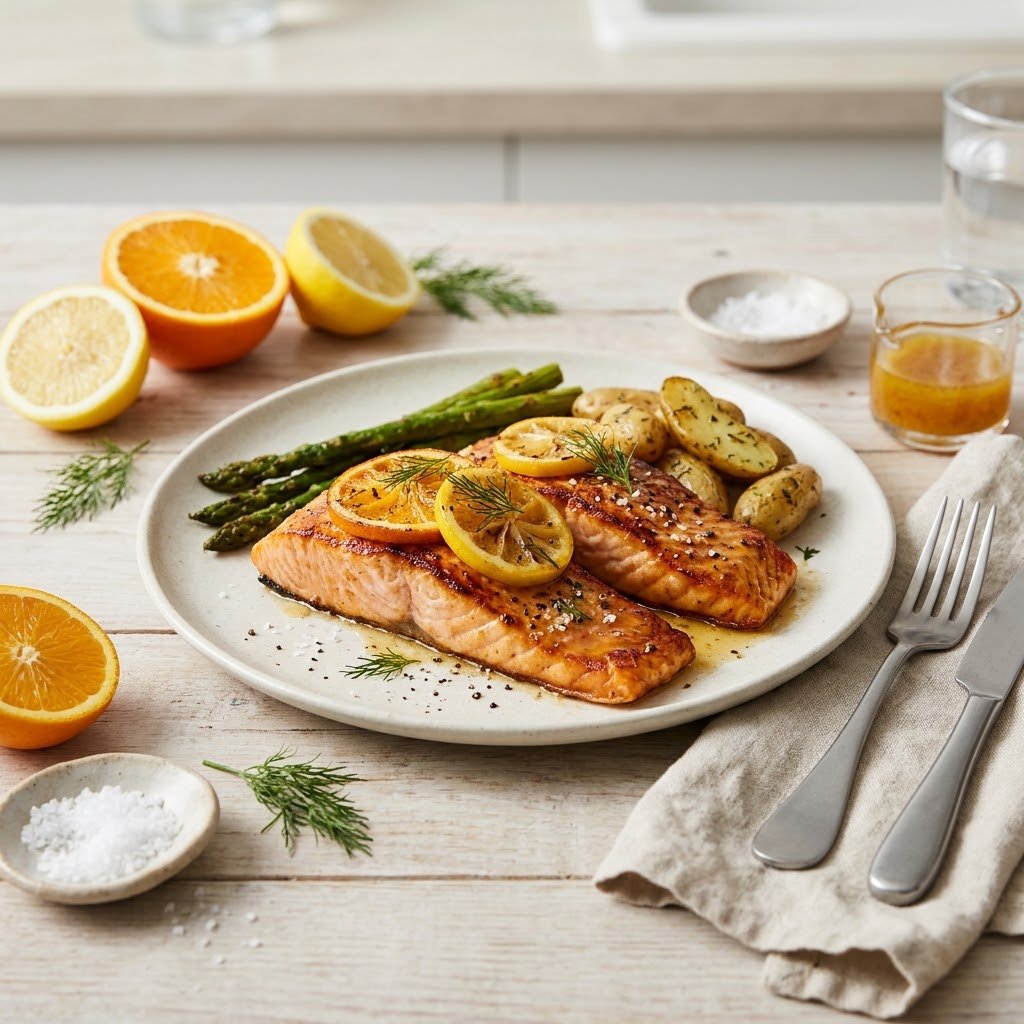
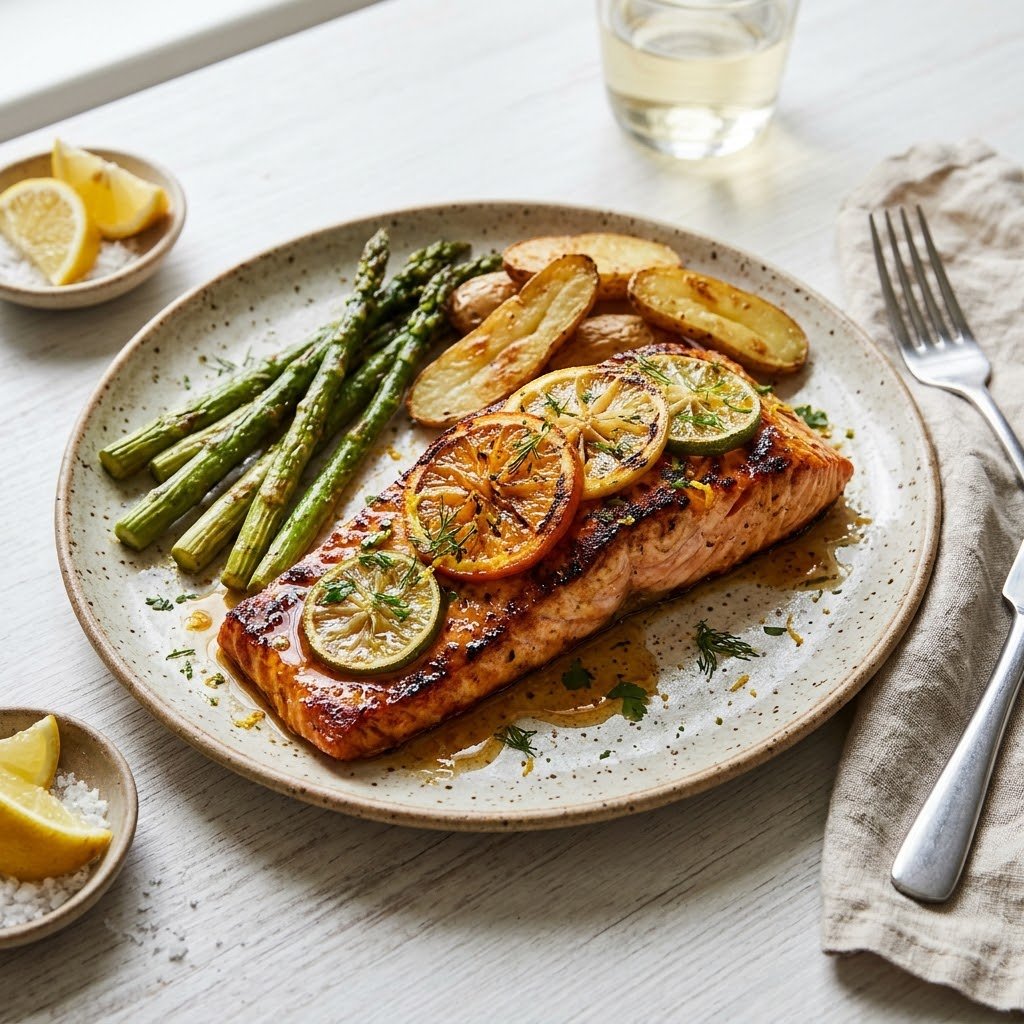
Asparagus and baby potatoes are a natural match, and both can share the oven. Toss halved baby potatoes with oil and salt and roast them at 400°F for about 20 minutes. Push them to one side, add oiled asparagus and the glazed salmon, and continue with the recipe. You will have a complete sheet pan dinner with only one extra step.
Other easy sides include:
- Crisp air fryer rosemary potatoes
- A hearty kale salad to balance the rich fish
- Fluffy rice, quinoa or couscous to catch the extra glaze
- Roasted fennel, green beans or broccoli
Looking for more salmon ideas? Try this kokanee salmon or crispy salmon kama next.
Scaling This Citrus Salmon Recipe for a Crowd
Serving guests? Use one whole side of salmon, about 2 to 2 1/2 pounds, in place of the individual fillets and double the glaze. Roast it at 300°F for 25 to 35 minutes, depending on thickness, until the thickest part reaches 145°F. The lower temperature gives you a wider window for getting everything else to the table, and the large fillet looks impressive on a platter surrounded by extra citrus and herbs.
You can get a head start by making the glaze and slicing the citrus earlier in the day. Keep both covered in the refrigerator, then warm the glaze briefly before brushing it over the fish.
Storing and Reheating Leftovers
Refrigerate cooled salmon in an airtight container and use it within 3 to 4 days. Keep any extra glaze in a separate jar. To reheat, cover the fish loosely with foil and warm it in a 275°F oven until heated through, which helps prevent it from drying out. Leftovers are also delicious cold, flaked over a salad or tucked into a grain bowl.
For longer storage, wrap the cooked fillets well and freeze them for up to 2 months. Thaw overnight in the refrigerator. The citrus slices are best removed before freezing.
Citrus Salmon Recipe FAQ
Can I make the citrus glaze ahead of time?
Yes. Refrigerate it in a sealed jar for up to 3 days. It will thicken when cold, so warm it gently with a teaspoon of water before brushing it on.
Can I use bottled citrus juice?
In a pinch, yes, but the flavor will be flatter. If you use bottled juice, try to include fresh orange zest to bring back some of the aroma.
Why does my glaze taste bitter?
Bitterness usually comes from white pith in the zest or from scorched garlic and honey. Zest only the colored outer layer and keep the heat at a moderate simmer. A small extra drizzle of honey can help balance it.
Can you eat the citrus slices on the salmon?
Yes, if they are thin and the fruit has been washed well. The rind softens as it roasts but keeps a slight bitterness, so some people prefer to eat only the flesh.
Should salmon be covered when baking?
No. Leaving it uncovered lets the glaze thicken and brown. Foil is only useful for keeping leftovers moist when reheating.
Is citrus salmon healthy?
Salmon is a good source of protein and omega-3 fats, and this recipe adds plenty of flavor with a modest amount of butter. The glaze does contain honey, so the serving of sauce is worth keeping in mind if you are watching added sugars.
A Bright Dinner for Any Night
Once you have made this citrus salmon recipe, the method is easy to remember: reduce the juice, glaze the fish, roast, and finish with a quick broil. Change the citrus with the seasons, pick a simple side, and you have a dinner that feels special without taking over your evening.
Citrus Salmon
Equipment
- Rimmed baking sheet
- Aluminum foil
- Small skillet or saucepan
- Pastry brush
- Instant-read thermometer
Ingredients
Salmon
- 4 salmon fillets 6 oz (170 g) each, about 1 inch thick, skin on or off
- 1 tablespoon olive oil
- 3/4 teaspoon kosher salt
- 1/2 teaspoon black pepper freshly ground
Citrus glaze
- 1/3 cup fresh orange juice 80 ml, from about 1 large orange
- 2 tablespoons fresh lemon juice from about 1 lemon
- 1 tablespoon fresh lime juice from about 1/2 lime
- 1 teaspoon orange zest zest before juicing
- 2 tablespoons honey
- 1 tablespoon Dijon mustard
- 2 cloves garlic minced
- 1 tablespoon unsalted butter
To finish
- 1 small orange very thinly sliced, seeds removed
- 1 small lemon very thinly sliced, seeds removed
- 1 tablespoon fresh dill chopped
Instructions
- Heat the oven to 400°F (200°C) and line a rimmed baking sheet with lightly oiled foil. Pat the salmon very dry, rub with the olive oil, and season with the salt and pepper.
- Combine the orange juice, lemon juice, lime juice, orange zest, honey, Dijon and garlic in a small skillet. Simmer over medium heat for 5 to 7 minutes, stirring often, until reduced to about 1/4 cup and syrupy. Remove from the heat, whisk in the butter, and pour half into a small bowl for serving.
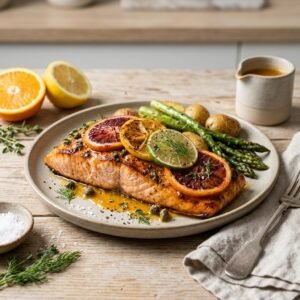
- Place the salmon on the baking sheet, skin side down if it has skin. Brush with the glaze left in the skillet and arrange the citrus slices on top.
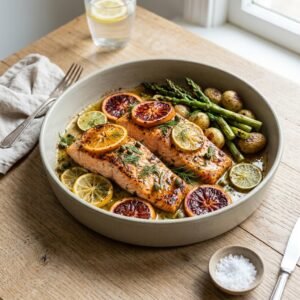
- Roast for 11 to 13 minutes. Switch to the broiler for 1 to 2 minutes, watching closely, until the citrus edges brown and the salmon reaches 145°F (63°C) in the thickest part and flakes easily with a fork.
- Rest the salmon for 3 minutes. Spoon the reserved glaze over the top, sprinkle with dill, and serve.