
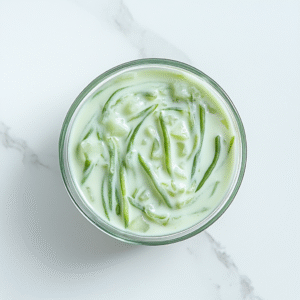
Bánh lọt are the soft, bright-green, wiggly little strands you find floating in Vietnamese sweet soups and iced drinks. They are made from a simple batter of rice flour, tapioca starch and pandan juice, cooked on the stove until thick and glossy, then pressed through a colander into ice water. This banh lot recipe walks you through every step, along with the rich coconut sauce and dark palm sugar syrup that turn them into a refreshing dessert.
If you have tried cendol in Malaysia or Singapore, or lod chong in Thailand, you already know the idea. Bánh lọt is the Vietnamese version, and it is easier to make at home than it looks. The only special tool you need is something with holes to push the dough through.
- What Is Bánh Lọt?
- Why You Will Love This Banh Lot Recipe
- Ingredients for Bánh Lọt
- Equipment You Will Need
- How to Make This Banh Lot Recipe Step by Step
- Tips for the Best Banh Lot Recipe Results
- Common Mistakes and How to Fix Them
- Ways to Serve Bánh Lọt
- Storing Bánh Lọt
- Bánh Lọt vs. Cendol vs. Bánh Bột Lọc
- Banh Lot Recipe FAQs
- Final Thoughts
What Is Bánh Lọt?
Bánh lọt (sometimes called bánh lọt lá dứa, “pandan” bánh lọt) belongs to the same family of Southeast Asian desserts as cendol. The name roughly describes how it is made: the cooked dough is pushed or “strained” through holes, which shapes it into short, tapered strands that look a little like green noodles or worms.
In Vietnam, bánh lọt is a common topping in chè, the broad category of sweet soups and drinks. It shows up in chè ba màu (three-color dessert) alongside mung beans and red beans, and on its own in a glass with crushed ice, coconut cream and syrup. The strands themselves taste mild and grassy-sweet from the pandan, with a soft, slippery chew. The flavor really comes from what you pour over them.

Why You Will Love This Banh Lot Recipe
- Naturally colored. Fresh pandan juice gives the strands their green color and gentle vanilla-like aroma, no food coloring required.
- Pleasantly chewy, not gummy. A blend of rice flour and tapioca starch gives a soft bite that still holds its shape.
- Quick and inexpensive. The strands are ready in about 30 minutes from a few pantry starches.
- Dairy-free and gluten-free. Everything here is plant-based, and none of the flours contain wheat.
- Perfect for hot days. Served over ice with coconut sauce, it is as much a drink as a dessert.
Ingredients for Bánh Lọt
Exact amounts are in the recipe card below. Here is what each ingredient brings:
For the green strands
- Rice flour: Regular (not glutinous) rice flour forms the body of the strands. Thai brands with a red label are widely available in Asian markets. Glutinous or sweet rice flour makes the dough too sticky to press.
- Tapioca starch: Adds chew and that slightly translucent look.
- Mung bean starch (optional): Traditional in many Vietnamese versions for extra bounce and clarity. If you can not find it, replace it with more tapioca starch.
- Pandan juice: Made by blending fresh or frozen pandan leaves with water and straining. If you can not get leaves, use water plus a little pandan extract.
- Salt: Just a pinch, to keep the flavor from tasting flat.
For serving
- Coconut milk: Full-fat canned coconut milk, simmered with sugar, a pinch of salt and a little tapioca starch until lightly thickened.
- Palm sugar or dark brown sugar: Melted with water into a caramel-like syrup.
- Crushed ice: Essential if you are serving it as an iced dessert drink.
- Optional toppings: Cooked split mung beans, sweet red beans, toasted sesame seeds or shredded coconut.
Getting the most out of pandan
Fresh pandan leaves can be hard to find outside Asian grocery stores, but frozen ones are common and work just as well. Look in the freezer section for bags of long, flat green leaves. Fresh or frozen, leaves give a much more natural flavor than extract, which can taste slightly artificial in large amounts.
For the most color, cut the leaves into short pieces before blending and squeeze the pulp hard. Pandan juice settles as it stands: the dark green sediment at the bottom carries most of the color, so stir the juice well right before whisking it into the flours. You can make the juice a day ahead and keep it in the refrigerator. Some cooks use a mix of fresh juice and a few drops of extract when they want a deeper green for serving to guests.
Palm sugar is the other ingredient worth seeking out. It comes in hard discs or soft paste in jars and has a deeper, almost smoky caramel flavor than white sugar. Dark brown sugar is the easiest substitute.
Equipment You Will Need
- A blender and a fine-mesh strainer or cheesecloth for the pandan juice
- A heavy nonstick saucepan
- A sturdy silicone spatula
- Something with holes about 1/4 inch (6 mm) wide: a cendol press, a metal colander with large holes, a potato ricer or a perforated spoon
- A large bowl of ice water
How to Make This Banh Lot Recipe Step by Step
1. Make the pandan juice
Rinse about 10 pandan leaves, cut them into short pieces and blend with the water until finely chopped. Squeeze the pulp through a fine strainer or cheesecloth to get a bright green juice. You need about 2 1/2 cups (600 ml); top it up with water if needed.
2. Mix the batter
In the saucepan, whisk the rice flour, tapioca starch, mung bean starch and salt. Slowly pour in the pandan juice, whisking until completely smooth with no lumps. The batter will be very thin, like milk. That is correct.
3. Cook until thick and glossy
Set the pan over medium-low heat and stir constantly with the spatula, scraping the bottom and corners. After 5 to 8 minutes the batter will suddenly start to thicken in patches. Keep stirring hard so it cooks evenly. It is ready when it turns into a thick, smooth, slightly translucent dough that pulls away from the sides of the pan, usually 10 to 12 minutes total. Undercooked dough will taste starchy and fall apart in the water.
4. Press the strands into ice water
Set your colander or press directly over the bowl of ice water. Working quickly while the dough is still hot and soft, scoop a few spoonfuls into the colander and push them through the holes with the spatula or the back of a spoon. Short strands will drop into the cold water and firm up instantly. Repeat with the remaining dough. If it becomes too stiff to press, return it to low heat with a splash of water for a minute.

5. Rest and drain
Let the strands sit in the ice water for about 10 minutes so they set completely, then drain them in a strainer.
6. Make the coconut sauce and syrup
For the sauce, warm the coconut milk with sugar and salt over medium heat. Stir in the tapioca starch mixed with a little water and simmer for a minute until it coats a spoon. For the syrup, melt the palm sugar with water in a small pan and simmer for 3 to 4 minutes until slightly thickened. Let both cool.
7. Assemble and serve
Spoon a generous amount of bánh lọt into each glass or bowl, add palm sugar syrup, pile on crushed ice and finish with coconut sauce. Stir everything together just before eating.

Tips for the Best Banh Lot Recipe Results
- Use regular rice flour. This is the most common mistake. Glutinous rice flour turns into a sticky paste that will not press into strands.
- Never stop stirring. Starch batters go from liquid to lumpy fast. Constant stirring gives a smooth dough.
- Press while hot. The dough stiffens as it cools, so work in batches and keep the pan on very low heat between batches if needed.
- Make the ice water really cold. The shock of cold water sets the shape. Add more ice as it melts.
- Adjust the texture next time. For a softer strand, add a few extra tablespoons of pandan juice. For a firmer one, add a tablespoon more tapioca starch.
Common Mistakes and How to Fix Them
| Problem | Likely cause | Fix |
|---|---|---|
| Strands dissolve or break apart in the water | Dough was undercooked | Cook until thick, glossy and pulling from the pan before pressing |
| Dough is too stiff to press | Overcooked or cooled down | Warm with a splash of water over low heat |
| Strands are pale green | Too little pandan or diluted juice | Use more leaves, or add a few drops of pandan extract |
| Texture is gummy | Glutinous rice flour used | Switch to regular rice flour |
| Lumps in the dough | Batter not whisked or stirred enough | Whisk well before heating and stir constantly |

Ways to Serve Bánh Lọt
Chè bánh lọt (iced coconut dessert)
The classic way: bánh lọt, palm sugar syrup, crushed ice and coconut sauce in a tall glass. Simple and very refreshing.
Chè ba màu (three-color dessert)
Layer sweet red beans, a mung bean paste and bánh lọt in a glass, then top with ice and coconut sauce. Each layer adds its own color and texture.
With fruit
Add diced jackfruit, ripe mango or cubed young coconut for a fruitier version.
As a drink topping
Spoon the strands into iced coffee, Thai-style milk tea or a coconut smoothie, the same way you might use boba.

Looking for more sweets with a twist? Try these no-bake honey joys, a silky butterscotch crème brûlée, or, for something savory from the same part of the world, our beef enoki rolls.
Storing Bánh Lọt
- Strands: Bánh lọt is best eaten the same day. Store leftovers covered in water or a little of the syrup in the refrigerator for up to 1 to 2 days. They firm up when cold; let them sit at room temperature for a few minutes before serving.
- Coconut sauce: Keeps in a sealed jar in the refrigerator for 2 to 3 days. Stir or warm briefly if it separates.
- Palm sugar syrup: Keeps for 2 weeks refrigerated.
- Freezing: Not recommended. The starches turn hard and crumbly after thawing.
Bánh Lọt vs. Cendol vs. Bánh Bột Lọc
These names get mixed up online. Cendol and Thai lod chong are close cousins of bánh lọt, made the same way with slightly different flours and usually served with coconut milk and palm sugar. Bánh bột lọc, on the other hand, is a completely different dish: a savory, translucent tapioca dumpling filled with shrimp and pork, from central Vietnam. If you are looking for the green pandan strands in sweet desserts, this banh lot recipe is the one you want.
Banh Lot Recipe FAQs
What does bánh lọt taste like?
The strands are soft, chewy and lightly sweet, with a fresh, grassy aroma from pandan. Most of the sweetness and richness comes from the palm sugar syrup and coconut sauce.
Can I make bánh lọt without pandan leaves?
Yes. Use plain water mixed with 1/2 to 1 teaspoon of pandan extract. The color comes from the extract, so add more for a deeper green.
Can I use glutinous rice flour?
No. Glutinous (sweet) rice flour makes a sticky dough that will not press into clean strands. Use regular rice flour.
What can I use instead of a cendol press?
A colander with large holes, a potato ricer or a perforated slotted spoon all work. The holes should be about 1/4 inch wide.
Is bánh lọt gluten-free and vegan?
Yes. Rice flour, tapioca starch, mung bean starch, pandan, coconut milk and palm sugar are all naturally gluten-free and plant-based. Check labels if you have a severe allergy.
Why did my strands fall apart?
The dough was most likely not cooked long enough. It needs to be thick, smooth and slightly translucent before you press it.
How long does bánh lọt last?
It is best on the day you make it, but it keeps 1 to 2 days in the refrigerator stored in water or syrup.
Final Thoughts
Once you have made bánh lọt at home, it becomes an easy dessert to pull together whenever you have pandan on hand. The key steps are simple: cook the batter until glossy, press it while hot and let ice water do the rest. If you try this banh lot recipe or serve it a different way, let us know in the comments below.

Bánh Lọt (Vietnamese Pandan Cendol) with Coconut Sauce
Equipment
- Blender
- Fine mesh strainer or cheesecloth
- Heavy nonstick saucepan
- Silicone spatula
- Cendol press or colander with 1/4-inch holes
- Large bowl of ice water
Ingredients
Bánh lọt strands
- 3/4 cup rice flour 100 g, regular (not glutinous)
- 3 tbsp tapioca starch 25 g
- 2 tbsp mung bean starch 20 g, or more tapioca starch
- 2 1/2 cups pandan juice 600 ml, from about 10 pandan leaves blended with water and strained
- 1/4 tsp salt
Coconut sauce
- 1 cup full-fat coconut milk 240 ml
- 2 tbsp sugar
- 1 pinch salt
- 1 tsp tapioca starch mixed with 1 tbsp water
Palm sugar syrup
- 1/2 cup palm sugar or dark brown sugar
- 1/4 cup water
To serve
- 2 cups crushed ice
- cooked mung beans or toasted sesame seeds optional
Instructions
Make the strands
- Make pandan juice: Blend chopped pandan leaves with water, then squeeze through a fine strainer or cheesecloth. Measure 2 1/2 cups (600 ml) of juice.
- Mix the batter: In a nonstick saucepan, whisk the rice flour, tapioca starch, mung bean starch and salt. Gradually whisk in the pandan juice until completely smooth.
- Cook the dough: Cook over medium-low heat, stirring constantly and scraping the bottom, for 10–12 minutes, until the batter becomes a thick, glossy, slightly translucent dough that pulls away from the pan.
- Press into ice water: Set a cendol press or large-holed colander over a big bowl of ice water. While the dough is hot, push it through the holes in batches so short strands drop into the water.

- Set and drain: Leave the strands in the ice water for 10 minutes, then drain.
Sauce, syrup and serving
- Coconut sauce: Warm the coconut milk, sugar and salt over medium heat. Stir in the tapioca slurry and simmer 1 minute until lightly thickened. Cool.
- Palm sugar syrup: Simmer the palm sugar and water for 3–4 minutes until syrupy. Cool.
- Assemble: Divide the bánh lọt among glasses or bowls. Add syrup, top with crushed ice and pour over the coconut sauce. Stir before eating.
Notes
- Use regular rice flour. Glutinous (sweet) rice flour will not press into strands.
- No pandan leaves? Use 2 1/2 cups water plus 1/2–1 tsp pandan extract.
- Dough too stiff to press? Warm it over low heat with a splash of water.
- Strands breaking apart? The dough was undercooked; cook until thick and glossy next time.
- Storage: Best the same day. Keep strands in water or syrup in the fridge up to 1–2 days; coconut sauce up to 3 days. Do not freeze.
- Calories are an estimate and depend on how much syrup and sauce you use.