
Atlantic wolffish is one of those fish most shoppers walk right past. The name sounds fierce and the face looks even fiercer, but under all that is thick, bright-white flesh with a mild, slightly sweet flavor that many people compare to monkfish or even lobster. This Atlantic wolffish recipe keeps the method simple: the fillets get a hard sear in a hot skillet, then a quick lemon garlic butter sauce comes together in the same pan. Dinner for two lands on the table in about 25 minutes.
Below you will find what wolffish actually is, how to buy it, the small details that make the sear work, easy swaps if your fish counter does not carry it, and side dishes that suit it. If you already know your way around a fish fillet, the full recipe card with measurements is at the bottom of the page.
- What Is Atlantic Wolffish?
- Why This Atlantic Wolffish Recipe Works
- Ingredients for Atlantic Wolffish
- How to Make This Atlantic Wolffish Recipe Step by Step
- Tips for the Best Atlantic Wolffish Recipe Results
- Common Mistakes to Avoid
- Substitutions and Swaps
- Variations on This Atlantic Wolffish Recipe
- What to Serve with Atlantic Wolffish
- Storing and Reheating Leftovers
- Is Atlantic Wolffish Healthy?
- Atlantic Wolffish Recipe FAQs
- Final Thoughts
What Is Atlantic Wolffish?
Atlantic wolffish (Anarhichas lupus) is a cold-water fish found on the rocky bottoms of the North Atlantic, from New England and Atlantic Canada across to Iceland, Norway and the North Sea. You may also see it sold as ocean catfish or sea wolf. Despite the catfish nickname, it has nothing to do with the freshwater catfish common in Southern cooking.
The fish is famous for its oversized, tusk-like teeth, which it uses to crush crabs, sea urchins, clams and whelks. That shellfish-heavy diet is often credited for the sweet taste of the meat. In the kitchen, what matters most is texture: the flesh is lean, firm and dense, with large flakes that hold together well in a pan. That makes wolffish more forgiving than delicate fish like sole or flounder, which tend to break apart when you flip them.
One thing worth knowing before you shop: the U.S. population of Atlantic wolffish is considered a species of concern, and according to NOAA Fisheries, possession of wolffish is prohibited in the federal Northeast groundfish fishery. Most wolffish sold in North America is therefore imported, often from Iceland or Norway. Ask your fishmonger where theirs comes from; a good shop will know.

Why This Atlantic Wolffish Recipe Works
- Dry fish plus high heat equals a real crust. Patting the fillets dry and starting them in shimmering oil gives you a golden surface instead of a pale, steamed one.
- The fish does the heavy lifting. Firm wolffish can take a confident sear and a flip without falling apart, so you do not need flour, breadcrumbs or a batter.
- One pan, one sauce. The butter sauce is built in the same skillet, so it picks up the browned bits the fish leaves behind.
- Lemon goes in at the end. Adding the juice and zest off the heat keeps the sauce bright and fresh rather than bitter.
- Short shopping list. Apart from the fish, you probably have everything already: butter, garlic, a lemon, olive oil and a few spices.
Ingredients for Atlantic Wolffish
Exact amounts are in the recipe card. Here is what each ingredient does and what to look for:
- Atlantic wolffish fillets: Two skinless fillets of 6 to 8 ounces each, ideally about an inch thick so they cook evenly. Look for flesh that is white, moist and firm, with a clean ocean smell rather than a fishy one.
- Olive oil: For the sear. Regular olive oil or a neutral oil such as avocado oil works better than an expensive extra-virgin oil here, since the pan gets hot.
- Unsalted butter: The base of the sauce. Unsalted lets you control the seasoning; if you only have salted butter, go easy on the salt on the fish.
- Garlic: Three cloves, finely minced, so they soften quickly in the butter.
- Lemon: You will use both the zest and the juice. Zest it before you cut it.
- Smoked paprika (optional): Adds color and a gentle smoky note to the crust.
- Salt and black pepper: Kosher salt is easiest to sprinkle evenly.
- Fresh dill or parsley: For finishing. Dill leans classic Nordic; parsley is more neutral.
Equipment
- A heavy skillet, cast iron, carbon steel, stainless or a good nonstick, large enough that the fillets are not crowded
- A thin, flexible fish spatula
- A zester or fine grater for the lemon
- Paper towels
- An instant-read thermometer (optional, but it removes all the guesswork)
How to Make This Atlantic Wolffish Recipe Step by Step
1. Dry and season the fish
Take the fillets out of the fridge about 10 to 15 minutes before cooking so the centers are not ice cold. Pat them very dry on both sides with paper towels; this is the single most important step for a good crust. Season both sides with salt, pepper and smoked paprika right before they go into the pan.
2. Heat the pan properly
Set the skillet over medium-high heat and add the olive oil. Wait until the oil shimmers and moves easily when you tilt the pan. If the fish goes into oil that is not hot enough, it will stick and turn grey instead of golden.
3. Sear without moving it
Lay the fillets in the pan, presentation side down, and leave them alone for 3 to 4 minutes. When the edges look opaque and the underside is deep golden, the fish will release from the pan on its own. Flip carefully with the spatula and cook another 2 to 4 minutes, depending on thickness. The fish is done when it flakes easily and reaches 145°F in the thickest part, the safe internal temperature for fish listed by FoodSafety.gov. Move the fillets to a plate.

4. Build the lemon garlic butter
Lower the heat to medium. If the oil left in the pan looks dark or smoky, wipe it out quickly with a paper towel. Add the butter, and once it melts and starts to foam, stir in the garlic. Cook for about 60 to 90 seconds, just until fragrant and pale gold; garlic turns bitter fast if it browns. Take the pan off the heat, then add the lemon juice and zest. Swirl and taste, adding a pinch of salt if needed.
5. Sauce and serve
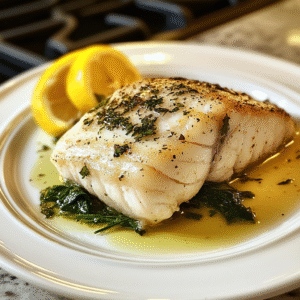
Return the fillets to the pan for a few seconds, or simply spoon the warm sauce over them on the plate. Finish with chopped dill or parsley and serve right away while the crust is still crisp.

Tips for the Best Atlantic Wolffish Recipe Results
- Watch the thickness, not just the clock. Wolffish fillets often taper toward the tail. Thin tail pieces may need only 2 minutes per side, while a thick center cut can take closer to 4.
- Salt at the last minute. Salting fish long before cooking draws moisture to the surface, which works against a crisp sear.
- Using frozen fish? Thaw it overnight in the refrigerator, still in its packaging. Thawed fish releases more water, so dry it even more thoroughly than fresh.
- Sear in oil, sauce in butter. Butter’s milk solids burn at searing temperatures. Cooking the fish in oil first and adding butter later gives you both a good crust and a clean-tasting sauce.
- Rest for a minute. A short rest on the plate while you make the sauce lets the fish finish cooking gently and keeps it juicy.
Common Mistakes to Avoid
- Overcooking. Lean fish dries out quickly. Pull it as soon as it flakes or hits 145°F.
- Crowding the pan. Two fillets in a 10-inch skillet is about right. More than that drops the temperature and the fish steams.
- Flipping too early. If the fillet sticks when you try to lift it, it is not ready. Give it another 30 to 60 seconds.
- Adding garlic to a hot, dry pan. Garlic needs the cooler butter stage; in searing-hot oil it scorches in seconds.
- Boiling the lemon juice. Long cooking dulls lemon. Add it off the heat at the very end.

Substitutions and Swaps
If your market does not carry wolffish, or you want to tweak the flavors, these swaps work well:
| Instead of | Try | Good to know |
|---|---|---|
| Atlantic wolffish | Monkfish | The closest match in firmness and sweetness. Remove the thin grey membrane before cooking. |
| Atlantic wolffish | Cod or haddock | Flakier and more delicate. Cook a minute or two less and flip gently. |
| Atlantic wolffish | Halibut | Firm and mild, but very lean, so watch it closely. See our heavenly halibut recipe for another idea. |
| Unsalted butter | Ghee or dairy-free butter | Ghee tolerates heat better; dairy-free butter keeps the dish dairy-free. |
| Lemon | Lime or a mix of lemon and orange | Lime is sharper; orange softens the acidity. |
| Smoked paprika | Sweet paprika, Aleppo pepper or a pinch of red pepper flakes | Red pepper flakes add heat rather than smokiness. |
| Dill or parsley | Chives, tarragon or basil | Tarragon pairs especially well with butter and lemon. |
Variations on This Atlantic Wolffish Recipe
Oven-baked wolffish
Melt the butter with the garlic, stir in the lemon, and pour it over seasoned fillets in a baking dish. Bake at 400°F for roughly 12 to 15 minutes, depending on thickness, until the fish flakes. You lose the crust but gain a hands-off dinner.
Air fryer wolffish
Brush the dried, seasoned fillets with a little oil and air fry at 400°F for about 8 to 10 minutes, flipping halfway if your fillets are thick. Make the butter sauce in a small pan on the stove while the fish cooks.
Mediterranean style
After the garlic, add a handful of halved cherry tomatoes, a spoonful of capers and a few sliced olives. Let the tomatoes soften for two minutes before adding the lemon. Serve with roasted potatoes to catch the juices.

Cajun spice
Replace the smoked paprika with a Cajun or blackening seasoning. Many blends are already salty, so cut back on the added salt.
White wine and capers
Once the garlic is fragrant, add a splash of dry white wine and let it bubble for a minute before finishing with lemon and a tablespoon of capers. The result is close to a classic piccata sauce.
What to Serve with Atlantic Wolffish
The lemon butter sauce is the star, so pick sides that soak it up or keep things fresh:
- Creamy mashed potatoes or crispy roasted baby potatoes
- Roasted asparagus, green beans or broccolini
- Rice pilaf, orzo or plain jasmine rice
- A simple green salad with a mustard vinaigrette
- Crusty bread for wiping the pan

Looking for more seafood dinners? Try our basil fish recipe, these tender grouper cheeks, the artichoke and Parmesan tilapia, or stuffed catfish fillets for something more filling.
Storing and Reheating Leftovers
Wolffish is at its best straight from the pan, but leftovers keep in an airtight container in the refrigerator for up to 3 days. Store any extra sauce separately if you can.
To reheat, warm the fish in a covered skillet over low heat with a splash of water or lemon juice, or in a 275°F oven until just heated through. The microwave tends to make lean fish rubbery. Cold leftovers are also good flaked into a salad, folded into fish tacos or mixed into fish cakes.
Is Atlantic Wolffish Healthy?
Like most white fish, wolffish is lean and high in protein, and it fits easily into a balanced diet. Most of the fat in this dish comes from the butter and oil, so you can reduce the butter if you are watching saturated fat. For general guidance on how often to eat fish, see the FDA advice on eating fish. The calorie figure in the recipe card is an estimate and will vary with fillet size and how much sauce you use.
Atlantic Wolffish Recipe FAQs
What does Atlantic wolffish taste like?
It is mild and slightly sweet, with a firm, meaty texture and large flakes. People often compare it to monkfish, and some say it has a faint shellfish sweetness.
Is wolffish the same as catfish?
No. Wolffish is sometimes sold as ocean catfish, but it is a saltwater fish from the North Atlantic and is not related to the freshwater catfish sold in most U.S. stores.
Should I remove the skin?
Most wolffish is sold skinless. If yours has skin, it is thick and does not crisp the way salmon skin does, so most cooks remove it before cooking.
Can I use frozen wolffish?
Yes. Thaw it overnight in the refrigerator, then pat it very dry before seasoning. Avoid thawing it at room temperature.
How do I know when wolffish is cooked?
The flesh turns from translucent to opaque white and flakes easily with a fork. An instant-read thermometer should read 145°F in the thickest part, the safe minimum temperature for fish.
Is this Atlantic wolffish recipe gluten-free?
Yes, as written. If you use a spice blend such as Cajun seasoning, check the label to be sure it is gluten-free.
Can I make it ahead?
The fish is best cooked just before serving. You can mince the garlic, zest the lemon and chop the herbs a few hours ahead to make dinner even faster.
Final Thoughts
Once you have cooked wolffish, it is easy to see why it deserves more attention. A dry fillet, a hot pan and a few minutes of patience give you a golden crust and a tender, sweet center, and the lemon garlic butter takes almost no extra effort. If you try this Atlantic wolffish recipe or make one of the variations, leave a comment below and tell us how it went.

Pan-Seared Atlantic Wolffish with Lemon Garlic Butter
Equipment
- Large cast-iron, stainless or nonstick skillet
- Zester or grater
- Fish spatula or tongs
- Knife and cutting board
- Small bowl (for sauce)
- Paper towels
- Instant-read thermometer (optional)
Ingredients
- 2 Atlantic wolffish fillets skinless, 6–8 oz each, about 1 inch thick
- 2 tbsp olive oil or avocado oil
- 3 tbsp unsalted butter
- 3 garlic cloves finely minced
- 1 lemon zested and juiced
- kosher salt and black pepper to taste
- 1 tsp smoked paprika optional
- 1 tbsp fresh dill or parsley chopped, for garnish
Instructions
- Prepare the fish: Let the fillets sit out for 10–15 minutes, then pat them very dry with paper towels. Just before cooking, season both sides with salt, pepper and smoked paprika.
- Heat the pan: Heat the olive oil in a large skillet over medium-high heat until it shimmers.
- Sear the fillets: Lay the fillets in the pan and cook without moving for 3–4 minutes, until golden and they release easily. Flip and cook 2–4 minutes more, until the fish flakes and reaches 145°F inside. Transfer to a plate.
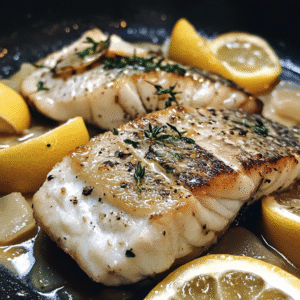
- Make the sauce: Lower the heat to medium (wipe out any dark oil). Melt the butter, add the garlic and cook 60–90 seconds until fragrant but not browned. Remove from the heat and stir in the lemon juice and zest. Season with a pinch of salt.
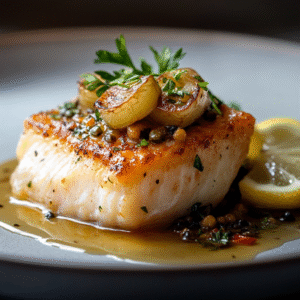
- Finish and serve: Spoon the lemon garlic butter over the fillets, sprinkle with dill or parsley and serve immediately.
Notes
- Substitutes: Monkfish is the closest match. Cod, haddock or halibut also work; cook thinner fillets a little less.
- Frozen fish: Thaw overnight in the refrigerator and pat extra dry before seasoning.
- Doneness: Fish is safe to eat at 145°F; it should be opaque and flake easily.
- Add heat: Stir a pinch of red pepper flakes into the garlic butter.
- Storage: Refrigerate leftovers in an airtight container for up to 3 days. Reheat gently in a covered skillet with a splash of water or lemon juice.
- Serve with: Mashed or roasted potatoes, asparagus, rice pilaf or a green salad.
- Calories are an estimate and vary with fillet size and amount of sauce.