
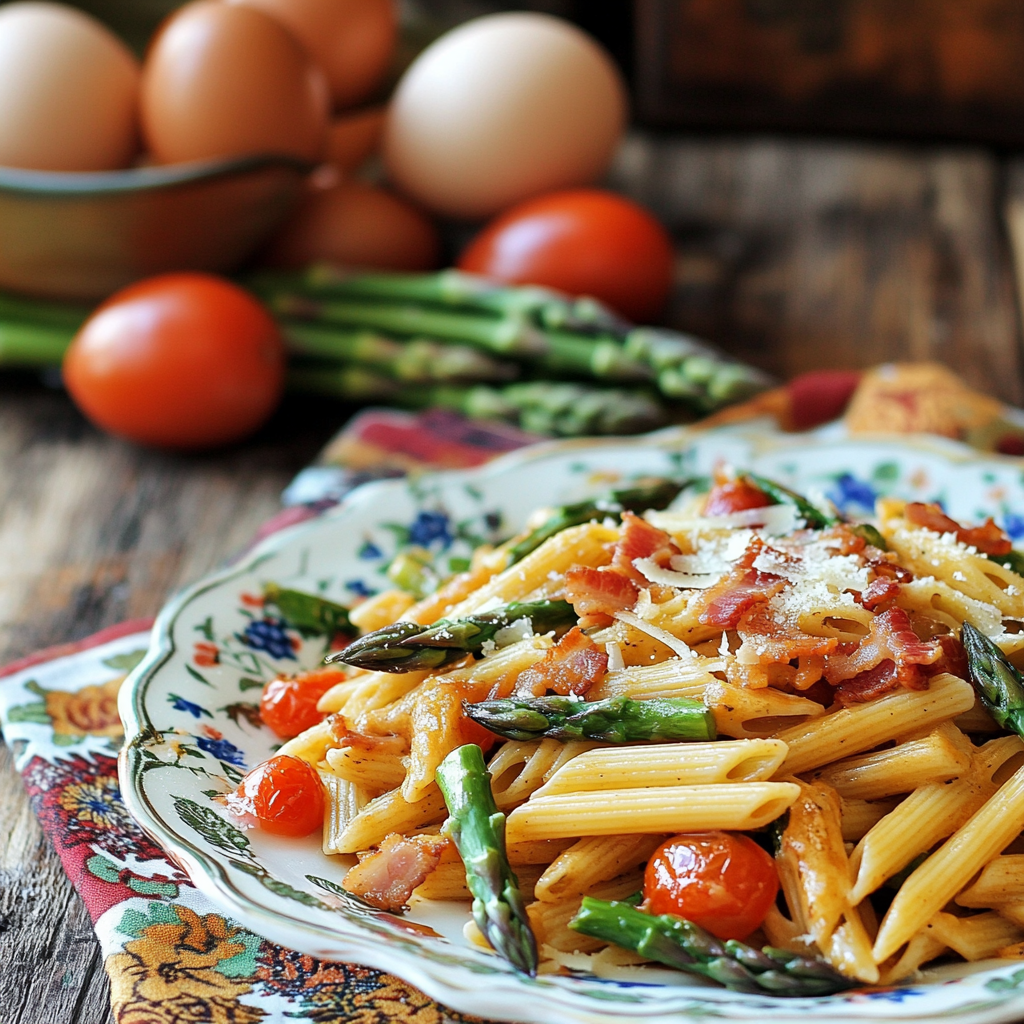
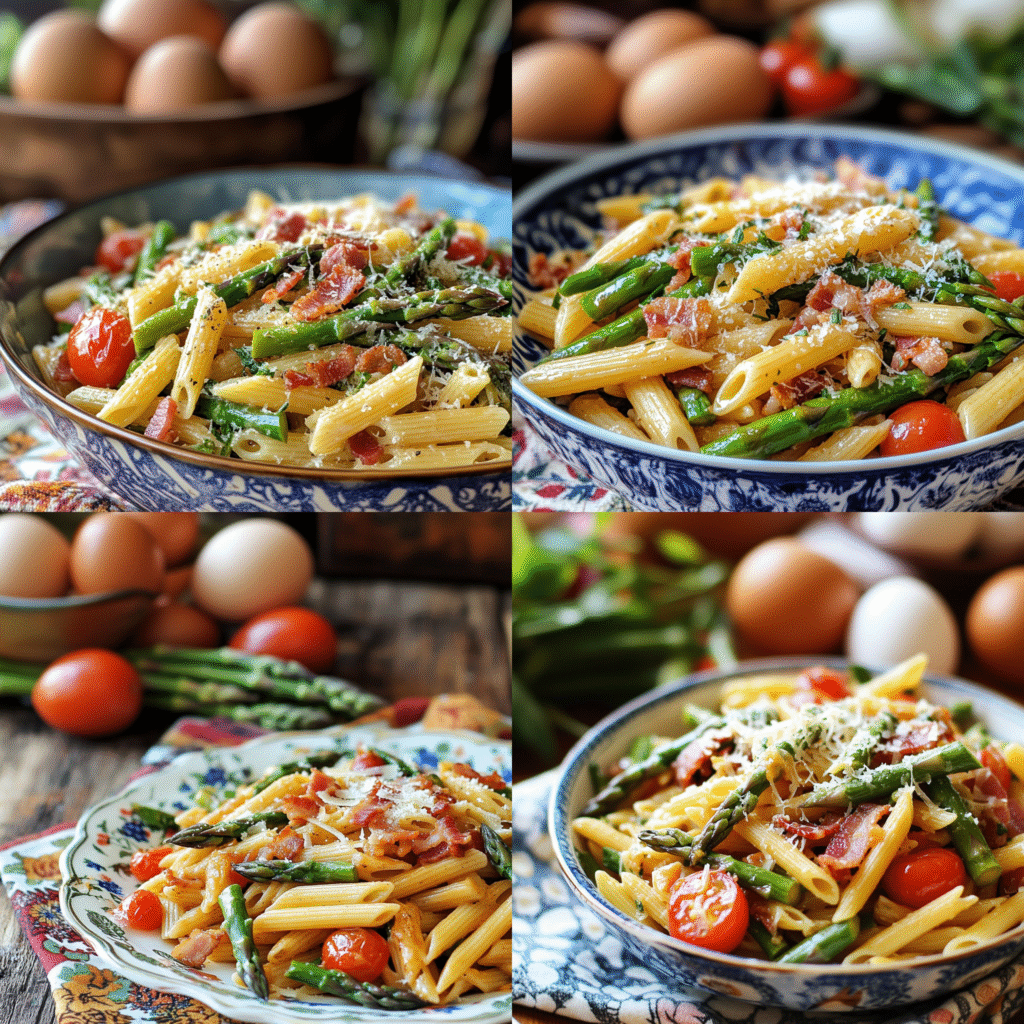
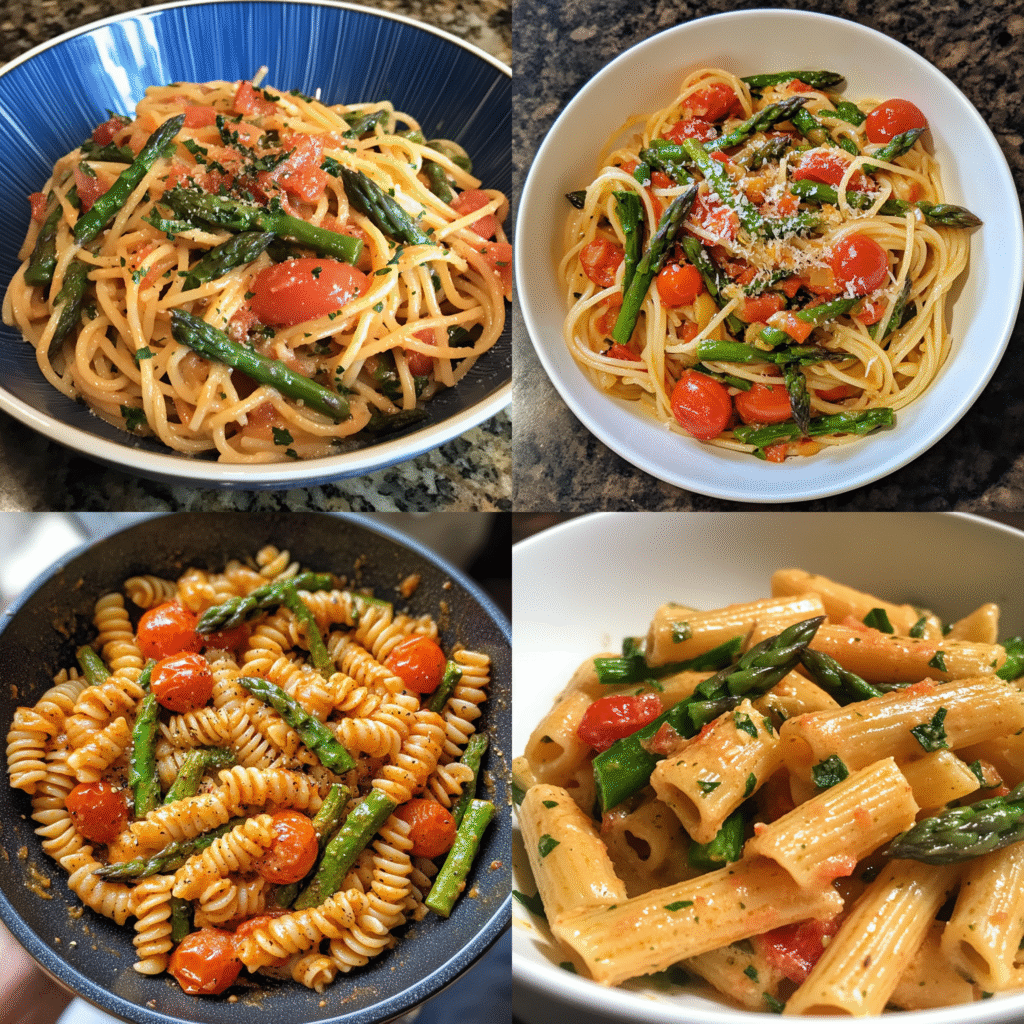
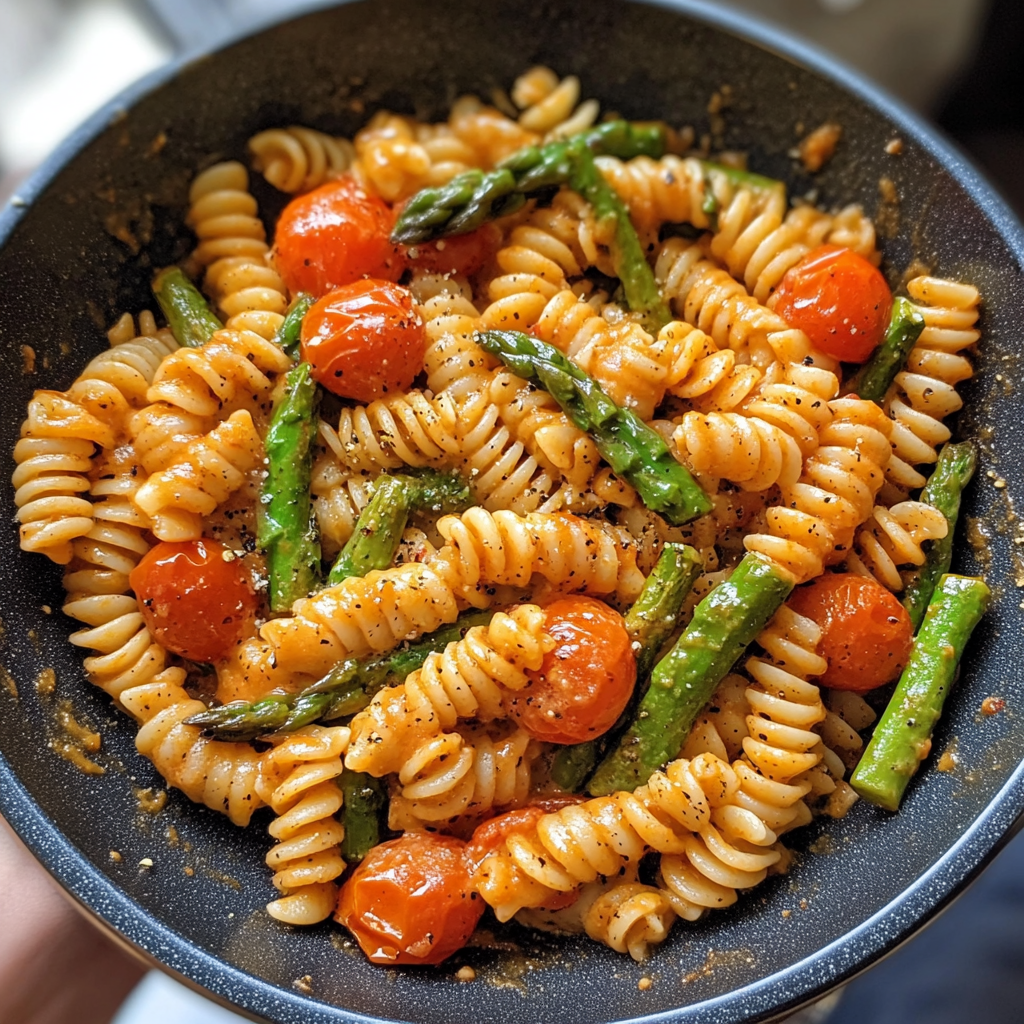
This asparagus tomato pasta recipe is bright, lemony and lightly creamy, and it’s on the table in 25 minutes with one pot, one skillet and a handful of ingredients. Tender asparagus, tomatoes that burst into the sauce, garlic, lemon and parmesan do all the work, and a splash of starchy pasta water makes it silky with only ¼ cup of cream.
Pick the Right Asparagus
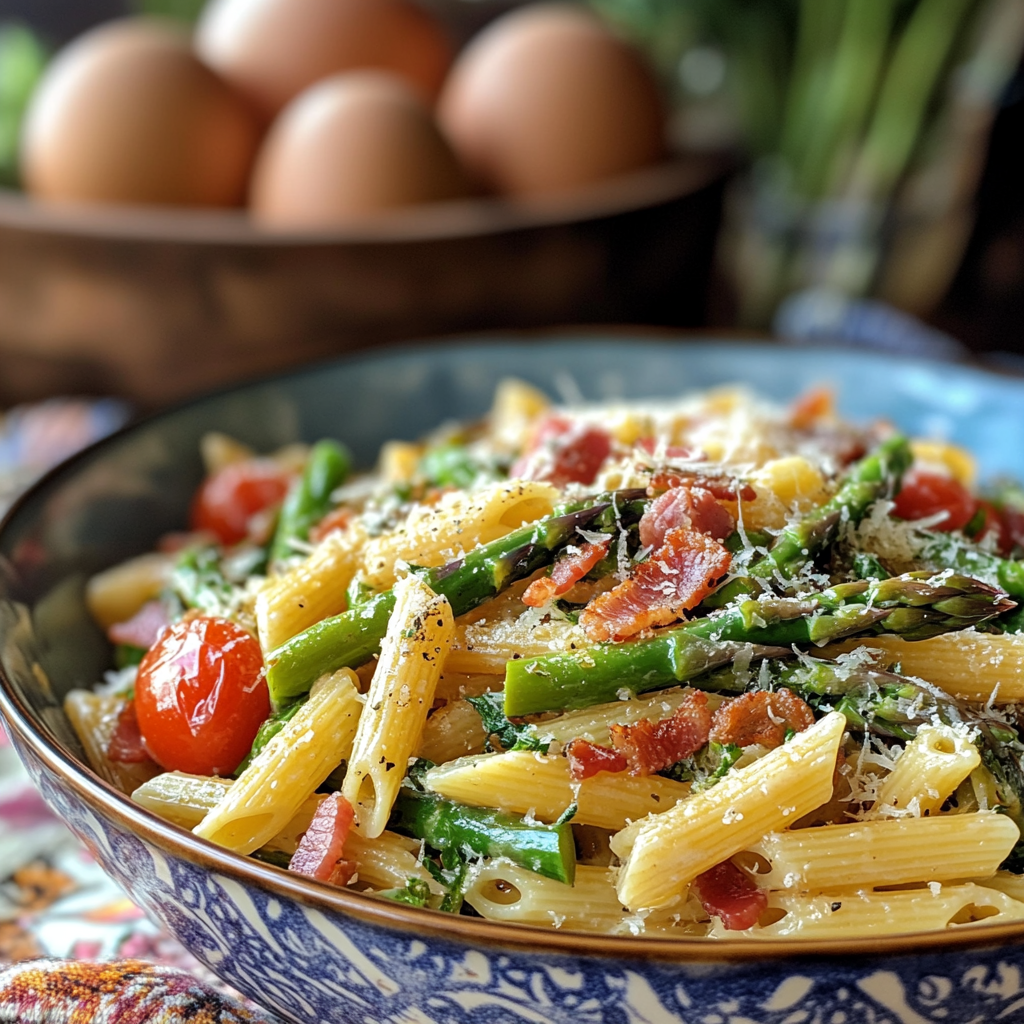
Asparagus is the star here, so it’s worth a minute at the store. Choose firm, bright green spears with tight, closed tips. Limp or woody-looking stalks will taste stringy. Thin spears cook in 2 or 3 minutes and stay tender without peeling. Thicker ones are sweeter but need a bit longer, and the lower part of the stalk can be tough.
To trim, hold a spear at both ends and bend it gently. It snaps where the tough part ends. Line up the rest of the bunch and cut at the same spot. Then slice on a diagonal into pieces about 1 to 2 inches long, so they cook evenly and fit on a fork with the pasta. Peak asparagus season is spring in most places, which is when the flavor is best and the price is lowest.
Asparagus Tomato Pasta Recipe Ingredients
- 12 oz penne, linguine or any shape you like
- 1 bunch asparagus, trimmed and cut into 1 to 2-inch pieces
- 1 cup cherry tomatoes, halved
- 3 cloves garlic, minced
- 2 tablespoons olive oil
- Juice and zest of 1 lemon
- ½ cup grated parmesan (or a vegan alternative)
- ¼ cup cream (or coconut milk or another non-dairy cream)
- ½ cup reserved pasta water, plus a little more if you need it
- Salt and pepper, and red chili flakes if you like heat
How the Sauce Comes Together
There are only two real techniques here, and both matter.
Salt the water properly and save some of it. Bring a big pot of water to a boil and salt it generously, about 1 to 2 tablespoons for 4 quarts, so the pasta tastes seasoned. Cook the pasta a minute shy of the package time, since it will finish in the sauce. Before draining, scoop out ½ cup of the cloudy water. The starch in it is what turns a loose, oily sauce into a glossy one that clings.
Add the lemon and cheese off the heat. Acid and dairy can split in a very hot pan, and parmesan turns stringy. Once the cream is in, turn the heat low, and add the lemon juice and cheese at the end.
- Cook the pasta as above, reserve ½ cup of water, and drain.
- Soften the garlic. While the pasta cooks, warm the olive oil in a large skillet over medium heat. Add the garlic and cook for about a minute, until fragrant but not browned.
- Cook the asparagus. Add it to the skillet and cook 3 to 4 minutes, stirring, until bright green and just tender with a little snap.
- Add the tomatoes. Cook another 2 minutes, until they start to soften and burst, releasing juices into the pan.
- Make it creamy. Lower the heat and stir in the cream, lemon zest and a pinch of salt, pepper and chili flakes.
- Toss it all together. Add the drained pasta, and toss over low heat, adding pasta water a splash at a time until the sauce coats every piece. Remove from the heat, stir in the lemon juice and half the parmesan, and taste for salt.
- Serve right away with the remaining parmesan, extra lemon zest and fresh basil if you have it.
Asparagus Tomato Pasta Recipe Card
Asparagus Tomato Pasta Recipe
Equipment
- Large pot
- Large skillet
- Colander
- Cutting board
- Knife
- Zester (optional)
- Measuring cups and spoons
- Wooden spoon or spatula
Ingredients
- 12 oz pasta penne, linguine, or preferred shape
- 1 bunch asparagus trimmed and chopped into 1-2″ pieces
- 1 cup cherry tomatoes halved
- 3 cloves garlic minced
- 2 tbsp olive oil
- Juice and zest of 1 lemon
- ½ cup grated parmesan or vegan cheese
- ¼ cup cream or coconut milk/non-dairy alternative for vegan
- Salt and pepper to taste
- Red chili flakes optional
- ½ cup reserved pasta water as needed
Instructions
- Cook Pasta: Boil salted water in a large pot. Cook pasta according to package directions until al dente. Reserve ½ cup pasta water, then drain.
- Sauté Vegetables: While pasta cooks, heat olive oil in a large skillet over medium heat. Sauté garlic for 1 minute. Add asparagus and cook for 3–4 minutes. Add cherry tomatoes and cook another 2 minutes until they soften and begin to burst.
- Make the Sauce: Lower heat. Stir in cream, lemon juice, and lemon zest. Season with salt, pepper, and red chili flakes.
- Combine: Add drained pasta to the skillet. Toss everything together. Add reserved pasta water as needed to thin the sauce and help it coat the pasta.
- Finish and Serve: Sprinkle with parmesan. Garnish with extra lemon zest or fresh basil, and serve hot.
Notes
- Vegan Option: Use dairy-free cheese and coconut milk or cashew cream.
- Gluten-Free: Substitute gluten-free pasta.
- Add Protein: Try grilled chicken, shrimp, or chickpeas for extra heartiness.
- Storage: Keeps well refrigerated for up to 3 days. Reheat with a splash of cream or water to refresh the sauce.
- Serving Suggestion: Pair with a green salad and crusty bread or garlic toast.
Seasonal Swaps
Asparagus is at its best in spring, but the method works with whatever’s good right now.
| Season | Swap for asparagus | Cooking tip |
|---|---|---|
| Spring | Asparagus, or fresh peas | Peas go in with the tomatoes |
| Summer | Zucchini or green beans | Slice zucchini thin, and cook green beans 5 minutes |
| Fall | Broccolini or Brussels sprouts | Add 2 to 3 extra minutes |
| Winter | Frozen peas or spinach | Stir in at the end, since they cook in a minute |
For the tomatoes, cherry or grape varieties are the most reliable year-round, because they stay sweeter than large winter tomatoes. A pinch of sugar can help if yours taste flat.
Make It a Bigger Meal
It’s a light dish, so it welcomes protein. Slice a few chicken medallions over the top, since their lemony Dijon pan sauce goes well with the same flavors. Seared shrimp, white beans or chickpeas, or a handful of toasted pine nuts all work too. For vegan, use coconut cream or cashew cream, and add nutritional yeast or a vegan parmesan for the savory note. For gluten-free, use gluten-free pasta and rinse it well, since some brands get sticky.
What to Serve With It
A crisp green salad, garlic bread or focaccia, and a glass of Sauvignon Blanc or Pinot Grigio suit it well. For something cold and crunchy on the side, try the sesame cucumber salad. If you want to keep the lemon theme going into dessert, the blueberry lemon mascarpone cake is a natural finish, and a pitcher of sugar-free lemonade keeps drinks simple.
Fixing Common Problems
The sauce is thin or watery. The tomatoes released a lot of juice. Let it simmer a minute, or toss with the pasta over low heat so the starch thickens it.
The sauce split or looks grainy. The pan was too hot when the lemon or cheese went in. Take it off the heat and stir in a splash of pasta water.
The asparagus is dull and soft. It cooked too long. Pull it while it’s still bright green.
The dish tastes flat. It usually needs salt, lemon or cheese, in that order. Taste after each addition.

Storing and Reheating
Refrigerate leftovers within 2 hours in an airtight container, and eat them within 3 days. Pasta absorbs sauce as it sits, so reheat in a skillet over low heat with a splash of water, broth or cream, stirring until it loosens and is steaming hot. In the microwave, use 30-second bursts, and stir between them. The asparagus will be softer after reheating. This dish doesn’t freeze well, since the cream sauce can separate and the vegetables turn mushy.
The recipe card lists about 410 calories per serving, which will vary with the pasta shape and how much cream and parmesan you use. It contains wheat and dairy unless you make the vegan swaps.
Questions About This Asparagus Tomato Pasta Recipe
Can I skip the cream? Yes. Use extra pasta water and a splash of olive oil, with a little more parmesan. The sauce will be lighter but still glossy.
What pasta shape is best? Penne, fusilli or rigatoni trap the sauce and fit with the vegetables. Linguine or spaghetti also work.
Can I use frozen asparagus? You can, but it will be softer. Thaw it and pat it dry, then add it with the tomatoes for just a minute or two.
Can I make it ahead? It’s best fresh. If you have to, cook the sauce ahead and boil the pasta just before serving.
If you make it, tell me which vegetables and pasta you used, and whether you kept the cream. Those details help other cooks more than anything on this page.