
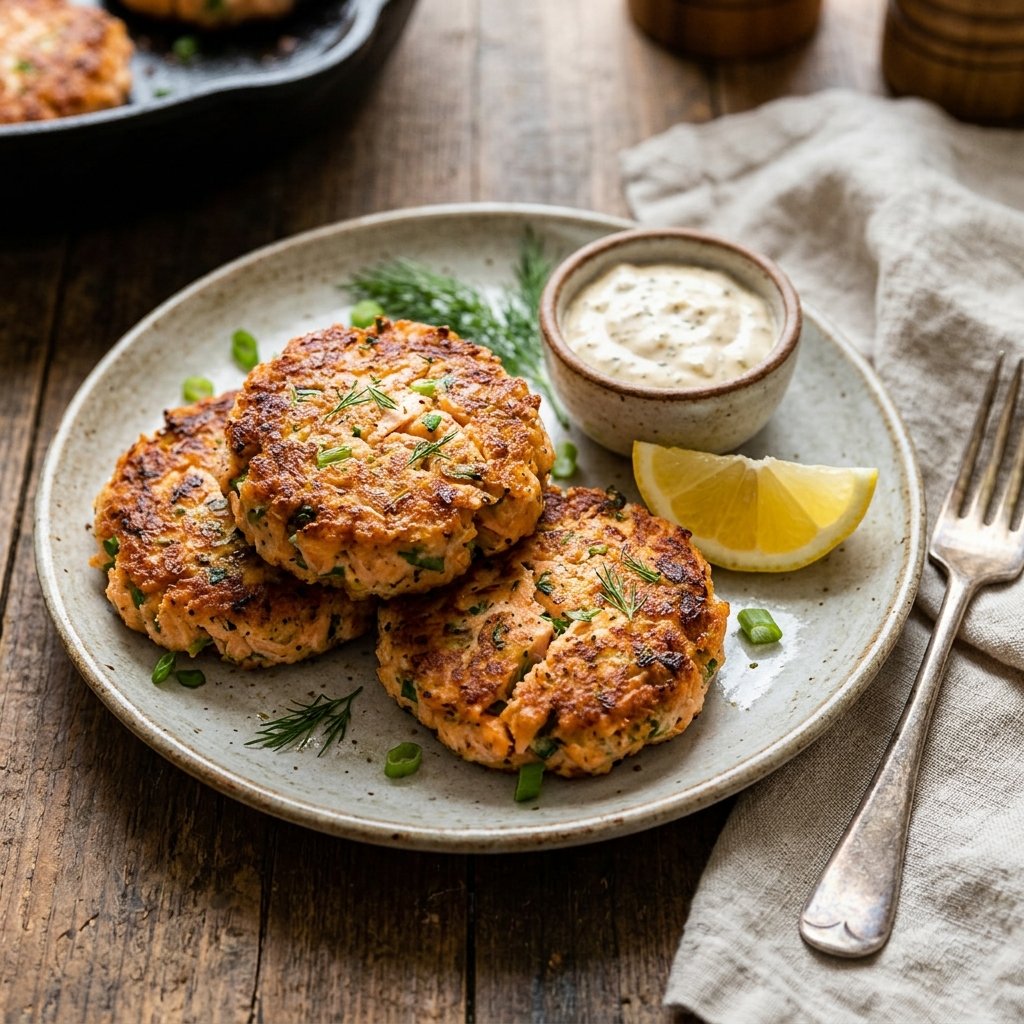
Few suppers are as thrifty, or as loved, as a plate of crispy salmon patties fresh out of the cast iron skillet. This salmon patties recipe, Southern style, sticks with the old-fashioned approach: a can of salmon, crushed saltines, a little onion and bell pepper, an egg to hold it together, and a cornmeal coat that fries up golden and crunchy in oil and butter. The patties come out crisp at the edges and tender in the middle, and a quick dill tartar sauce finishes the plate.
- Makes: 8 patties, enough for 4 people.
- Time: 25 minutes of hands-on work, plus a 20-minute chill so the patties hold together.
- The Southern touches: saltines and cornmeal in the mix, a cornmeal crust, and a cast iron skillet.
- Serve with: tartar sauce, lemon, grits, slaw or mac and cheese.
A Pantry Supper With Deep Southern Roots
Salmon patties are usually traced back to the Great Depression, when canned salmon was an affordable way to put protein on the table and a single can could be stretched with crackers or meal to feed a whole family. The dish stayed on Southern tables long after times got easier, partly because it is cheap and fast, and partly because so many people grew up eating it for weeknight supper or even breakfast with a pot of grits.
You will hear them called salmon patties, salmon cakes and salmon croquettes, often in the same kitchen. In practice the names overlap. Some families shape croquettes into small ovals or logs and roll them in meal or crumbs, while patties are flatter rounds, but the mixture inside is much the same.
What Makes Southern Style Salmon Patties Different?
Plenty of salmon cake recipes use panko, fresh herbs and a quick sear. Southern style salmon patties lean on pantry staples and a skillet, and a few details give them their character:
- Saltines and cornmeal. Many cooks swear by crushed saltines, while others use cornmeal. This recipe uses both: saltines in the mix for a soft, tender binder, and cornmeal on the outside for crunch.
- Cast iron and a mix of fats. Oil handles the heat, and a spoonful of butter adds flavor and helps the crust brown.
- A little kick. Old Bay or Cajun seasoning and a pinch of cayenne keep the patties from tasting flat without making them spicy.
- Tartar sauce, not aioli. A tangy pickle relish sauce is the classic partner, although plenty of people still reach for ketchup.
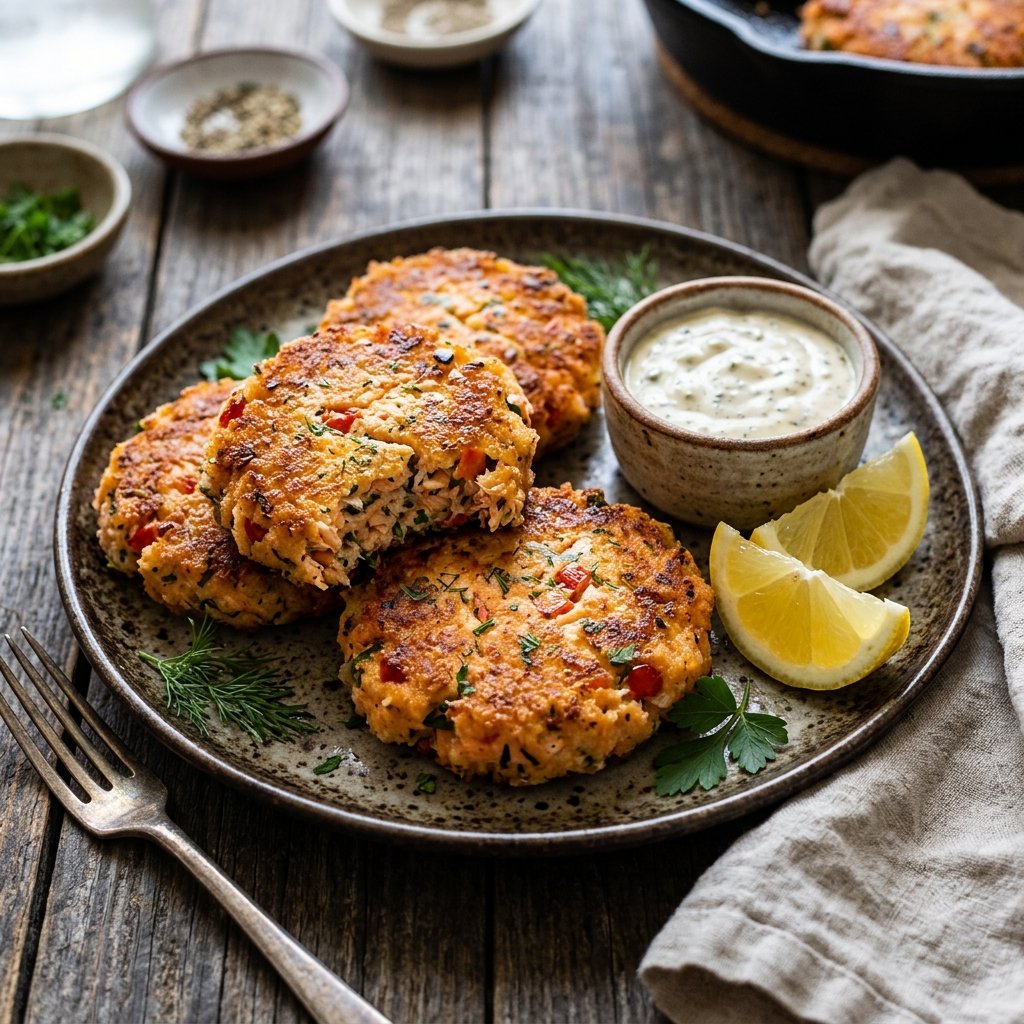
Choosing the Canned Salmon
Pink or red?
Both work. Canned pink salmon is milder, lighter in color and usually cheaper, which makes it the traditional choice. Red sockeye salmon is richer, deeper in color and has a more pronounced flavor. If anyone at your table thinks canned salmon tastes too fishy, start with pink.
What about the bones and skin?
Traditional canned salmon includes skin and soft, round pieces of backbone. Everything in the can is edible: the bones are soft enough to mash with a fork and add calcium. Many cooks remove the skin and the larger bone pieces simply for texture. If you would rather skip that step entirely, buy boneless, skinless canned salmon or use two 6-ounce cans or pouches.
Can you use fresh salmon?
Yes. Bake or poach about 12 ounces of salmon until it is just cooked through, let it cool, and flake it. Fresh salmon is a little drier than canned, so you may need an extra spoonful of mayonnaise to bring the mixture together.
Ingredients for Southern Salmon Patties
For the patties
- Canned salmon: one 14.75-ounce can, drained. Save the liquid in case the mixture needs moisture.
- Egg and mayonnaise: the egg binds and the mayonnaise keeps the inside moist.
- Yellow mustard and lemon juice: a little tang to brighten the fish.
- Onion and red bell pepper: chop them finely. Large pieces make the patties more likely to break.
- Saltine crackers: about 12, crushed to fine crumbs in a zip-top bag with a rolling pin.
- Cornmeal: a couple of tablespoons in the mixture, plus more for coating. Yellow cornmeal gives the best color.
- Seasonings: Old Bay or Cajun seasoning, garlic powder, black pepper, parsley and an optional pinch of cayenne. Taste your seasoning blend first, since some are much saltier than others.
For frying and serving
Vegetable or peanut oil and a tablespoon of butter for the skillet, plus mayonnaise, dill pickle relish, lemon juice and fresh dill for a quick tartar sauce. Exact amounts are in the recipe card below.
How to Make This Salmon Patties Recipe, Southern Style
1. Prepare the salmon
Drain the can, pick out the skin and any large, hard pieces of spine if you prefer, and mash the small soft bones with a fork until they disappear. Flake the salmon into a large bowl.
2. Mix gently
Add the egg, mayonnaise, mustard, lemon juice, onion, bell pepper, parsley, crushed saltines, the 2 tablespoons of cornmeal and the seasonings. Stir with a fork until just combined. You want visible flakes of salmon, not a paste. Squeeze a little in your hand: if it falls apart, add the reserved salmon liquid a teaspoon at a time.
3. Chill for 20 minutes
Cover the bowl and refrigerate it. This short rest gives the cracker crumbs and cornmeal time to soak up moisture, and it is the single best way to stop the patties from breaking in the pan.
4. Shape and coat
Divide the mixture into 8 portions and shape each into a patty about 1/2 inch thick and 3 inches across. Press each side into a plate of cornmeal so the coating sticks.
5. Fry in cast iron
Heat the oil and butter in a large cast iron skillet over medium heat until the butter foams and the oil shimmers. Lay the patties in without crowding and fry for 3 to 4 minutes per side, turning only once, until deep golden. The salmon is already cooked, but the egg is not, so the center should reach 160°F, the temperature foodsafety.gov recommends for egg dishes. Drain on a wire rack rather than paper towels so the bottoms stay crisp.
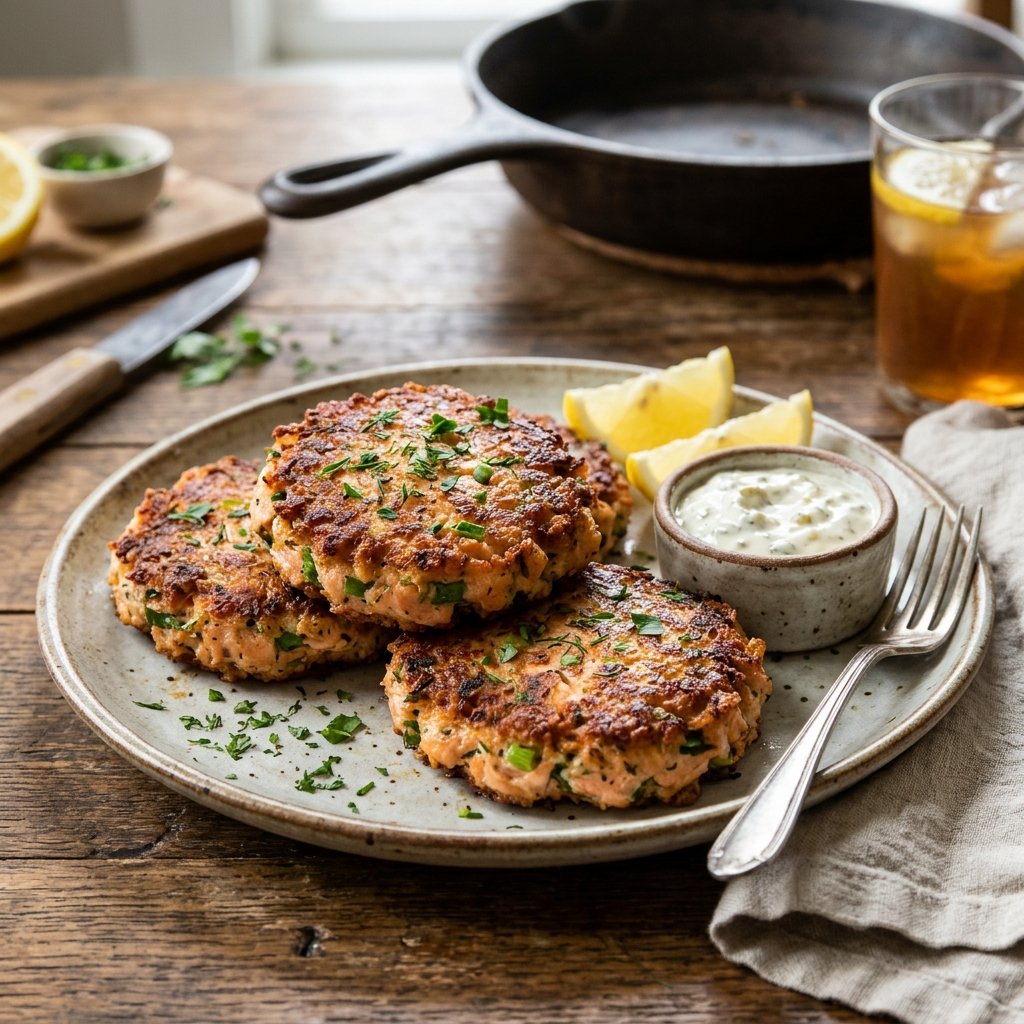
Why Salmon Patties Fall Apart (and How to Fix It)
- The mixture is too wet. Too much salmon liquid or very juicy onion makes a loose mix. Add another crushed saltine or two.
- The mixture is too dry. Dry patties crack around the edges as they cook. Add reserved salmon liquid or a little more mayonnaise.
- You skipped the chill. Cold patties firm up and hold their shape far better in hot fat.
- The skillet is not hot enough. Patties that go into lukewarm oil soak it up and turn soft. Wait until the oil shimmers.
- You flipped too early or too often. Let the crust set for a full 3 minutes before turning, and use a thin, wide spatula.
Sauces for Salmon Patties
The quick tartar sauce in the card is just mayonnaise, dill relish, lemon juice and fresh dill, and it takes about a minute. Other good options:
- Ketchup: not fancy, but plenty of Southern households serve it this way.
- Lemon aioli: our garlicky lemon aioli is a brighter choice.
- Quick remoulade: stir Creole mustard, a little hot sauce, paprika and chopped capers into mayonnaise.
- Hot sauce: a few dashes straight on top, the way some families have always done it.
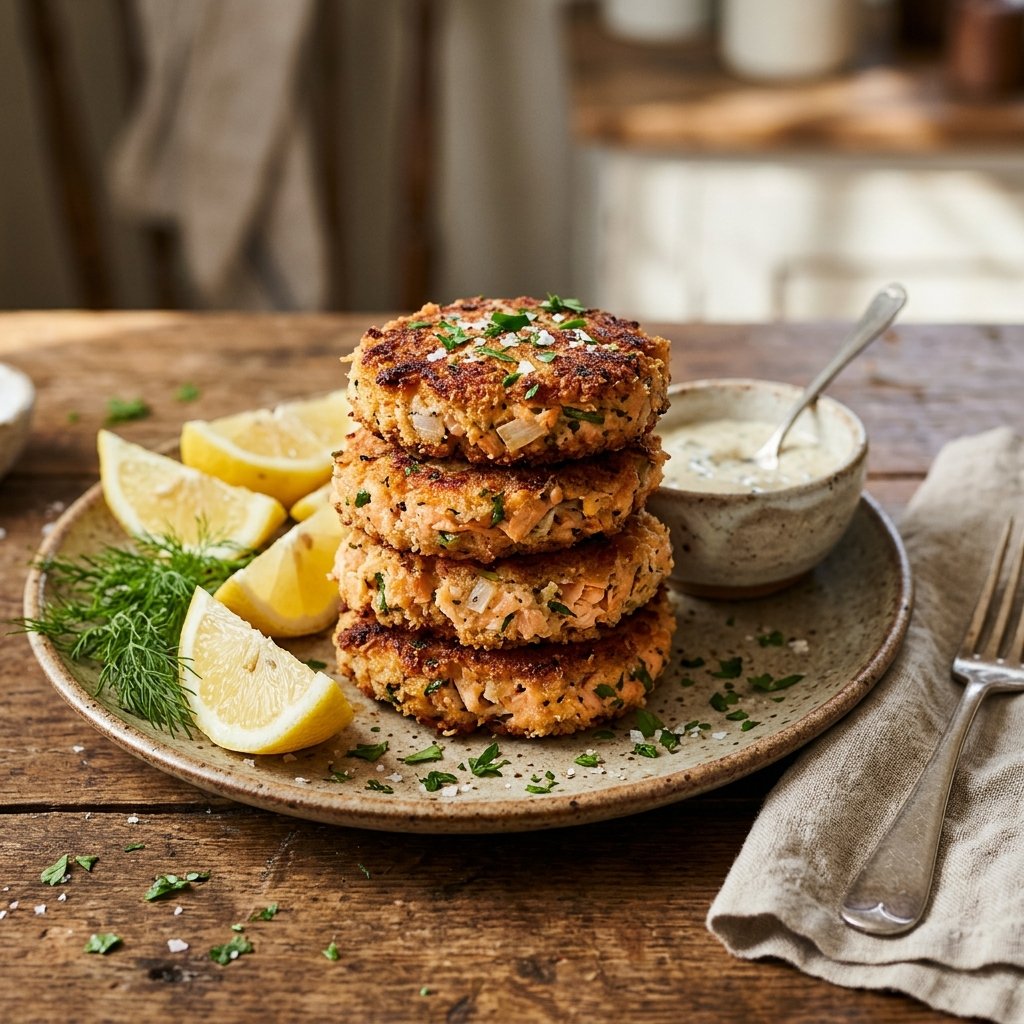
What to Serve With Salmon Patties
Salmon patties are a natural fit with classic Southern sides:
- Grits: creamy, stone-ground Marsh Hen Mill grits make salmon patties a proper breakfast or brunch.
- Mac and cheese: a scoop of baked Creamette mac and cheese turns supper into comfort food.
- Coleslaw: a creamy Brookville Hotel coleslaw adds crunch and cuts the richness.
- Hush puppies or corn: serve with air fryer hush puppies, jalapeno corn pudding or a skillet of maque choux.
- Beans and bread: pinto beans and cornbread, or a warm Loveless Cafe-style biscuit for a salmon patty sandwich.
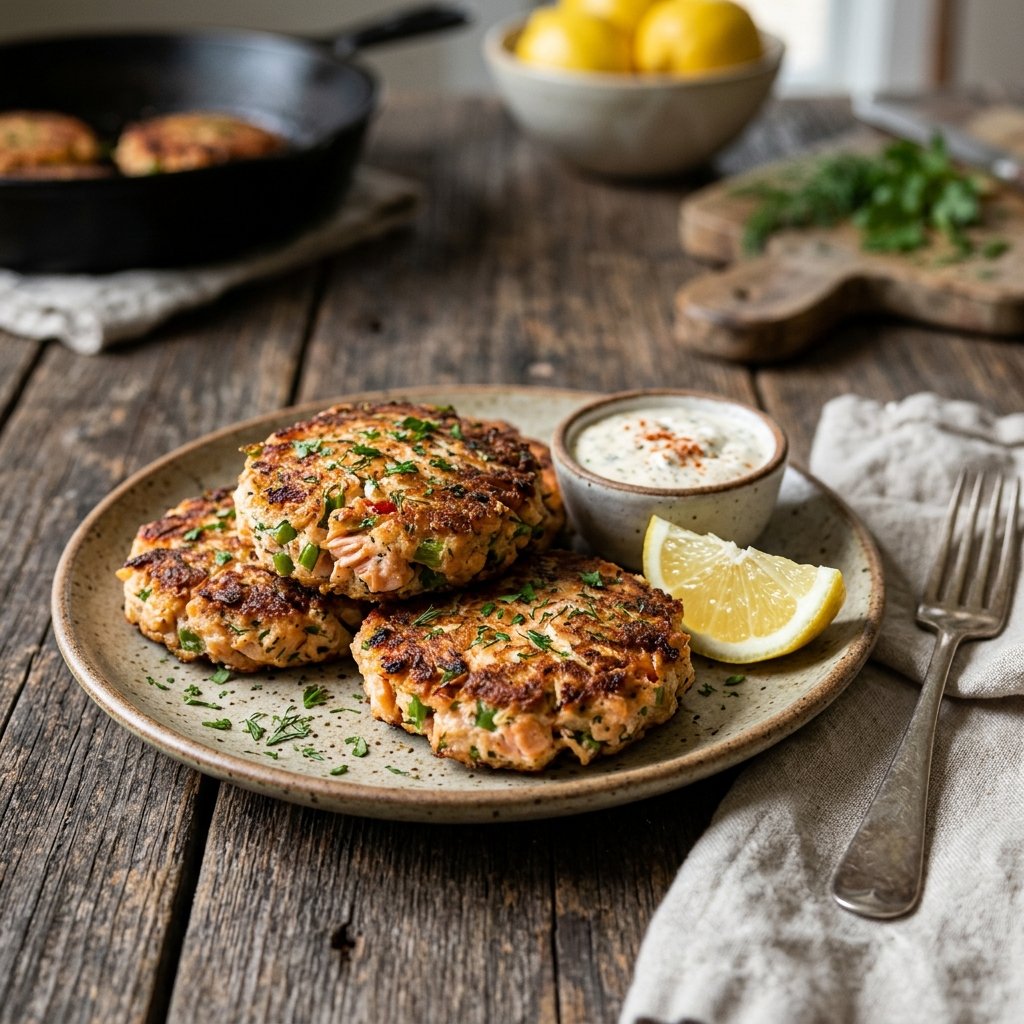
Air Fryer and Oven Salmon Patties
Frying gives the crispiest crust, but both of these methods work well with the same mixture:
- Air fryer: brush or spray the cornmeal-coated patties with oil and air fry at 375°F for 8 to 10 minutes, flipping halfway through.
- Oven: bake on an oiled, parchment-lined sheet pan at 400°F for 15 to 18 minutes, flipping halfway. Brushing the tops with a little melted butter helps them brown.
Make Ahead, Freezing and Leftovers
You can mix and shape the patties up to a day ahead and keep them covered in the refrigerator; coat them in cornmeal just before frying. To freeze, set the shaped, uncoated patties on a parchment-lined tray until firm, then transfer them to a freezer bag for up to 3 months. Thaw them overnight in the refrigerator before coating and cooking.
Cooked salmon patties keep in an airtight container in the refrigerator for up to 3 days. Reheat them in a 375°F oven or air fryer until they are hot all the way through (165°F), which brings back some of the crunch the microwave would take away.
Southern Salmon Patties FAQ
Do I have to remove the bones from canned salmon?
No. The bones in canned salmon are soft and edible, and mashing them into the mixture makes them disappear. Removing the larger pieces is purely a matter of texture and preference.
Can I use breadcrumbs or panko instead of saltines?
Yes. Use about 1/2 cup of dry breadcrumbs or panko in place of the crackers. Saltines add a little salt and a softer texture, so taste and adjust the seasoning.
How do I make gluten-free salmon patties?
Swap the saltines for gluten-free crackers or extra cornmeal, and check that your cornmeal and seasoning blend are labeled gluten-free.
Are salmon patties healthy?
Salmon is a good source of protein and omega-3 fats, and the FDA counts it among the “best choices” in its advice about eating fish. Pan-frying and tartar sauce add fat and calories, so the air fryer or oven method is the lighter route. The nutrition values in the recipe card are estimates.
Why are my salmon patties mushy inside?
Usually the mixture was too wet, or the patties were shaped too thick. Add a little more cracker crumb, keep the patties to about 1/2 inch, and make sure they reach 160°F in the center.
Printable Salmon Patties Recipe, Southern Style
Southern Style Salmon Patties
Equipment
- Large cast iron skillet
- Large mixing bowl
- Instant-read thermometer
- Wire rack set over a sheet pan
Ingredients
Salmon patties
- 1 can salmon 14.75 oz (418 g) pink or red, drained, liquid reserved
- 1 large egg
- 2 tbsp mayonnaise
- 1 tsp yellow mustard
- 1 tsp lemon juice
- 1/3 cup yellow onion finely chopped
- 1/4 cup red bell pepper finely diced
- 2 tbsp fresh parsley chopped
- 12 saltine crackers finely crushed (about 1/2 cup)
- 2 tbsp yellow cornmeal
- 1/2 tsp Old Bay or Cajun seasoning
- 1/4 tsp garlic powder
- 1/4 tsp black pepper
- 1 pinch cayenne pepper optional
For coating and frying
- 1/3 cup yellow cornmeal
- 3 tbsp vegetable oil or peanut oil
- 1 tbsp butter
Quick dill tartar sauce
- 1/2 cup mayonnaise
- 2 tbsp dill pickle relish
- 1 tsp lemon juice
- 1 tsp fresh dill chopped
To serve
- lemon wedges
- chopped parsley
Instructions
- Drain the salmon, saving the liquid. Pick out the skin and any large, hard pieces of spine if you like. The small soft bones can stay; mash them with a fork until you cannot see them. Flake the salmon into a large bowl.
- Add the egg, 2 tablespoons mayonnaise, mustard, lemon juice, onion, bell pepper, parsley, crushed saltines, 2 tablespoons cornmeal, Old Bay, garlic powder, black pepper and cayenne. Mix gently with a fork until evenly combined. If the mixture is too dry to hold together, add the reserved salmon liquid 1 teaspoon at a time.
- Cover and refrigerate the mixture for 20 to 30 minutes so the crackers and cornmeal absorb moisture and the patties hold their shape.
- Shape the mixture into 8 patties about 1/2 inch thick and 3 inches across. Spread the 1/3 cup cornmeal on a plate and press each patty into it on both sides.
- Heat the oil and butter in a large cast iron skillet over medium heat until the butter foams and the oil shimmers. Fry the patties in batches, without crowding, for 3 to 4 minutes per side, until deep golden brown and hot in the center (160°F on an instant-read thermometer). Flip them only once.
- Transfer the patties to a wire rack set over a sheet pan. Add a little more oil to the skillet between batches if it looks dry.
- Stir together the 1/2 cup mayonnaise, relish, lemon juice and dill for the tartar sauce. Serve the patties hot with the sauce, lemon wedges and parsley.
Notes
Want more Southern seafood? Try our stuffed catfish fillets, or for a fresh fillet dinner, this citrus glazed salmon.