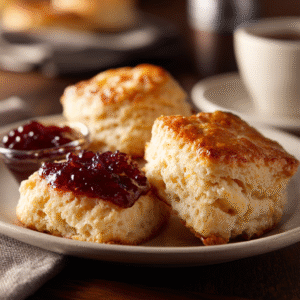
Few biscuits in the South have a reputation like the ones at the Loveless Cafe in Nashville. They’re small, tall, tender and buttery, and they arrive at the table in a basket with homemade preserves. This Loveless Cafe biscuit recipe is a from-scratch copycat that follows the same method the cafe uses for its own biscuit mix: a wet buttermilk dough, a 2-inch cutter, biscuits baked touching in a skillet, and melted butter brushed on before and after baking.
You need only flour, leavening, salt, cold fat and cold buttermilk. The whole batch takes about 35 minutes from bowl to basket.
Below you’ll find the story behind the biscuits, the ingredients and why each one matters, detailed steps, how to use the official Loveless biscuit mix if you have a bag, and fixes for flat or tough biscuits.
- The Loveless Cafe and Its Famous Biscuits
- Is This the Real Loveless Cafe Biscuit Recipe?
- What Makes Loveless Biscuits Different
- Ingredients for Loveless Cafe Biscuits
- Equipment You'll Need
- How to Make Loveless Cafe Biscuits
- Using the Loveless Cafe Biscuit Mix
- Biscuit Troubleshooting
- How to Serve Them the Loveless Way
- Flavor Variations
- Make-Ahead, Storage and Freezing
- Nutrition Per Biscuit
- Loveless Cafe Biscuit FAQs
- Final Thoughts
The Loveless Cafe and Its Famous Biscuits
The Loveless Cafe started in 1951, when Lon and Annie Loveless began serving fried chicken and biscuits with homemade preserves to travelers on Highway 100, just outside Nashville near the northern end of the Natchez Trace Parkway. The house became a restaurant, a small motel went up beside it, and the biscuits became the reason people kept stopping.
Decades later, the cafe still sits at 8400 Highway 100, and its biscuits have been praised by Southern Living, Food & Wine and Martha Stewart, among others. The cafe also sells its biscuit mix so people can make them at home, and the method printed with that mix is the backbone of this recipe.

Is This the Real Loveless Cafe Biscuit Recipe?
Not exactly, and it’s worth being clear about that. The cafe has never published its scratch dough recipe. As Chowhound reported, even the cafe’s own cookbook points readers toward the biscuit mix instead of printing the formula.
What the cafe does share is how to handle the dough: keep it wet, mix it gently, cut small biscuits straight down, bake them touching in cast iron at 400°F on the middle rack, and brush them with butter. This copycat Loveless biscuits recipe combines those published techniques with a classic Southern buttermilk dough, so you get the same size, texture and style from ingredients you already have.
What Makes Loveless Biscuits Different
- They’re small. A 2-inch cutter gives you bite-size biscuits with more golden crust per bite and a quick, even bake.
- The dough is wet. The cafe’s instructions call for a sticky dough, wetter than most people expect. More moisture means more steam and a softer, taller crumb.
- They bake touching. Biscuits packed shoulder to shoulder support each other as they rise, so they climb up instead of spreading out.
- Cast iron does the work. A heavy skillet browns the bottoms evenly without burning them.
- Butter goes on twice. A brush of melted butter before baking helps the tops brown; another brush after baking keeps them soft and shiny.
Keep these five habits in mind and any Loveless Cafe biscuit recipe, whether from scratch or from the mix, will turn out lighter and more even.
Ingredients for Loveless Cafe Biscuits
This Loveless Cafe biscuit recipe makes about 16 two-inch biscuits.
| Ingredient | Amount | Why it’s there |
|---|---|---|
| All-purpose flour | 2 1/2 cups (300 g) | Structure; a soft Southern flour gives the most tender result |
| Baking powder | 1 tablespoon | Main lift |
| Baking soda | 1/2 teaspoon | Reacts with buttermilk for extra rise and browning |
| Fine salt | 1 teaspoon | Flavor |
| Sugar | 1 teaspoon | A hint of sweetness and better browning |
| Unsalted butter, very cold | 6 tablespoons (85 g), cubed | Flavor and flaky layers |
| Vegetable shortening, cold | 2 tablespoons (25 g) | Extra tenderness and a soft crumb |
| Whole buttermilk, cold | 1 1/4 cups (300 ml) | Moisture, tang and rise |
| Unsalted butter, melted | 3 tablespoons | For the skillet and brushing before and after baking |
Why Use Both Butter and Shortening?
Butter brings flavor and creates flaky pockets as its water turns to steam. Shortening is 100 percent fat, so it coats the flour and keeps the crumb soft and tender. The Loveless mix is made with vegetable fat, and a little shortening here gets you closer to that soft, fine texture while butter keeps the flavor rich.
Choosing the Right Flour
Southern bakers have long used soft winter wheat flour for biscuits because it’s lower in protein, which means less gluten and a more tender bite. If you can find a Southern soft-wheat brand, use it. With regular all-purpose flour, swap 1/4 cup of it for cake flour, and spoon the flour into the cup and level it rather than scooping, so you don’t pack in too much.
Equipment You’ll Need
- 10- or 12-inch cast iron skillet (or a rimmed baking sheet)
- Large mixing bowl
- Pastry cutter or two forks
- 2-inch round biscuit cutter
- Rolling pin and wax paper or a floured counter
- Pastry brush
How to Make Loveless Cafe Biscuits
Step 1: Heat the Oven and Prep the Skillet
Heat the oven to 400°F (200°C) with a rack in the middle position. Brush the bottom of the skillet with about 1 tablespoon of the melted butter.
Step 2: Whisk the Dry Ingredients
In a large bowl, whisk together the flour, baking powder, baking soda, salt and sugar until evenly combined, so every biscuit rises the same way.
Step 3: Cut In the Cold Fat
Add the cold butter cubes and shortening. Work them into the flour with a pastry cutter or your fingertips until the mixture looks like coarse crumbs with some pea-size pieces of butter still visible. Those pieces are what make the layers, so stop before the mixture looks sandy. If the kitchen is warm, chill the bowl for 10 minutes.
Step 4: Add the Buttermilk
Pour in the cold buttermilk and stir with a fork or spatula just until no dry flour remains. The dough should be shaggy, wet and sticky. That’s exactly right, so resist adding more flour.
Step 5: Fold and Roll
Turn the dough onto a lightly floured surface or sheet of wax paper. Dust the top with flour and gently fold it over itself 2 or 3 times to build a few layers. Pat or roll it to about 1/2 inch thick.
Step 6: Cut Straight Down
Dip the 2-inch cutter in flour and press straight down without twisting. Twisting seals the edges and keeps the biscuits from rising. Place each biscuit in the skillet so they touch each other and the sides of the pan. Gather the scraps, pat them out once more and cut again; don’t re-roll a third time, or those biscuits will be tough. Odd-shaped last biscuits are fine.
Step 7: Brush, Bake and Brush Again
Brush the tops with melted butter. Bake for 8 minutes, rotate the skillet, then bake for 7 to 9 minutes more, until the tops are light golden brown. Brush with the remaining butter as soon as they come out, let them rest for 3 to 5 minutes, and serve warm.

Using the Loveless Cafe Biscuit Mix
If you have a bag of the official mix, the cafe’s own directions are simple. For 12 to 14 biscuits, stir 1 1/4 cups of mix with 2/3 cup of cold whole buttermilk. A full 2-pound bag takes 2 2/3 cups of buttermilk and makes about 50 biscuits. Roll the dough to 1/2 inch, cut with a floured 2-inch cutter, set the biscuits touching in a buttered pan, and bake at 400°F on the middle rack for 6 to 8 minutes, rotate, then bake 5 to 8 minutes more until light golden.
The mix is handy when you want the cafe’s exact flavor. The scratch Loveless Cafe biscuit recipe above is for when you don’t have a bag on hand, or prefer to control what goes into the dough.
Biscuit Troubleshooting
| Problem | Likely cause | Fix |
|---|---|---|
| Flat biscuits | Old baking powder, twisted cutter or warm fat | Use fresh leavening, cut straight down, keep butter cold |
| Tough or chewy | Overmixing or too much re-rolling | Stir only until combined; re-roll scraps once |
| Dry and crumbly | Too much flour | Spoon and level flour; keep the dough sticky |
| Spread out sideways | Biscuits not touching | Pack them close together in the pan |
| Pale tops | Oven too cool or no butter brush | Check oven temperature; brush with butter before baking |
| Dark bottoms | Pan too low in the oven | Bake on the middle rack |
How to Serve Them the Loveless Way
At the cafe, biscuits come with butter and homemade preserves, with peach, blackberry and strawberry among the favorites. They’re also served alongside country ham, bacon and the cafe’s famous fried chicken. At home, try them with:
- Butter and your favorite jam or preserves
- Thin slices of country ham for small breakfast sandwiches
- Creamy sausage gravy, like the gravy in this Bob Evans biscuit recipe
- A drizzle of honey or sorghum syrup
- A side of stone-ground grits and scrambled eggs
- A bowl of pinto beans for a Southern supper

Flavor Variations
- Cheddar garlic: Fold 1 cup of shredded sharp cheddar into the dough and brush the biscuits with melted butter mixed with a little garlic powder and chopped chives.
- Honey butter: Stir 1 tablespoon of honey into the melted butter you brush on after baking.
- Black pepper: Add 1 teaspoon of coarsely ground pepper to the dry ingredients; great with gravy.
- Sweet biscuits: Double the sugar and brush the hot biscuits with butter and a sprinkle of cinnamon sugar.
- Larger biscuits: Use a 3-inch cutter for sandwich-size biscuits and add 3 to 4 minutes to the bake.
If you like boxed mixes, this Krusteaz biscuit recipe is another quick option.
Make-Ahead, Storage and Freezing
- Freeze unbaked: Cut the biscuits, freeze them on a tray until firm, then bag them for up to 2 months. Bake straight from frozen, adding 3 to 5 minutes.
- Store baked: Keep cooled biscuits in an airtight container at room temperature for up to 2 days.
- Reheat: Wrap in foil and warm at 350°F for 8 to 10 minutes. Brush with a little butter to refresh the tops.
- Freeze baked: Wrap individually and freeze for up to 2 months; reheat from frozen in foil for 12 to 15 minutes.
Nutrition Per Biscuit
Calculated from the ingredients in this Loveless Cafe biscuit recipe for 16 biscuits, including the butter for brushing, one biscuit has about 152 calories, 16 g carbohydrates, 3 g protein, 9 g fat (5 g saturated) and 285 mg sodium. Toppings like preserves, honey or gravy are not included. These numbers are estimates.
Loveless Cafe Biscuit FAQs
Does the Loveless Cafe use lard in its biscuits?
The cafe hasn’t published its scratch recipe. The ingredients listed on its biscuit mix include vegetable fat rather than lard, which is why this copycat uses butter with a little shortening.
Can I use self-rising flour?
Yes. Use 2 1/2 cups of self-rising flour and leave out the baking powder and salt, but keep the baking soda for the buttermilk.
What if I don’t have buttermilk?
Stir 1 tablespoon of lemon juice or white vinegar into 1 1/4 cups of cold whole milk and let it sit for 5 minutes. Real buttermilk gives better flavor and rise, though.
Why is my biscuit dough so sticky?
It’s supposed to be. A wet dough makes steam in the oven and gives tall, tender biscuits. Use a light dusting of flour on your hands and the counter instead of working more flour into the dough.
Can I make these without a cast iron skillet?
Yes. A rimmed baking sheet or a 9×13-inch pan works. Keep the biscuits touching, and check them a minute or two early, since thinner pans bake faster.
How big are Loveless Cafe biscuits?
They’re small, about 2 inches across, which is part of their charm. You can cut them larger, but they’ll take a few minutes longer to bake.
Final Thoughts
The secret behind Nashville’s most famous biscuits isn’t a rare ingredient. It’s technique: a wet dough, a gentle hand, small biscuits baked close together and plenty of butter. Follow this Loveless Cafe biscuit recipe once and you’ll see how simple it is to bring a little of Highway 100 into your own kitchen. Warm a jar of preserves, put the coffee on, and serve them straight from the skillet.


Loveless Cafe Biscuits (Copycat)
Equipment
- 10- or 12-inch cast iron skillet
- Large mixing bowl
- Pastry cutter
- 2-inch round biscuit cutter
- Rolling Pin
- Pastry brush
Ingredients
Biscuit dough
- 2 1/2 cups all-purpose flour 300 g, spooned and leveled; soft Southern flour is best
- 1 tablespoon baking powder
- 1/2 teaspoon baking soda
- 1 teaspoon fine salt
- 1 teaspoon sugar
- 6 tablespoons unsalted butter 85 g, very cold, cubed
- 2 tablespoons vegetable shortening 25 g, cold
- 1 1/4 cups whole buttermilk 300 ml, cold
For the pan and brushing
- 3 tablespoons unsalted butter melted
Instructions
- Prep: Heat the oven to 400°F (200°C) with a rack in the middle. Brush a 10- or 12-inch cast iron skillet with about 1 tablespoon of the melted butter.
- Mix the dry ingredients: Whisk the flour, baking powder, baking soda, salt and sugar in a large bowl.
- Cut in the fat: Work in the cold butter and shortening until the mixture looks like coarse crumbs with some pea-size butter pieces.
- Add buttermilk: Stir in the cold buttermilk just until no dry flour remains. The dough should be wet and sticky.
- Fold and roll: Turn out onto a floured surface, fold 2 to 3 times, and pat or roll to 1/2 inch thick.
- Cut: Cut with a floured 2-inch cutter, pressing straight down without twisting. Place the biscuits touching each other and the sides of the skillet. Re-roll scraps only once.
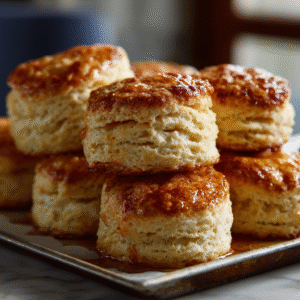
- Bake: Brush the tops with melted butter. Bake 8 minutes, rotate the pan, then bake 7 to 9 minutes more until light golden.
- Finish: Brush with the remaining butter, rest 3 to 5 minutes and serve warm with butter and preserves.